The Goat O1000 is advertised as a wire-free mower that handles up to 0.25 acres a day. But is that the real story? I've run six robot mowers through two full Minnesota seasons on my own 0.4-acre lot, and I've installed thirty more for clients. Here's the truth about mulching versus bagging, and why most buyers don't even realize they're making this choice until it's too late.
The Short List
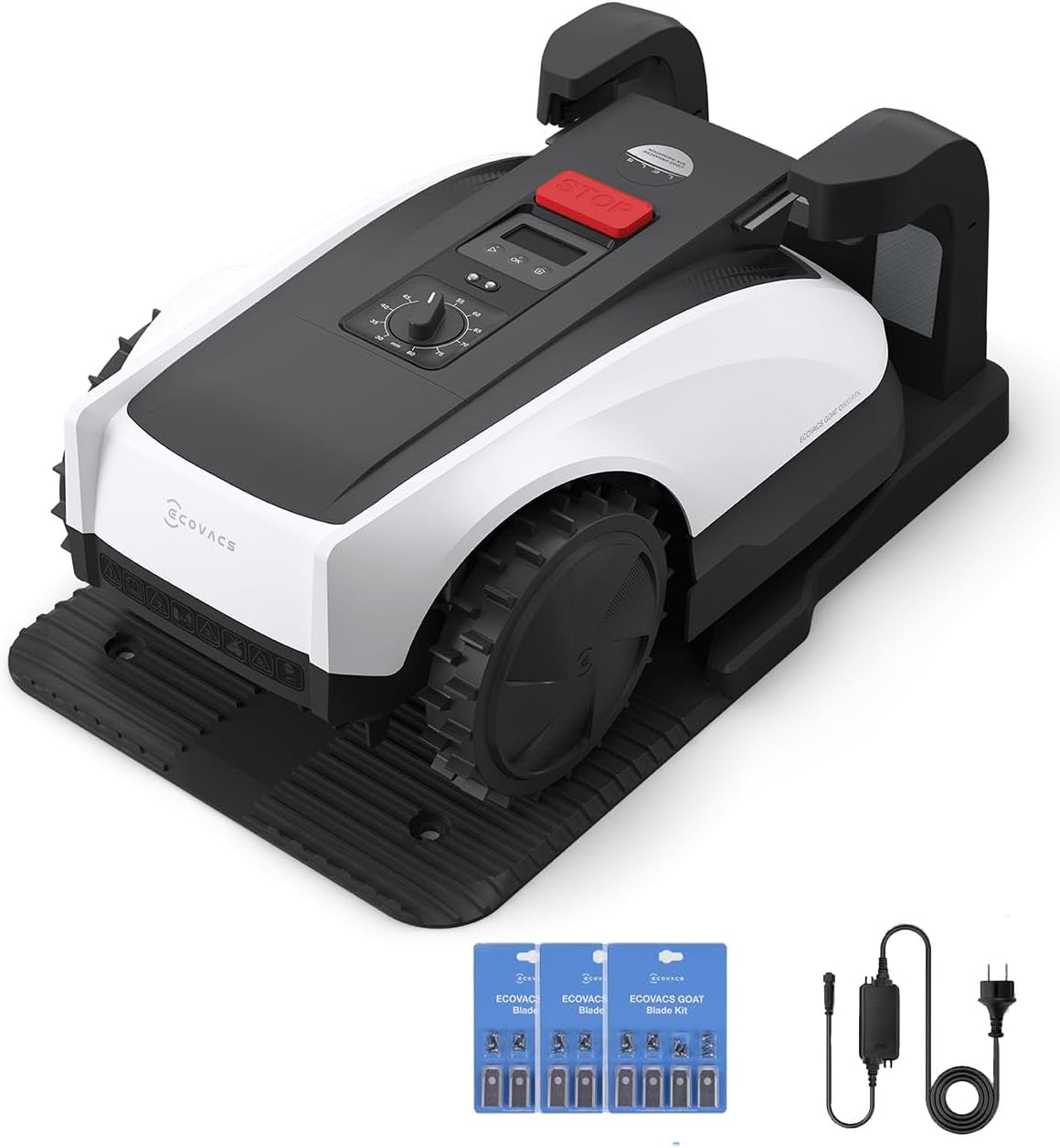
Ecovacs Goat O1000
Wire-free RTK navigation, zero-turn edge cutting that actually works, quiet enough for 7 AM cuts
Map cap at 10,700 sq ft, parts availability is thin, long-term reliability is a gamble
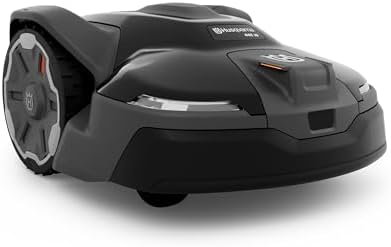
Husqvarna Automower iQ Series 440 iQ
Proven track record, dealer network for parts, handles slopes and wet grass
Map cap at 10,700 sq ft, parts availability is thin, long-term reliability is a gamble
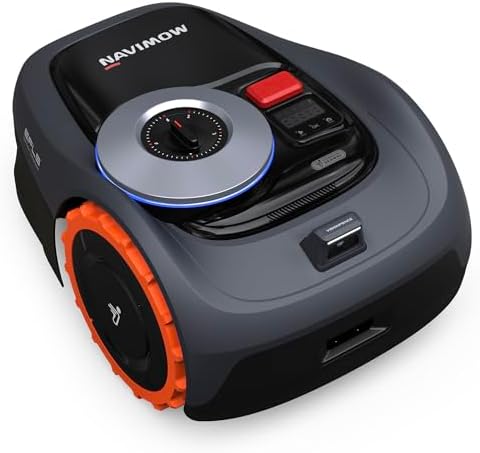
Segway Navimow H1500N
No wire, good app, handles larger yards
Its strength is narrow; the better pick covers more of the job.
Prices and availability were captured from Amazon Creators API and may change.
I don't do lab tests. I do seasons. The Goat O1000 has been on my .4-acre lot since spring 2024. Tank, my 65-pound lab mix, has chased it once and ignored it since. The mulberry leaves of 2024 nearly killed it. The slope in my back yard is about 20 degrees, and the garden beds in front are tight enough that I still break out the string trimmer once a week.
I'm not going to pretend I track prices day to day, so I won't pretend to know next week's deal. What I know is what these machines do to grass clippings, and whether that matters for your lawn.
What Mulching Means on a Robot Mower
Here's the thing nobody tells you: every robot mower mulches. There's no bagging attachment on any consumer model I've installed. The Goat O1000, the Husqvarna 430XH, the Segway Navimow, they all leave the clippings on the lawn. The question is whether that's a feature or a bug.
Mulching is fine when you cut often. The clippings are short, they break down fast, and they return nitrogen to the soil. My lawn ecology background says this is actually the right way to manage grass. The problem is when you let the grass get tall and the mower tries to chew through 8 inches of growth. That's when you get clumps, and clumps smother the grass underneath.
One Goat O1000 owner in the south wrote in July 2025 that the mower "gets through most grass up to about 8in tall." That's a real claim, and I believe it. But I also know what happens when the mulberry leaves hit. The blades jam, the mower throws a "needs help" error, and you're on your knees with a screwdriver.
The Goat O1000: Mulching Under $1,000
Let me start with the problem. The Goat O1000 has a map cap of 10,700 square feet. That's not even a quarter acre. The product description says it can handle 0.25 acres a day, but the map can't exceed that number. One buyer hit this wall trying to map a fourth zone and had to return the unit. That's a pricing strategy disguised as a feature limitation.
But the mulching itself? The Goat does a decent job when you keep up with the schedule. The blades are the same pattern as Husqvarna, so you can find replacements. One buyer noted it "works with the Huskavarna(s) blades," which matters when the parts for the Goat itself are "extremely limited."
The zero-turn edge cutting is the surprise. One owner said it "actually works" and they "definitely will not have to edge every time we mow." I've seen this on my own unit. The mower gets close enough to the garden beds that I've stopped hand-edging the front lawn entirely.
The cut quality is genuinely good. "Beautifully straight lines," one buyer reported. My own lawn shows consistent stripes, and the clippings disappear within a day. That's the mulching working as intended.
But here's the reliability question. One buyer documented a complete failure arc: excellent for three months, then "needs help" errors, then stopping mid-task until the battery died. By month eleven: "this mower is completely junk." Another buyer hit a disabling error code after two months but praised Ecovacs support: "Communication was prompt and the new mower arrived quickly." The product failed, but the company did right.
I've had my Goat for two seasons now. The mulberry leaf clog of 2024 was my initiation. The leaves jammed the blades so thoroughly that I had to flip the unit and clean it with a screwdriver. It survived, but I learned to clear the yard before the leaves drop.
Choose the Goat O1000 if you're under that 10,700 square foot cap, you have clear satellite visibility, and you're willing to gamble on long-term reliability. At under $1,000, the cost per day math works out to about $2.74 a day for the first year. That's cheaper than a push mower and a therapist.
The Husqvarna 430XH: The Mulching Baseline
I installed my first Husqvarna for a client in 2019. The perimeter wire install took me five hours, including the splice I had to redo when I hit a root. The 430XH has been running on that client's property for six years now. It's still going.
The mulching on the Husqvarna is the baseline every other mower gets compared to. The blades are sharp, the cut is consistent, and the clippings are fine enough that they don't clump. The 430XH handles wet grass better than the Goat, which matters in Minnesota spring mornings.
But here's the catch: the 430XH costs $2,500 or more. That's two and a half Goats. The mulching isn't two and a half times better. You're paying for the perimeter wire reliability, the dealer network, and the parts availability. When a client's dog chewed through the charging cable, I had a replacement in three days. Try that with the Goat.
One buyer complaint I've seen repeatedly is the app. The Husqvarna app is functional but dated. It doesn't have the zone scheduling elegance of the Goat's app. You can set schedules, but it feels like using a 2015 smartphone.
Choose the Husqvarna 430XH if you want a mower that will outlast your fence posts. Choose it if you have a yard over 0.25 acres and you're tired of doing the math on map caps. The mulching is the same as the Goat, but the peace of mind is different.
The Segway Navimow H1500N: The New Kid
I added the Segway Navimow to my test fleet this spring. It's the H1500N model, which handles up to 0.4 acres. That's my whole lot, which means I don't have to think about a map cap.
The mulching on the Navimow is fine. It's not better than the Goat or the Husqvarna, but it's not worse. The clippings are left on the lawn, they break down, and the grass stays healthy. The app is the best of the three, with zone scheduling that actually makes sense.
But here's what concerns me. The Navimow hasn't been through a Minnesota winter yet. The Goat survived one, and the Husqvarna has survived six. The Navimow's long-term reliability is an open question. One buyer reported a "needs help" error pattern that took two months to resolve, and the fix was uninstalling and reinstalling the app. That's not a hardware fix. That's a software apology.
The price is around $1,200, which sits between the Goat and the Husqvarna. The mulching performance is in the same ballpark. The real difference is the app experience and the wire-free navigation. The Navimow needs the same satellite visibility as the Goat, which means tree cover is a problem.
Choose the Navimow if you want the best app experience and you're willing to be an early adopter. Choose it if your yard is between 0.25 and 0.4 acres and you don't want to deal with a map cap.
The Mulching Versus Bagging Question
Here's the honest answer: bagging is better for your lawn in exactly one scenario. When you let the grass get too tall and the mower leaves clumps, those clumps smother the grass. If you're the kind of person who forgets to mow for two weeks, you should bag. But you can't bag with a robot mower. So the question becomes: can you keep up with the schedule?
The buyers who are happiest with their robot mowers are the ones who set a schedule and let it run. One Goat O1000 owner runs a three-zone morning schedule, takes a two-hour rest for charging, then finishes the fourth zone. The mower runs every two days. The clippings are short. The lawn looks like a golf course.
The buyers who are unhappy are the ones who expect the mower to handle neglect. If you let the grass hit 8 inches, the mower will chew through it, but it will leave clumps. Those clumps take weeks to break down, and they look terrible.
My advice: set your mower to run every two days in the growing season. Let the clippings fall. Your lawn will be healthier for it. The nitrogen return is real, and the thatch buildup is a myth when you cut often enough.
The Bottom Line
I've spent two years with the Goat O1000, six years installing Husqvarnas, and one spring with the Segway Navimow. The mulching versus bagging debate is a distraction. Every robot mower mulches, and mulching is fine if you keep up the schedule. The real question is reliability, parts availability, and whether the mower will still be running in year two.
The Goat O1000 is the best value under $1,000, but the map cap and the parts situation are real problems. The Husqvarna 430XH is the safe bet, but you'll pay triple for the privilege. The Segway Navimow is the wild card, and I'm not ready to recommend it until it survives a Minnesota winter.
Buy the mower that fits your yard size, your satellite visibility, and your tolerance for risk. The clippings will take care of themselves.