I installed my first robot mower perimeter wire in 2011 for a client in Edina who hated mowing more than she hated writing checks. Fifteen years, 30-plus installs, and two full Minnesota seasons of running my own robots later, I still believe the install is the product and the mower is just the machine that executes it. This robot lawn mower comparison covers four items I keep coming back to for small and mid-size yards: three mowers that take three different approaches to the same job, plus the blade kit that decides whether any of them cuts grass or just tears it.
Related: Perimeter Wire Vs RTK: What Actually Survives A Minnesota Spring
The best pick here for most 0.25 to 0.4 acre suburban yards is the T1200Pro, because it is sized for 0.37 acre and ships with 24 replacement blades, which answers the hidden cost problem before you ever bury a wire. The two budget entries are genuinely interesting for smaller, flatter lawns, and the Husqvarna blade kit is the purchase that keeps any of them honest in September.
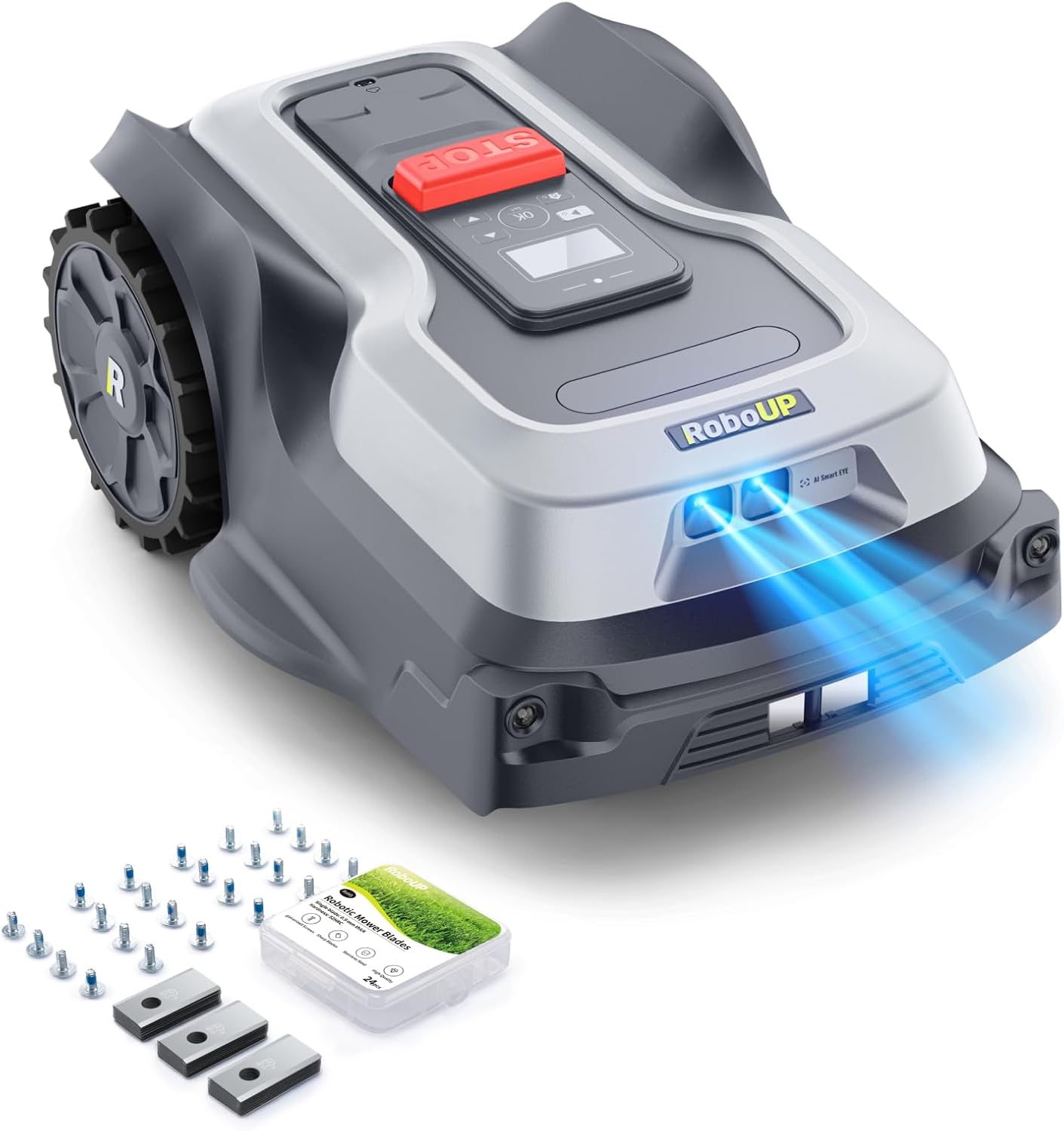
T1200Pro Robot Lawn Mower with 24 Replacement Blades for 0.37 Acre
Sized for 0.37 acre and bundled with 24 spare blades, so the consumable cost is handled up front
The biggest coverage claim in the group, which means a sloppy wire layout shows up here first
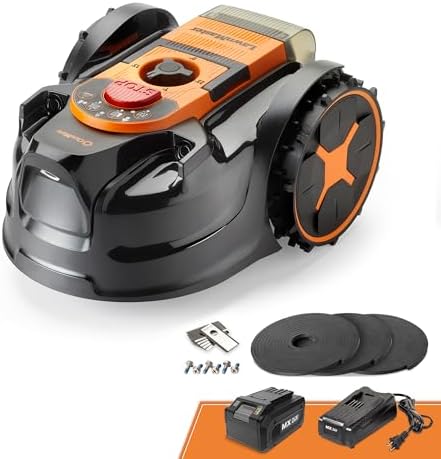
LawnMaster OcuMow VBRM601YCM AD Robot Mower with Parallel Cutting
Lowest barrier to entry here, and parallel cutting suits a flat, rectangular suburban lawn
Budget-tier machines usually show their price in the app, so expect more schedule fiddling in month one
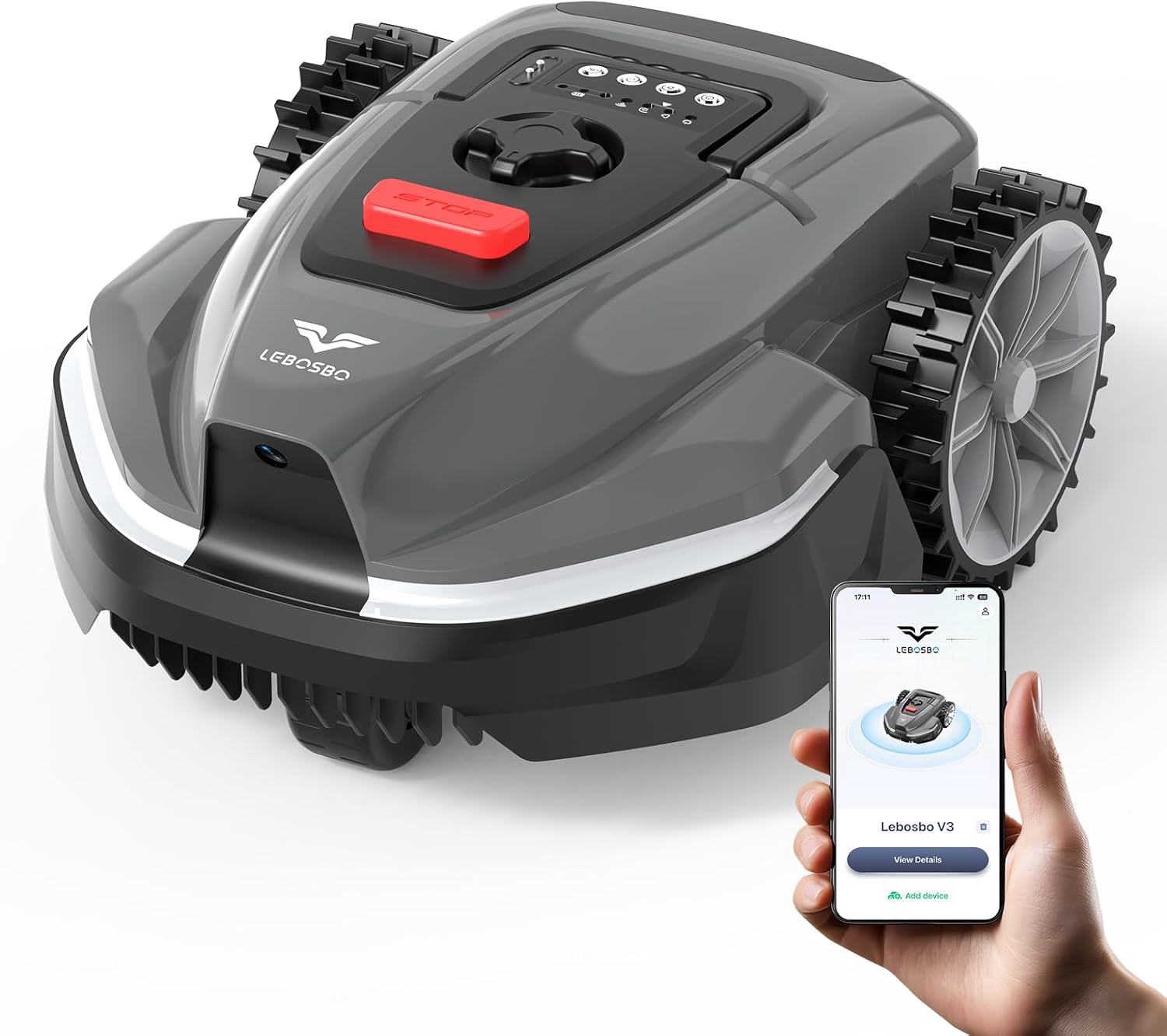
V3 AI Vision Robotic Lawn Mower, 1600 Sq.Ft, Dark Grey
Vision-based navigation and a 1,600 square foot claim, which fits a small fenced yard
Camera navigation is the part of the market with the least long-term data behind it
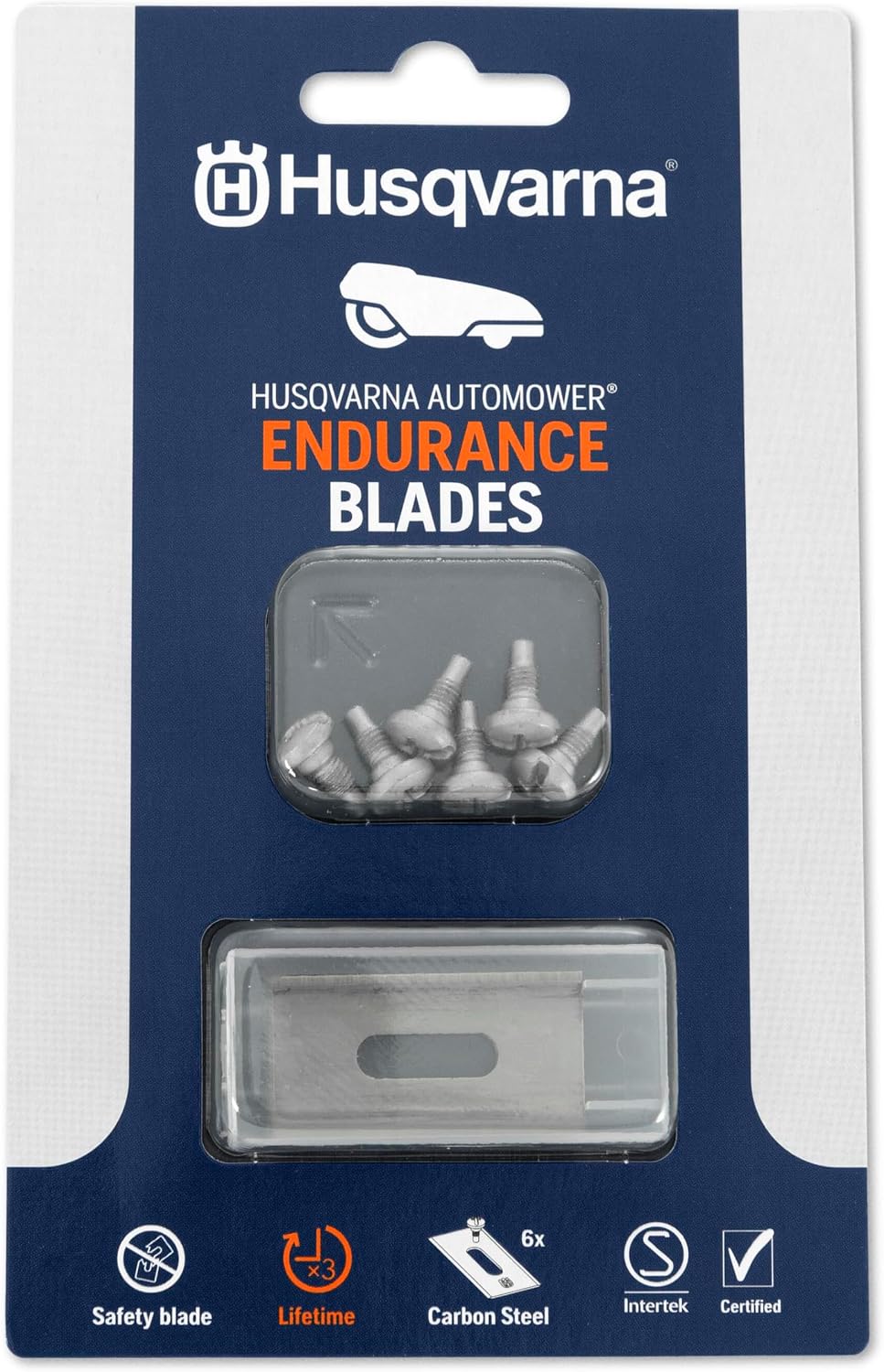
Husqvarna 595084411 Endurance Automower Blades, Silver
Genuine consumable from the brand with the longest reliability record in the category
It is not a mower; if you do not run an Automower, this is the wrong purchase
Prices and availability were captured from Amazon Creators API and may change.
How I read a mower listing before I trust it
A robot mower listing tells you four things that matter and about twenty that do not. The coverage number is the first. If a machine claims 1,600 square feet and your lawn is 4,000, you are buying a robot that will live on the charger and never finish the job. Coverage claims are also optimistic, because they assume a flat rectangle with no flower beds, no dog toys, and no maple that drops leaves for three weeks straight.
The second thing is navigation. There are three flavors in this group and in the market generally: perimeter wire, camera or vision-based guidance, and RTK satellite positioning. Wire is boring and it works. I install wire for clients who want reliability, because a buried boundary does not care about tree cover, cloud cover, or a firmware update. RTK is elegant and it fails under a maple tree, which is why I have watched three clients return RTK-only mowers after one season in a mature Minneapolis neighborhood. Camera navigation is the newest of the three, and the honest answer is that nobody has a decade of data on it yet.
The third thing is slope rating, and I treat every one of those numbers as marketing. I have watched a mower advertised for a 25 percent slope slide sideways on wet grass at 18 percent. Wet grass in October is not the same surface as dry grass in July, and no listing will tell you that.
The fourth thing is the blade situation, and it is the one buyers ignore. Blades are consumables. They dull, and a dull blade tears grass instead of cutting it, which shows up as brown tips and a lawn that looks stressed by August. A mower that arrives with a blade supply solves a problem most people do not know they have.
T1200Pro Robot Lawn Mower with 24 Replacement Blades for 0.37 Acre
This is the pick for anyone with a real suburban lot. The 0.37 acre coverage claim puts it in the range where a homeowner in a 0.25 to 0.4 acre property can run it daily and actually keep up, which matters more than any feature list. Mowing frequency beats mower quality every time. A cheap robot running daily beats an expensive one running weekly, because daily cutting keeps clippings short enough to mulch back into the soil.
The 24 replacement blades are the part I would highlight to a client. Blade changes are the recurring chore of robot ownership, and a machine that arrives with a season or two of blades included means you are not ordering a $30 pack in July when your lawn starts looking ragged. My only real caution is the coverage claim itself. A bigger zone means the boundary wire has to be laid properly, with clean corners, adequate clearance around obstacles, and a dock location with a straight approach. On a 0.37 acre property, a rushed install is visible within a week.
LawnMaster OcuMow VBRM601YCM AD Robot Mower with Parallel Cutting
Parallel cutting is an underrated feature. Random-pattern mowers wander, which works fine but leaves visible tracks and takes longer to cover ground. A mower that cuts in parallel stripes covers a lawn more predictably and leaves a pattern that reads as intentional. For a flat, rectangular suburban lawn with few obstacles, that is exactly the behavior you want.
This is the entry point in the group, and I want to be straight with you about what that means. The mower itself is usually fine. The app is where budget machines show their price. Scheduling that drops, maps that reset after a firmware update, and a dock the robot struggles to find at dusk are the three complaints I hear most from owners of inexpensive robots, and those complaints are about software, not hardware. Budget for a month of patience and you will likely be happy. Expect it to work perfectly out of the box and you will be emailing support.
If your lawn is under a quarter acre, mostly flat, and free of steep transitions, this is a reasonable first robot. If you have a slope that makes you nervous on a riding mower, it is not.
V3 AI Vision Robotic Lawn Mower, 1600 Sq.Ft, Dark Grey
The V3 is the most interesting machine here on paper and the one I would want to watch for two seasons before recommending it to a client with a complicated yard. Vision-based navigation is appealing because it promises less wire, and wire is the part of this hobby that scares people off. Burying 400 feet of boundary cable in Minnesota means either a trencher, a lot of kneeling with a spade, or a week of staking and waiting for the grass to grow over it.
The catch is that camera navigation is young. It has the least long-term reliability data of the three navigation methods, and the failure modes are the kind that show up in month four, not week one. A camera that handles a sunny afternoon can behave differently in low autumn light or when the lawn is covered in fallen leaves.
The 1,600 square foot coverage claim is honest about what this machine is for: a small, contained, fairly simple yard. If that is your lawn, the tradeoff of less wire for newer technology may be worth it. If your property is bigger or has a lot of hard shadows, I would wait.
Husqvarna Endurance Automower Blades: the line item nobody budgets
This is the least glamorous item in the comparison and the one that determines how your lawn looks in August. Husqvarna has the longest reliability record in this category, and their genuine blade kits are the consumable I trust most. The Endurance line is built for the reality that robot blades take a beating from grit, twigs, and the occasional dog toy.
Here is the arithmetic that matters. A robot mower runs most days. Sharp blades slice grass cleanly and the clippings mulch back into the turf. Dull blades bruise and tear the blade of grass, the tips brown out, and the lawn starts looking thirsty even when it is not. Replacing blades is a five minute job on most machines, and doing it monthly through the growing season is the single cheapest upgrade to your lawn's appearance.
The pet peeve I will keep repeating: blades that need a proprietary tool to change are a design failure. Buy a kit that swaps with a screwdriver or a simple hex key and you will actually do the maintenance. Buy one that requires hunting down a special wrench and you will put it off until the grass tells you about it.
One warning. This is a consumable for Husqvarna Automower models. If you run a different brand, check compatibility before you order, because blade mounting patterns are not universal.
What the install actually costs
Nobody budgets for the install, and the install is the product. On a 0.37 acre lot I plan on a full weekend for a careful wire layout: mapping the boundary, deciding which obstacles get islands, running the cable, staking it down, and then watching the robot for two or three full cycles to find the spots where it gets confused. Splicing is where I see the most failures. A splice that corrodes in one season will cost you an afternoon in the spring to find.
The dock placement matters more than people expect. It needs a straight approach, level ground, and enough clearance that the robot can find it in the dark. Mowers that cannot dock reliably are the number one reason I get called back to a property.
Add the electrical side too. Most of these need an outdoor outlet near the dock, and if you do not have one, that is an electrician's visit on top of everything else. That is the real number people should be comparing, not the sticker on the mower.
Who should buy which
For a 0.25 to 0.4 acre suburban lot, the T1200Pro is the pick, mostly because of the coverage headroom and the included blade supply. You get the two things that determine success: enough machine for the lawn and a season of sharp blades.
For a small, flat, simple yard under a quarter acre, the LawnMaster OcuMow is the sensible entry, and parallel cutting is a genuine plus on a rectangular lawn.
For a small fenced yard where running wire is genuinely impractical, the V3 AI Vision is the interesting experiment, with the caveat that camera navigation is the least proven path.
And whatever you buy, budget for the Husqvarna blade kit if you own an Automower, or an equivalent for your brand. Blades are not an accessory. They are the cutting edge, literally.
What I'm watching next
Two things. First, hybrid navigation, where a mower uses wire as its primary boundary and vision or RTK as a supplement. That combination solves the tree-cover problem without giving up the reliability of a buried wire, and I expect it to become the default in this price range.
Second, blade technology. Self-sharpening and longer-life blade designs are the next premium tier, because owners have figured out that the consumable cost is the real cost of ownership. Prices will keep sliding downward as the factories scale, and within a few years a real mower under four figures will not be remarkable. When that happens, the install will still be the hard part, and it will still be the reason your neighbor's robot sits in the garage.