I have installed robot mowers on lots that fight back: a slope that sheds water like a roof, a maple canopy that swallows a positioning signal, and a dog who treats the docking station like a chew toy. So when I sit down to write a robot lawn mower comparison, I am not ranking spec sheets. I am ranking how a machine behaves on install day, in week three, and in the mud of a Minnesota April.
This comparison covers four things you can buy right now: two wire-free mowers that solve navigation from opposite directions, one machine built around a wide cutting disk, and a handbook that costs less than a set of replacement blades. If you take one thing from this page, take this: the mower is the robot, but the install is the product.
For most suburban lots between a quarter acre and three quarters of an acre, the Neomow X SE is where I would start, because 3D LiDAR navigation removes the perimeter wire problem without asking for an RTK fix under your trees. The L2500-NEO is the stronger pick if your property runs closer to an acre and your sky is open. The TRON is for the homeowner who wants a big deck and does not mind a second delivery. And the handbook is for everyone who has not installed one of these before, which is most people.
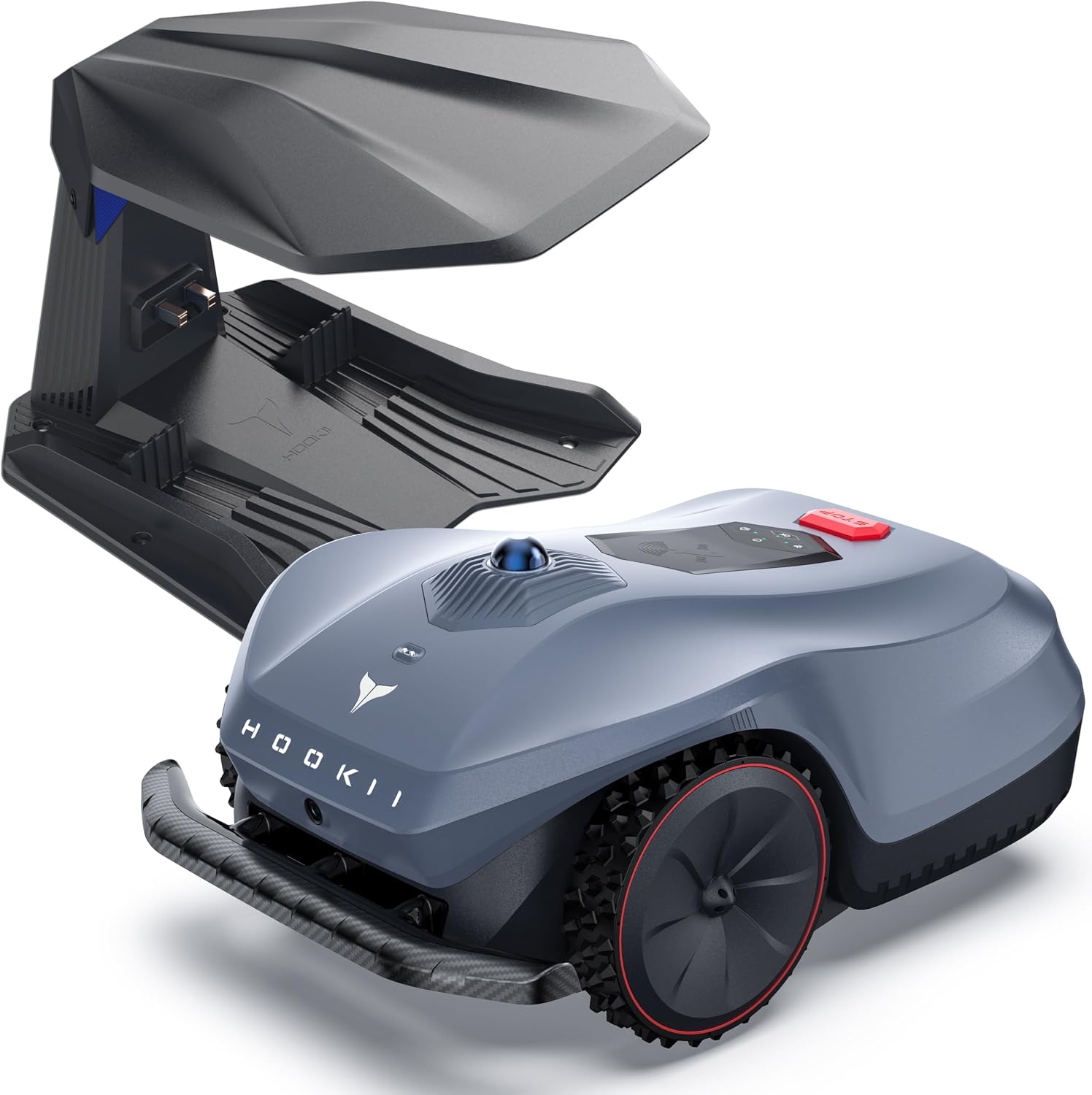
Neomow X SE 360° 3D LiDAR Navigation Robot Lawn Mower for 0.75 Acre
LiDAR navigation needs no perimeter wire and no satellite fix, and 0.75 acre covers the honest middle of the suburban market
LiDAR mapping wants a picked-up lawn, and clutter is what breaks the map
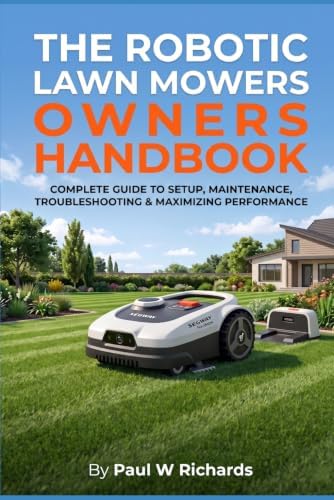
The Robotic Lawn Mower Owners Handbook: The Real-World Guide for Managing Complex Yards, Maximizing Efficiency, and Eliminating Edging with Robotic Mowing (The Evolution of Lawn Care Series)
The lowest-cost item here, and it answers the install questions people normally learn the hard way in July
It is a book. It will not cut a single blade of grass
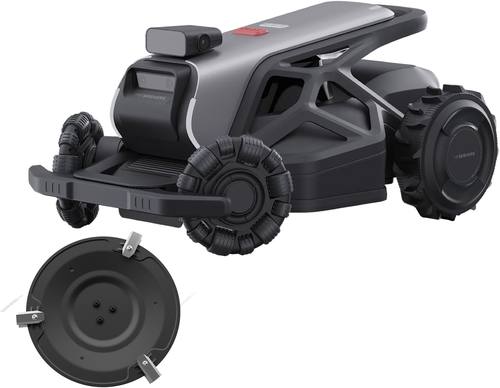
TRON Robot Lawn Mower with Large Mowing Disk (Ship Separately)
A large mowing disk carries more blade edge per lap, so wide open runs finish in fewer passes
Ships separately, which turns one install day into two delivery windows
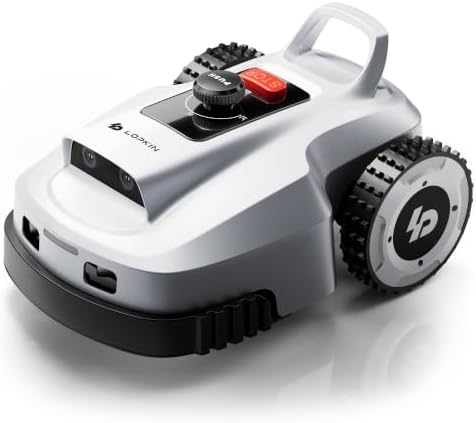
L2500-NEO Robot Lawn Mower for 0.9 Acres, NetRTK + AI Vision Lawnmower Robot, Wi-Fi HaLow Connectivity, No Boundary Wire, AI Obstacle Avoidance, App Control, 60dB Quiet, Multi-Zone Management
Bigger acreage rating, AI vision obstacle avoidance, long-range Wi-Fi HaLow, and a 60 dB noise figure
RTK still depends on sky view, and tree cover is the one thing it cannot argue with
Prices and availability were captured from Amazon Creators API and may change.
What actually decides an install
Three things decide whether a robot mower becomes invisible infrastructure or an ongoing chore: navigation, boundary, and acreage headroom.
Navigation is the brain. Boundary is the fence. Acreage headroom is the margin between what the mower is rated for and what your lawn actually is. A mower rated for exactly your lot size will run all day, every day, and still fall behind in a wet spring. Buy headroom.
Then the boundary. Perimeter wire is boring and it works. I have run wire through two Minnesota seasons and through a winter of frost heave, and the failures I see are almost always splices, not the wire itself. Wire-free mowers skip the burial but inherit a new dependency: they have to know where they are without a fence to tell them. That is where LiDAR and RTK split apart.
Neomow X SE: 3D LiDAR takes the wire out of the equation
The Neomow X SE is rated for 0.75 acre and navigates with 360 degree 3D LiDAR. That combination matters more than any other line on the page.
LiDAR measures the world with light. It does not need a satellite fix, which means a maple canopy does not blind it and a cloudy week does not degrade it. It maps what is physically there: the shed, the garden bed, the trunk of the oak, the dog. For a yard with tree cover, that is the difference between a mower that runs and a mower that parks itself at the edge of the lawn and sulks.
0.75 acre is also the honest middle of this market. Most lots people describe as half an acre are closer to a third, and most lots people describe as an acre are three quarters. The Neomow X SE sits right there, with enough headroom to survive a wet May.
Where I push back: LiDAR wants a lawn that has been picked up. A yard scattered with hoses, dog toys, and a folding chair is a yard that a LiDAR map will either route around forever or learn badly. The technology is rarely the limit. The clutter is.
L2500-NEO: NetRTK plus AI vision, and a Wi-Fi HaLow wrinkle
The L2500-NEO goes the other way. It is rated for 0.9 acre and combines NetRTK positioning with AI vision, adds Wi-Fi HaLow connectivity, runs at 60 dB, and manages multiple zones from an app. No boundary wire.
NetRTK is a correction service layered on satellite positioning. When it works, it is elegant: centimeter accuracy, no wire to bury, no splice to corrode. When it does not work, it is a mower that cannot find its own dock. The failure mode is sky view. RTK wants a clear cone of satellites above it, and mature trees, a tall garage, or a steep north-facing slope can eat that cone for hours. I have watched this exact failure in client yards, and it is why I still install wire for people who value reliability over elegance.
The AI vision layer is the interesting part. Vision is what lets a mower tell a hedge from a shadow, and here it is doing obstacle avoidance work rather than navigation alone. Pairing vision with RTK is the right architecture, because vision can carry the machine through the moments when satellites drop. Whether it carries it well is a firmware question, and firmware is the part of every robot mower that changes after you buy it.
Wi-Fi HaLow is the quiet upgrade. It is a low-frequency, long-range variant of Wi-Fi, which matters on a property where the mower works 300 feet from the router. Standard Wi-Fi drops at the back fence. HaLow is designed not to.
At 60 dB, the L2500-NEO sits in the range where you stop noticing it from the kitchen window. That is not a marketing number to shrug off. Noise is the reason some neighborhoods never see a robot mower at all.
TRON: a large disk and a separate box
The TRON Robot Lawn Mower leads with its large mowing disk. That is a real mechanical advantage, and it is the kind of spec that gets buried under app features in most listings.
A larger disk carries more blade edge per rotation. More edge means fewer passes to cover the same strip, and fewer passes means less time on the lawn, less battery per acre, and less wear per blade. On a wide open lawn with long straight runs, a big disk is the difference between a machine that finishes and a machine that keeps going back to the dock.
The catch is in the name: it ships separately. That is not a shipping footnote, it is an install planning fact. Two deliveries mean two windows, and if the mower arrives before the dock or the dock before the mower, your install day splits in half. Order early, and confirm both tracking numbers before you clear a Saturday.
The Robotic Lawn Mower Owners Handbook: the cheapest install upgrade
The Robotic Lawn Mower Owners Handbook is the odd one out in this comparison, and I am including it on purpose.
It is a book about managing complex yards with a robotic mower, covering efficiency and the edging problem. Edging is the part of robot mowing nobody warns you about. A robot mower cuts grass. It does not cut a crisp line along a driveway, and it will not trim against a foundation. Every robot mower owner I know spends the first month discovering this, usually in July, usually standing in the heat with a string trimmer.
If you have never installed a robot mower, this handbook is cheaper than a set of replacement blades and it answers the questions you would otherwise settle by trial and error: where zones should break, how to think about a complex boundary, and how to plan for the corners a robot cannot reach. Buy it before the mower, not after.
The trade-offs nobody puts in the brochure
Here is where I stop being polite about the category.
Slope ratings are marketing. I have watched a mower rated for a 25 percent slope slide sideways on wet grass at 18 percent. Every machine here will be judged by a brochure number that was tested on dry ground by someone who was not standing on a hill in April.
Wire-free is not the same as install-free. LiDAR and RTK both remove the burial, and both replace it with something: LiDAR with a dependency on a clean, mapped lawn, and RTK with a dependency on sky view. Neither is free. You are trading a weekend with a shovel for a season of paying attention to the map.
The app is a feature, not the mower. Every machine here is app controlled, and I have watched client apps lose a map after a firmware update more than once. If scheduling fails, you own a very slow Roomba. Confirm your mower keeps a physical start button that works when the cloud does not.
Acreage ratings are best case. A 0.9 acre rating assumes a rectangular lawn, no obstacles, and grass that is not growing four inches overnight in May. If your lot is irregular, cut the rating by a third in your head before you buy.
Which one for which yard
If your lawn is under three quarters of an acre with tree cover and a garden to protect, the Neomow X SE is the machine I would short list, because LiDAR does not care about the canopy.
If your property is closer to an acre and your sky is open, the L2500-NEO is the better fit, and the Wi-Fi HaLow radio plus the 60 dB rating make it the easier neighbor to live with.
If you have long, straight runs and want fewer laps, look hard at the TRON and its large disk, then plan for the split shipment before you commit a weekend.
If you have never owned a robot mower, buy the handbook first. It is the cheapest item in this comparison and the one most likely to change how you lay out the install.
Blades, docks, and the maintenance tax
Two costs hide behind every robot mower purchase.
The first is blades. Dull blades tear grass instead of cutting it, and torn tips brown at the edges. Replace them on schedule, not when the lawn looks bad. A large disk machine like the TRON gives you more cutting edge per lap, which is a genuine advantage, but it also means more blades to replace over a season.
The second is the dock. A docking station needs power, a flat approach, and a clear path. A mower that cannot find the dock in the dark will spend the night on your lawn, and a mower that spends the night on your lawn will be wet, low, and confused by morning. Plan the dock location before you plan anything else. It is the one part of the install that is genuinely hard to move later.
The short version
A robot mower is a lawn system, not an appliance. The machine matters, but the navigation choice and the install decide whether you get a lawn that maintains itself or a hobby you did not ask for.
LiDAR, in the Neomow X SE, is the most forgiving navigation for a yard with trees. NetRTK plus vision, in the L2500-NEO, is the more elegant system when the sky stays clear. The TRON brings a big disk to wide open ground. And the handbook is the install day I have done dozens of times, minus the mistakes.
Pick the navigation that matches your canopy, buy an acreage rating bigger than your lot, and read the manual before you dig. That is the whole game.