I have installed robot mowers on lawns that should never have had one. A 0.6-acre lot with three maples crowding the fence line, a postage stamp in Edina where the dog treats the docking station like a chew toy, and my own 0.4-acre mess with a slope that turns slick every April. Six different mowers have spent full seasons in my yard, and the install, not the machine, is what decides whether the thing survives. This robot lawn mower comparison is the short version of what I have learned, applied to four products that landed on the same shelf: a wire-free Segway, a large-disk TRON, the handbook I wish more owners read before they buried a wire, and one blade that has no business being in a mower article at all.
Related: Perimeter Wire Vs RTK: What Actually Survives Winter
The short answer: for a typical quarter-acre suburban lawn with open sky, the Segway Navimow i110N is the one I would put on the property first, and the handbook is the cheapest thing you can buy to keep it out of trouble. If your yard sits under a maple canopy, no wire-free mower on this list is a safe bet, and the honest recommendation is a wired install instead.
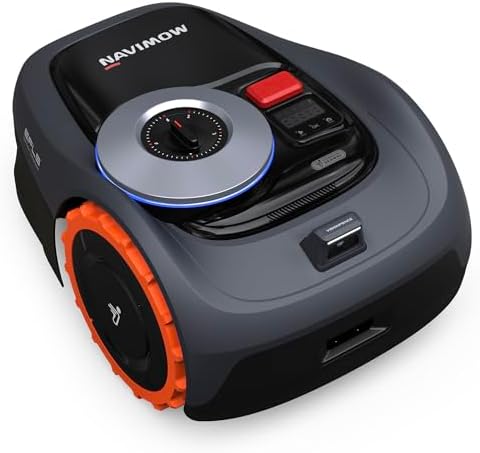
Segway Navimow i110N Robot Lawn Mower
Wire-free setup removes the weekend of staking, RTK plus vision for mapping, multi-zone management for garden borders and dog runs, quiet enough for early mornings
RTK is the weak link under tree cover, and a virtual boundary is only as good as the map you build on install day
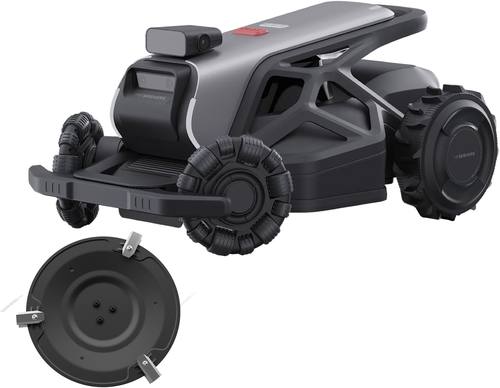
TRON Robot Lawn Mower with Large Mowing Disk
A larger mowing disk means a wider cut path per pass, which matters on thick spring growth
Ships separately, so you are coordinating two deliveries and an assembly before you ever see it cut
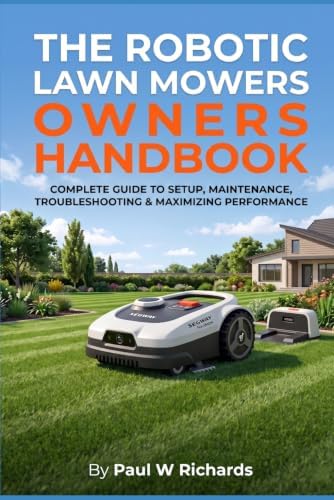
The Robotic Lawn Mower Owners Handbook
Covers the parts nobody sells you: complex yards, efficiency, and the edging problem that never goes away
It is a book, not a robot. It will not fix a bad wire layout or a lawn that is too steep
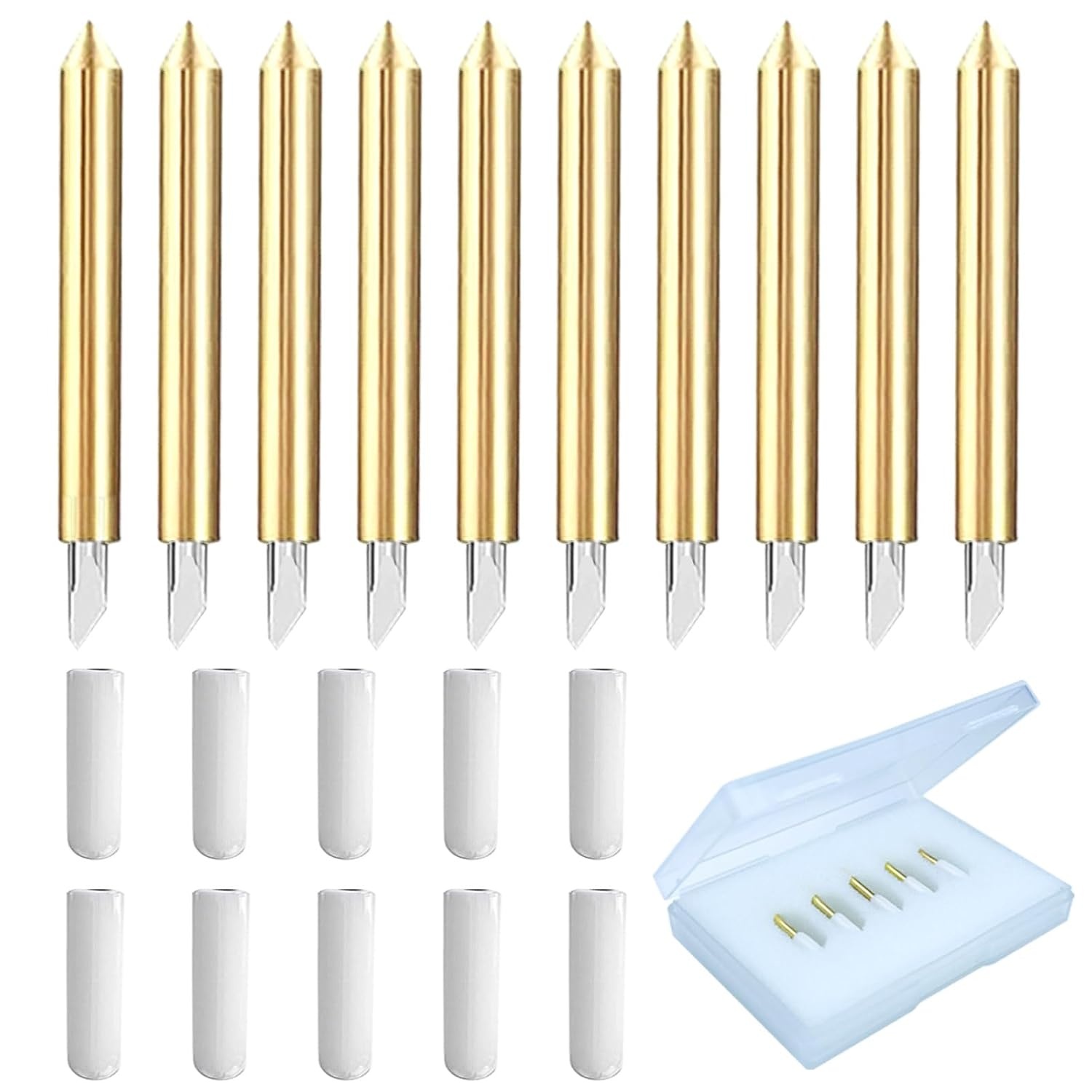
Premium Fine Point Blade for Cricut Explore Air and Maker
Cheap, widely used consumable for craft cutting machines
It is not a robot mower blade. Buying it for a mower is money spent on the wrong tool
Prices and availability were captured from Amazon Creators API and may change.
How I judge these, and what the table cannot tell you
A robot mower is a lawn system, not an appliance. The install is the product. The mower is just the robot that executes it, and that framing changes which column of the table above matters most to you.
I have not put a full Minnesota season on either mower listed here, so I am not going to pretend I have. What I can do is separate the manufacturer's stated specs from what I know about the category after six seasons of running mowers through mud, mulberry leaves, and a dog that chases anything with a spinning blade. Where I say the Navimow claims 58 dB(A) and quarter-acre coverage, that is the listing talking. Where I say RTK signal dies under a maple, that is me talking, and I have watched it happen on three separate properties.
Three things decide whether a robot mower earns its place on your lawn:
- Sky view. RTK positioning needs a clear view of satellites. Open lawns are fine. A yard ringed by mature trees is not, and no amount of app polish fixes that.
- Install honesty. A wire-free mower saves you a weekend of staking and splices. That is real value. It also moves the risk from copper in the ground to radio signal in the air, and copper is more predictable.
- Frequency. A cheap robot running daily beats an expensive one running weekly. If you only run the thing twice a week in June, the grass wins.
The Segway Navimow i110N: the wire-free pitch, and where it breaks
The pitch here is straightforward. Perimeter-wire-free setup, RTK plus vision for positioning, AI-assisted mapping, virtual boundaries instead of buried copper, app control, multi-zone management, and a 58 dB(A) noise claim. On paper that is the install-day dream: no trenching, no stakes, no splice that corrodes in a single season.
The multi-zone feature is the part I actually care about. A quarter-acre suburban lot usually is not one open rectangle. It is a front lawn, a side strip the dog uses as a racetrack, a garden border, and a back yard behind a gate. Being able to define those separately and schedule them separately is the difference between a mower that works and a mower you keep rescuing. The app is a feature, not the mower, but if scheduling fails, you own a very slow Roomba.
Where it breaks is the same place every RTK-only machine breaks. Tree cover. My clients with a maple over the dock have watched wire-free mowers wander, lose their position, and hunt for a signal instead of cutting grass. Vision systems help, and the combination is smarter than RTK alone, but "helps" is not "solves." If you have open sky, this is the cleanest install in the comparison. If you do not, plan for a hybrid approach or a wire.
One more note on slope: ratings are marketing. I have watched a mower advertised for steep grades slide sideways on wet grass at a much milder angle than the box claimed. Minnesota springs are mud season, and mud does not care what the spec sheet says.
The TRON mower with the large disk
The TRON's headline feature is right in the name: a large mowing disk. Mechanically, a wider disk means a wider cut path per pass, which matters in a wet spring when the grass puts on four inches in a week and you want the robot covering ground efficiently rather than making a dozen narrow passes over the same strip.
The catch is in the parentheses. This unit ships separately, which means two deliveries, an assembly step, and a gap between the day the box arrives and the day anything cuts grass. If you are the kind of buyer who wants to unbox one carton and press start, budget an afternoon for this one.
Beyond that, I will be honest about what I do not know. The listing name tells me about the disk and the shipping arrangement. It does not tell me about the navigation method, the app, the docking behavior, or how it handles a wet slope. The newcomers in this category are catching up fast on hardware, and their apps are still rough. If you buy a newer brand, expect to spend the first month teaching it your yard, and expect at least one firmware update that resets something you had tuned.
The handbook, which is the cheapest useful thing here
Every install I have done for a client came with a conversation I should have had in writing. The Robotic Lawn Mower Owners Handbook is that conversation: managing complex yards, maximizing efficiency, and the edging problem.
Edging is the part that sells the dream and then disappoints. A robot mower cuts the field. It does not trim the fence line, the garden border, or the strip along the driveway where the wheels cannot reach. If you thought a robot would retire your string trimmer, it will not. It will cut your mowing time by most of the mowing, and leave you the edging, which is the part most people hate.
A book is not a substitute for a proper install, and it will not tell you whether your specific slope is safe. But for the price of a couple of replacement blades, it front-loads the decisions that are expensive to reverse, and that is a trade I would take every time. I recommend it to clients before they buy anything with a battery.
The blade that does not belong in this comparison
This is a premium fine point blade compatible with Cricut Explore Air 2, Air 3, and Maker machines. Those are craft cutting machines. This is a cutting blade for paper, vinyl, and cardstock. It is not a robot mower blade, it will not fit a mower, and if you arrived here searching for a replacement mower blade, this is not it.
I am keeping it in the table anyway because this confusion is common enough to be worth naming. Blade life is the hidden cost of robot mowing. Cheap blades dull in about a month, and a dull blade stops cutting and starts tearing, which leaves your lawn with brown, frayed tips that look like disease and are actually just bad scissors. Replacement blades for mowers are a consumable you will buy several times a season.
What I want from a mower blade is simple: it should be cheap, and it should not require a special tool to swap. Any brand that makes blade changes into a project is making a mistake, because you will not do it on schedule. Buy blades in bulk, change them often, and keep the craft supplies in the craft room.
The trade-offs, stated plainly
Wire versus RTK. Wire is boring and it works. RTK is elegant and it fails under a maple tree. I install wire for clients who want reliability and I install wire-free for clients who want to be mowing this weekend. Both are defensible. Pretending the choice is obvious is not.
Install time versus install risk. A wire-free mower trades a weekend of physical labor for a dependency on signal. If your lawn is open, that is a great trade. If your lawn is not, you have moved the problem from something you can fix with a shovel to something you cannot fix at all.
Coverage claims versus your actual lawn. A quarter-acre rating assumes a roughly open quarter acre. Add a garden, a shed, a narrow side gate, and a dog run, and the effective area the robot can reach drops. Measure your real cutting area, not your lot size.
App quality versus hardware quality. The hardware in this category has gotten good fast. The apps have not kept up. A mower that cannot find its dock in the dark is a mower you will find parked in a flowerbed at 7 a.m.
Mowing frequency versus mower price. If you are choosing between a better mower and running the cheaper one daily, run the cheaper one daily. Frequency is the variable that shows up in the grass.
What I would buy for a quarter-acre lawn
If your lawn has open sky, a defined perimeter, and a slope that does not turn to grease in April, the Segway Navimow i110N is the machine I would start with, and the handbook is the twelve-dollar insurance policy on the install. Buy them together and read the book before you map anything.
If your yard is complicated, shaded, or steep, spend your money on a wired mower and a proper layout instead. That is not a knock on the Navimow. It is a statement about what radio signals do when they meet a canopy, and I have watched it happen too many times to pretend otherwise.
If you are drawn to the TRON for the wide disk, go in with your eyes open about the separate shipping and the fact that a newer brand means a learning curve for both you and the app.
What I am watching next
My dated prediction list says the market settles on hybrid systems, wire plus RTK, because that is the only arrangement that handles both open lawns and tree cover without asking the homeowner to gamble. I also expect a blade-tech race: self-sharpening and tool-free swaps will be the next premium tier, and the brands that get there first will win the repeat customers.
Prices are still falling. Real mowers below a thousand dollars are coming as the factories scale, and when that happens the install conversation gets harder, not easier, because more people will buy a robot before they have thought about their yard.
That is the whole comparison. The mower is the easy part. The lawn is the project.