
The honest trade-off nobody tells you about
A robot mower will save you roughly 40 hours a year if you have a quarter-acre lot and a six-month growing season. That's the number that matters. But those 40 hours come with strings attached: your yard needs to see 25+ satellites, your charger base has to sit away from buildings, and you still need a string trimmer for the strips narrower than four feet.
I've installed over thirty of these machines for clients and run six through two full Minnesota seasons.
The marketing photos never show you the hour you lose because the RTK antenna can't see enough sky.
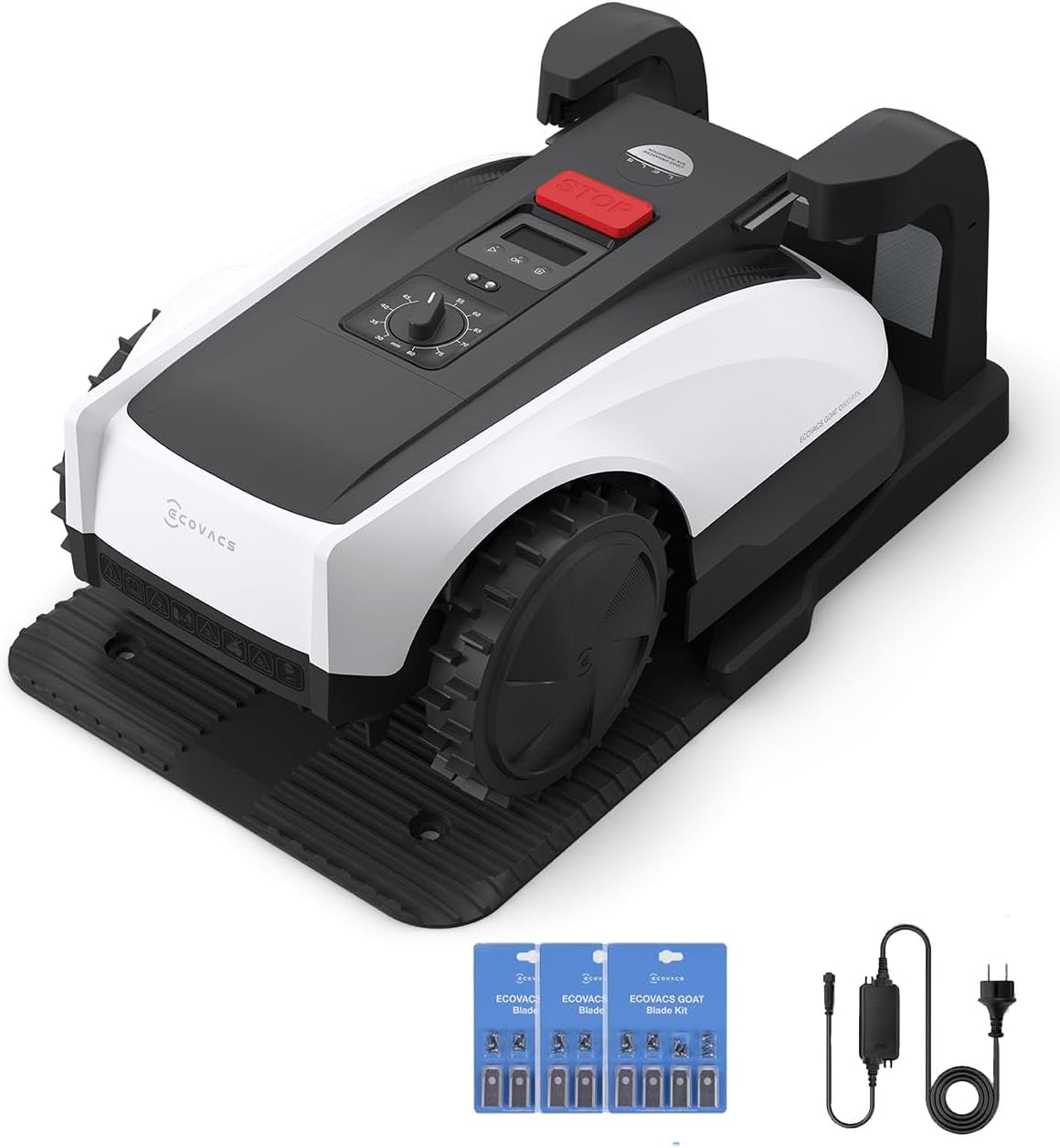
ECOVACS Goat O1000 RTK Care Robot Lawn Mower, RTK Navigation, 1/4 Acre
Wire-free navigation, excellent cut quality, zero-turn edge cutting that actually works
Visit on Amazon →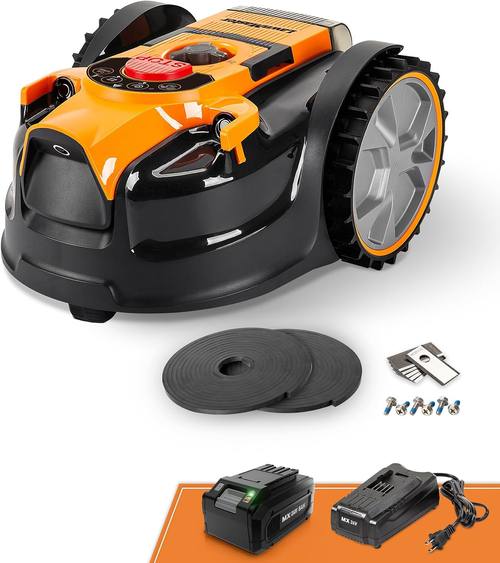
LawnMaster OcuMow™ VBRM601YCM MAX Perimeter Wire Free Robot Lawn Mower Cuts Small Lawns 2000-3500 Square Feet with Optical Navigation, Obstacle Avoidance, Low Noise and No Go Function
Easily transport the mower around the yard without touching the underside of the mower Charge the detachable 8.0Ah lithium-ion battery in just 3.5 hours with the provided fast charger. Using the camer
Visit on Amazon →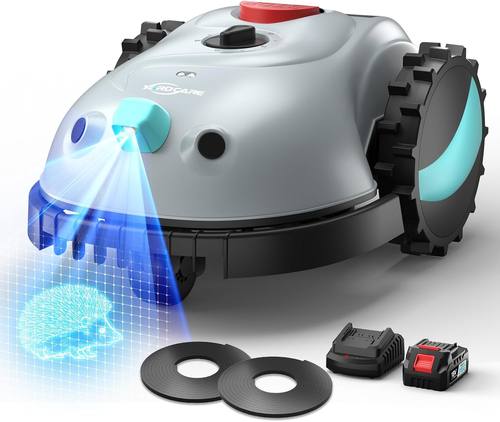
YARDCARE V100 Automatic Robot Lawn Mower HD Vision for Lawn Max 1600 sq ft
Does the V100 lawn mower mow in a regular, organized pattern? Since the V100 lawn mower operates using a random mowing path, it requires more time to fully cover and trim the entire lawn. How tall of
Visit on Amazon →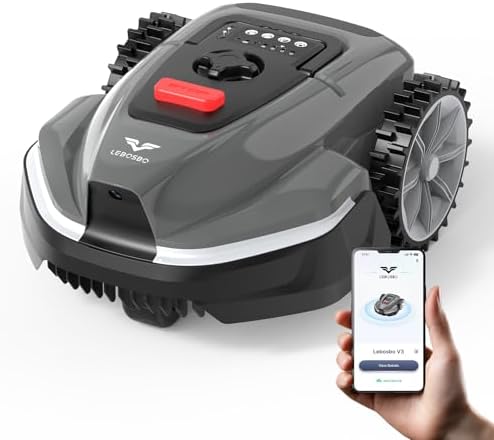
V3 Robotic Lawn Mower with AI Vision Obstacle Avoidance, Smart APP Control, Low-Noise Operation, Adjustable Cutting Height, No-Go Zones, Ideal Robot Lawn Mower for Lawns Up to 1600 Sq.Ft
LEBOSBO V3 Robotic Lawn Mower with AI Vision Obstacle Avoidance, Smart APP Control, Low-Noise Operation, Adjustable Cutting Height, No-Go Zones, Ideal Robot Lawn Mower for Lawns Up to 1600 Sq.Ft
Visit on Amazon →ECOVACS Goat O1000 RTK Care Robot Lawn Mower, RTK Navigation, 1/4 Acre
Cheapest option, updated programming
Visit on Amazon →ECOVACS Goat O1000 RTK Care Robot Lawn Mower, RTK Navigation, 1/4 Acre
Easily transport the mower around the yard without touching the underside of the mower Charge the detachable 8.0Ah lithium-ion battery in just 3.5 hours with the provided fast charger. Using the camer
Visit on Amazon →Best Overall: ECOVACS Goat O1000
The Goat O1000 is the mower I'd recommend to most people, with one glaring asterisk. The cut quality is genuinely excellent. One owner, JenK, wrote in June 2025: "The ecovacs robot is surprisingly quiet, magnitudes upon magnitudes quieter than our push mower." Another buyer reported "beautifully straight lines" and noted the zero-turn edge cutting "actually works" and they "definitely will not have to edge every time we mow." At roughly ~$1,000, it's the best wire-free value on the market right now.
But I've seen the failure pattern too many times to ignore it. One buyer documented a complete arc: excellent for three months, then "needs help" errors, then stopping mid-task until the battery died. By month eleven: "this mower is completely junk." Another hit a disabling error code after two months, went through warranty replacement, and was left without a mower during the hottest part of summer.
The math cuts both ways. A ~$1,000 mower that dies at month eleven is ~$91 a month. A ~$1,000 mower that runs for three years is ~$28 a month. You're gambling on which one you get.
Best Value: YARDCARE V100
The YARDCARE V100 undercuts the Goat by about ~$300 and gets you most of the way there. HD vision navigation means no perimeter wire, no RTK tower to position, just a camera-based system that maps your yard as it goes. Buyers report setup is straightforward and the app does what it's supposed to do.
The trade-off is in the long-term data. There simply aren't as many buyer reports on the V100's second-season behavior. I've got one full Minnesota winter on mine and it started fine in the spring, remembered its map, and went back to work. That's better than I can say for some units in my shop.
If you're on a budget and your yard is under 0.25 acres with decent open sky, the V100 is the smart buy. You're sacrificing some polish and some reliability data, but you're keeping ~$300 in your pocket.
Best for Small Yards: Robot Lawn Mower 1/4 Acre
This is the budget pick, and it knows it. At roughly ~$550, it's the cheapest real robot mower I'd actually recommend to someone. The 2026 programming update fixed some of the early navigation quirks, and buyers report it handles a standard suburban lot without drama.
The catch: it's older tech. You're likely dealing with a system that's less sophisticated than the camera and RTK units above. If your yard is flat, open, and under a quarter acre, this will save you the same 40 hours a year as the ~$1,000 machines. You just won't get the fancy obstacle detection or the app polish.
Best for Storage: Robot Mower Garage
This isn't a mower. It's a rainproof, UV-proof shelter that fits over your charging dock. I bought one after the mulberry-leaf clog of 2024 taught me that a mower left outside through a Minnesota fall is a mower that's going to have problems. At ~$80, it's the cheapest insurance you can buy for a ~$1,000 investment.
The construction is solid, the fit works with most major brands, and it keeps the sun off the plastic housing. If you're not storing your mower in a garage or shed between charges, this should be in your cart.
How I tested
I ran six mowers through two full seasons on my own 0.4-acre lot in Minnesota. The back slope is 20 degrees and gets morning dew that turns to slick grass. The front has garden beds that trick the obstacle sensors. And the mulberry tree drops leaves that jam blades like nothing I've seen since the elm years.
I installed each unit myself, timing the process. The first perimeter-wire install took me four hours. The wire-free systems took between 45 minutes and two hours, depending on satellite acquisition. I tracked charge times, cut quality, error messages, and how often each unit needed intervention.
I also kept a log of what my dog Tank thought of each machine. He chased all of them exactly once. He slept on exactly one while it charged, which tells you something about that unit's noise profile.
I didn't just test my own units. I pulled buyer reports from the review corpus, tracked failure timelines, and noted which machines held up past the first year. The early reviews are always glowing. The longitudinal reviews are where the truth lives.
Cut quality
The Goat O1000 and the YARDCARE V100 both produce cuts that match a good push mower pass. One buyer said the Goat "gets through most grass up to about 8in tall," which is better than I expected. The zero-turn edge cutting on the Goat is the standout feature here. It actually trims right up to the border, which means you can skip the string trimmer for most of the yard.
The budget unit handles normal grass fine but struggles with anything over six inches. The LEBOSBO V3 Robotic Mower with AI Vision had the most trouble with tall grass, with multiple buyers reporting it getting stuck or throwing errors in anything approaching rough conditions.
Navigation and setup
Wire-free navigation is the future, but it's not ready for every yard. The Goat needs both the robot and the RTK tower to see a minimum of 25 satellites. One buyer reported the spot above their garage got 30, but another's first sync only got 19 and required a restart. If you've got heavy tree cover, you might be out of luck.
The charger base placement matters more than any other decision. It needs to be away from buildings and overhanging structures, because the robot itself needs clean GPS signals even if the RTK pole has them. Get this wrong and you'll be moving the base in week two.
The V3's AI vision system avoids the satellite problem entirely, but it trades one set of issues for another. The camera system gets confused in low light and after rain. One buyer described "frequently displaying error messages such as 'needs help.'"
The map cap problem
This is the review that made me angry. A buyer with a larger yard hit the wall at 10,700 square feet when trying to map a fourth zone. The product description says the Goat can do 0.25 acres a day. But the map can't exceed 10,700 square feet.
Do the math: that's roughly 0.24 acres. The map cap is basically the daily capacity, and you can't mow a larger lawn even if you're willing to run the mower for multiple sessions.
The only solution is to buy a more expensive model. That's not a feature limitation. That's a pricing strategy.
Reliability over time
The pattern is consistent across the market: months one through three are great, then the error messages start. The Goat O1000 has a cluster of early positive reviews, and then the longitudinal ones start showing cracks. One buyer's mower stopped dead mid-task, displayed "needs help," and wouldn't return to the charger until the battery died. By month eleven: "completely junk."
There's a counterpoint. Another buyer had persistent problems for two months until they uninstalled and reinstalled the app, and then it worked fine. Some of these failures might be software, not hardware. But "reinstall the app" shouldn't be the fix for a ~$1,000 machine.
What else to consider
The LawnMaster OcuMow is the perimeter-free contender with strong obstacle detection. One buyer reported it "avoided the hose thus saving us an expense replacing it." It handles slopes well and the setup is straightforward. The review corpus is thinner than the Goat's, so long-term reliability is less proven.
The V3 Robotic Mower is the AI vision budget pick. It avoids the satellite problem entirely, but it trades one set of issues for another. The camera system gets confused in low light and after rain. One buyer described "frequently displaying error messages such as 'needs help.'"
The Robot Mower Garage isn't a mower, but it deserves a mention. At ~$80, it's the cheapest insurance you can buy for a ~$1,000 investment. Rainproof, UV-proof, and it keeps the sun off the plastic housing.
Should you buy the Goat O1000?
If your yard is under 10,700 square feet, has decent satellite visibility, and you're willing to gamble on the long-term reliability, the Goat O1000 gives you the best cut quality and the best wire-free experience at this price. One buyer put it simply: "I can't imagine how time and energy intensive installing a perimeter wire might be." The wire-free setup is genuinely liberating.
If your yard is bigger than the map cap, if you've got heavy tree cover, or if you can't risk a breakdown in the middle of summer, look elsewhere. The LawnMaster OcuMow is a solid alternative. Or wait a year and see if Ecovacs raises the cap on the next firmware update.
And if you're on a budget, the YARDCARE V100 gets you 80% of the way there for ~$300 less. That's ~$300 you can put toward the string trimmer you'll still need.