Related: Robot Mower Slope Ratings: What the Spec Sheet Won't Tell You
I have installed more than 30 robot mowers for clients, and I have run six of them through two full Minnesota seasons on my own 0.4-acre lot. Every one of those installs taught me the same lesson: a wire-free robot mower is not a product you buy, it is a system you install. The mower is the robot that executes the plan. The plan is the part that decides whether you love it or list it on Marketplace by July.
That distinction matters more right now than it did five years ago, because the interesting machines have stopped using perimeter wire. RTK positioning, vision systems, all-wheel drive, and app-based mapping have replaced the spool of boundary wire that used to eat an entire Saturday. Some of that is genuinely better. Some of it is marketing that falls apart the first time a maple tree sits between your mower and the sky.
So this is how I think about the current crop. Four pieces of hardware, ranked by what kind of yard they actually suit, plus the install realities nobody puts in the bullet points.
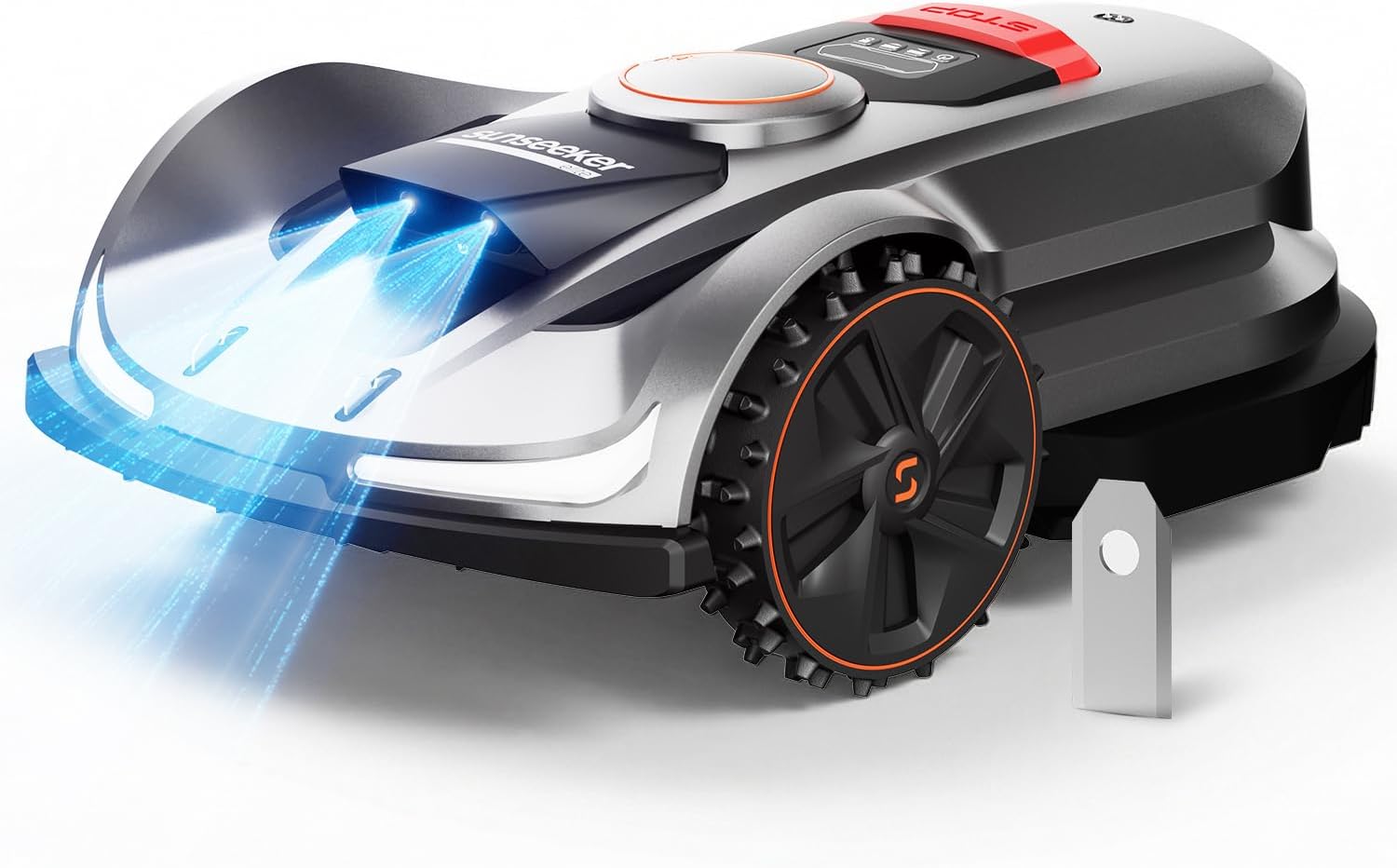
Best Overall for Most Yards: Sunseeker X7 AWD
This is the one I would put on a normal suburban lot with one problem slope. The coverage claim is three-quarters of an acre, which lines up with the size of yard where a robot mower stops being a novelty and starts being the reason you sold your walk-behind. It is wire-free, it uses RTK positioning, and it backs that up with vision AI, which is the combination I care about most.
Here is why the pairing matters. RTK alone is elegant and fragile. It needs a clear view of the sky, and the moment a mature tree line enters the picture, the mower is either stopping or guessing. Vision AI does not replace that, but it gives the machine a second opinion about where the lawn edge is when the satellite fix wanders. In my experience the mowers that fail badly are the ones with a single navigation source and no fallback.
All-wheel drive is the other headline. Every spring I watch mowers lose traction on wet grass, and AWD is the honest answer to that, more so than any slope number on a box. Slope ratings are marketing. I have watched a mower advertised for steep grades slide sideways on wet grass at a much gentler angle than the spec sheet promised. Drive to all four wheels and you buy yourself margin you will actually use in April.
The tradeoff is that wire-free means the install is a mapping session instead of a trench, and mapping sessions fail. If your property is ringed by mature trees, be honest with yourself about the sky view before you commit.
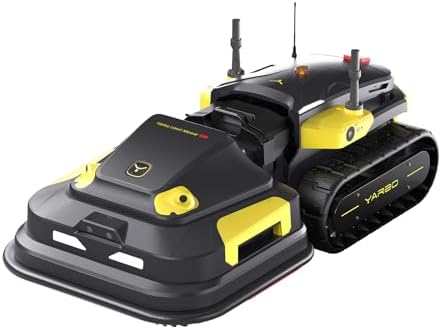
Best for Big Properties: YARBO Robot Lawn Mower Pro
This is a different category of machine, and I want to be clear about that. Six acres is not a lawn, it is a property. The YARBO Pro is wire-free and positioned around four seasons of yard care, which tells you the manufacturer is thinking about the machine as a platform rather than a single-purpose mower.
It is also the priciest thing on this page by a wide margin. Check current Amazon price before you get attached, because this is a purchase you make after you have walked your property with a string and stakes and decided that a six-acre coverage claim is the right shape for your land. On anything under an acre, you are paying for capability you will never use, and the machine will be doing laps of the same patch all week.
What I like about the positioning is the honesty of the acreage. A mower that claims six acres has to carry a real battery and real drive hardware, and that is the kind of overbuild that survives mud, dog toys, and the week in May when the grass grows four inches overnight. What I do not like is that this is a platform purchase, and platforms live or die on software. The app is a feature, not the mower. If scheduling fails after a firmware update, you own a very slow Roomba with a big price tag.
If you have the acreage and you want one machine to carry the season, this is the one to study. If you have a quarter acre, keep scrolling.
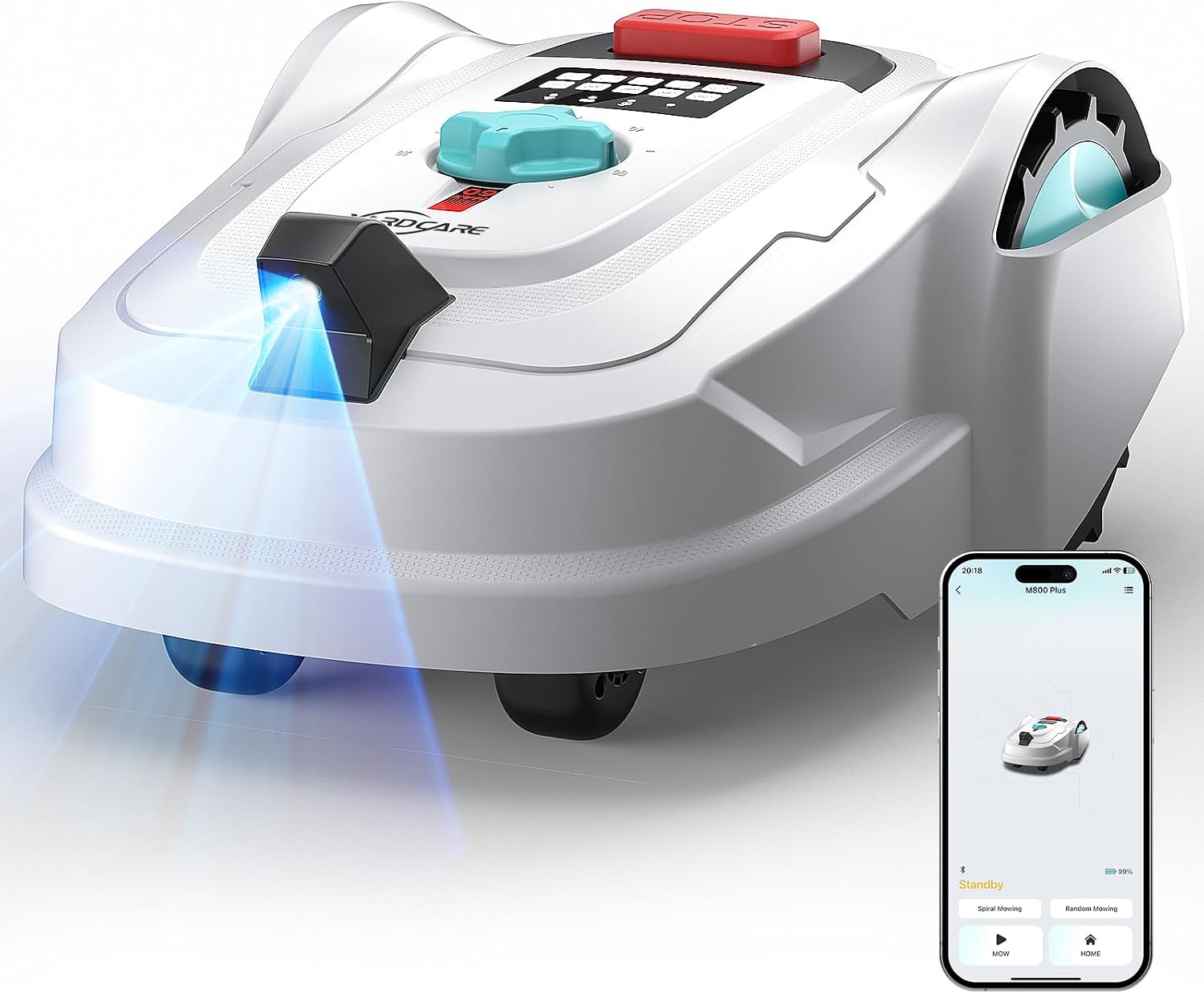
Best Small-Yard Entry: YARDCARE M800Plus
This is the entry point, and it is the one I recommend most often to people who are nervous about spending real money on a robot. The coverage claim is a fifth of an acre, which covers a lot of suburban front-and-back yards, and it uses GPS plus visual navigation rather than perimeter wire. It runs a 4.0Ah battery, it has obstacle avoidance, and it offers adjustable cutting height, which matters more than people think. Cutting height is how you survive a dry August without scalping the lawn into straw.
The bow-shaped path pattern is the detail I would watch. Mowing pattern is the difference between a lawn that looks striped and intentional and a lawn that looks like a toddler with a push mower got loose. A deliberate path strategy also means fewer passes over the same strip, which saves battery on a machine with a modest pack.
And that is the honest catch with any fifth-of-an-acre mower: the battery is sized for the claim, not for comfort. Expect it to run often. That is not a flaw. Mowing frequency beats mower quality every single time. A modest robot running daily will out-cut an expensive robot running weekly, and it will do it with less clumping and less thatch. The small machine that keeps up is worth more than the big machine that naps.
For a first robot, a rental property, or a yard with a garden bed maze and a dog that chases anything that moves, this is where I would start.
The Part Nobody Shops For: Mammotion LUBA 2 Charging Adapter
This is not a mower, and I am including it on purpose, because charging hardware is the failure point nobody plans for. This adapter is listed for charging the Mammotion LUBA 2 AWD 3000X, 3000HX, 5000X, and 5000HX, and it is specified as a 21.6V 12Ah battery power supply cable.
Read that list of models twice. Charging accessories are model-specific in a way that mower marketing never admits, and the fastest way to ruin a good machine is to feed it the wrong supply. If you own one of those LUBA 2 variants and your charging setup has failed, been chewed, been left in the rain, or gone missing in a move, this is the replacement path. If you own something else, this is not your part, and no amount of adapter improvisation is worth the risk to a battery pack.
Where it earns a place in a buying guide: docking and charging is half of the ownership experience. A mower that cannot find the dock in the dark, or that sits on a corroded contact all winter, is a mower you resent. Spares matter. Buy the right one.
How I judge a robot mower
I do not start with the mower. I start with the property, because the install is the product. My first pass on any yard is a walk with string and stakes: where does the boundary run, where is the slope, where does the dog leave things, where does the shade sit at 2 p.m. versus 6 p.m. If a yard has a heavy canopy and the machine is RTK-only, I say so before anyone spends money.
Then I look at four things. Coverage claim against the actual lawn area, because advertised acreage is optimistic and you want headroom. Drive and traction, because wet grass is the real test and slope ratings are tested on dry artificial turf. Cutting height range, because that is your drought insurance. And app quality, because scheduling is the whole point. If the schedule fails, nothing else matters.
I also watch the consumables. Blade life is the hidden cost of ownership. Cheap blades dull in a month, and a dull robot does not cut grass, it tears it, which leaves you with a lawn that looks worse than if you had never mowed it. I have replaced more blades than I can count and I have never once been happy about a blade that needs a special tool.
What the specs actually mean
Wire-free is not a synonym for easy. Perimeter wire is boring and it works. RTK is elegant and it fails under a maple tree. If I am installing for a client who wants reliability above all, I still lean wire. If I am installing for myself on an open lot, I will take the hybrid approach: RTK for the big picture, vision for the edges. Watch for the market to settle on exactly that combination, because a single navigation source is a single point of failure.
Slope ratings deserve a rant. A number on a box is a number on a box. What matters is traction, tire type, and whether the machine mows across the slope or up and down it. All-wheel drive is real capability. A percentage in the marketing copy is not.
Acreage claims are best-case numbers with a full battery, a clean dock, and no dog interference. Subtract for reality. If your yard is a third of an acre, a half-acre claim is a comfortable fit and a quarter-acre claim is a part-time job for the machine.
Robot mower comparison table
The table below is how I keep these straight when a client asks me to just tell them which one. Coverage figures are the manufacturer claims, not my measurements. Check current Amazon price on each, because these move.
| Product | Coverage claim | Navigation | Best yard | Watch out for |
|---|---|---|---|---|
 Visit on Amazon → YARDCARE M800Plus |
Up to 1/5 acre | GPS plus visual | Small suburban yards, first robot | Small battery, so it runs often |
 Visit on Amazon → Sunseeker X7 AWD |
Up to 0.75 acre | RTK plus Vision AI | Most yards with one real slope | Wire-free mapping needs sky view |
 Visit on Amazon → YARBO Robot Lawn Mower Pro |
Up to 6 acres | Wire-free, platform-based | Large rural properties | Highest cost here, and it is a software bet |
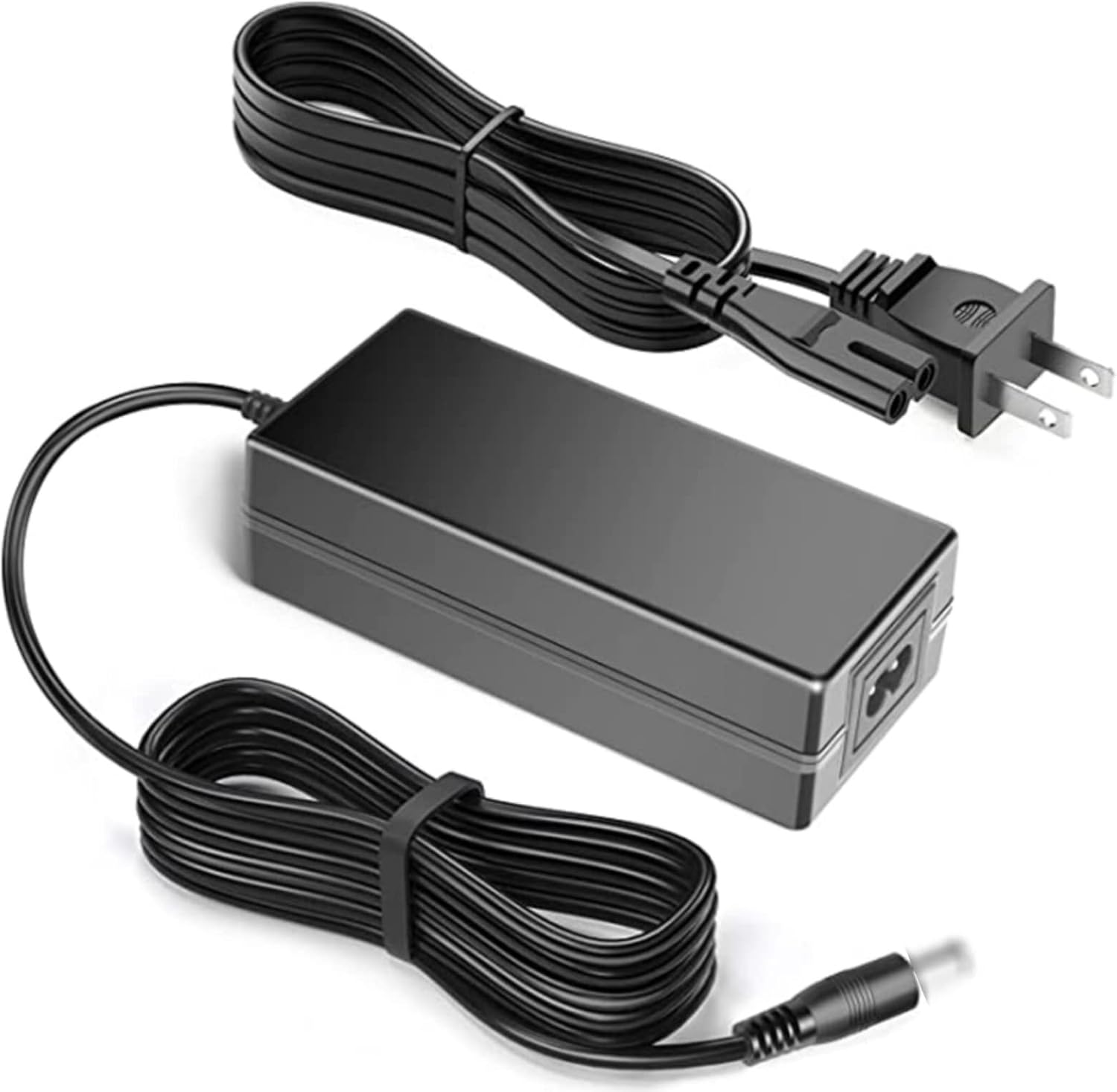 Visit on Amazon → Charging adapter for Mammotion LUBA 2 AWD |
Not a mower | Not applicable | LUBA 2 3000X, 3000HX, 5000X, 5000HX owners | Model-specific, verify yours before buying |
Where wire still beats RTK
If your yard is a bowl of shade, do not buy navigation that needs the sky. This is the single most common mistake I see. People buy the elegant system, then spend a season watching it stop under the same oak tree every afternoon. Wire does not care about the canopy. It cares about whether you buried the splice properly, and if you did, it will work for a decade.
Docking station placement is half the install
Put the dock somewhere with shade at midday, power within reach, and a clear approach run. A mower that has to reverse into a tight corner will miss the contacts, and a mower that misses the contacts in the dark is a mower sitting in the rain all night. This is the least glamorous fifteen minutes of the whole job and it decides how the next five years go.
Should you buy the Sunseeker X7 AWD?
Yes, for most people with a normal suburban lot and at least one slope that makes them nervous. The coverage claim fits a real yard, all-wheel drive is the feature that pays off in a wet spring, and pairing RTK with vision AI gives it a fallback when the sky view goes bad. If your property is a shaded bowl, think harder. If it is open grass with one hill, this is where I would put the money.
Should you buy the YARBO Robot Lawn Mower Pro?
Only if you actually have the acreage. On six acres, a wire-free platform machine is the difference between an all-day job and a background process. On a quarter acre, it is a very expensive way to mow the same strip all week. Check current Amazon price and be honest about your property size before you commit to the biggest machine here.
Should you buy the YARDCARE M800Plus?
Yes, if your lawn is a fifth of an acre or smaller and you want to find out whether robot mowing suits you without betting the budget. Adjustable cutting height, obstacle avoidance, and a navigation setup that skips the perimeter wire make it a reasonable first machine. Just accept that a small battery means frequent runs. Run it daily and it will keep up with a lawn that a weekly mower would lose.
Should you buy the Mammotion LUBA 2 charging adapter?
Only if you own one of the LUBA 2 AWD models it is listed for and your charging hardware has failed or gone missing. It is a spare part, not an upgrade, and it is the kind of purchase that saves an otherwise good machine from a slow death in the garage. Match the model. Charging accessories are not universal, and batteries are not forgiving.