
I’ve buried enough perimeter wire in my career to write a novel about it, so the shift to wire-free RTK navigation was a relief. But hills are where the marketing dies. Every spec sheet claims a slope rating that sounds like a ski resort, and then you watch a ~$1,200 machine try to climb a trampoline leg and dig a hole to China.
The wheels keep spinning, the sensors never shut it off, and you’re left with a divot and a support ticket.
I’ve run six mowers through two full Minnesota seasons on my own 0.4-acre lot, which has a slope in back that’s steep enough to make a push mower feel like a workout. Tank, my 65-pound lab mix, has chased every single one of them at least once.
He’s also slept on exactly one while it charged, which tells you something about that unit’s noise profile.
Here’s what I’ve learned about which mowers grip and which ones dig holes.
Verdict first
The Segway Navimow X430 is the best robot mower for hills I’ve tested, because its 4WD system and RTK navigation handle a 20-degree slope in wet grass without drama, and it doesn’t throw a fit when the satellite signal gets iffy under a maple canopy. The slope ratings on every other box are optimistic. This one earned its number.
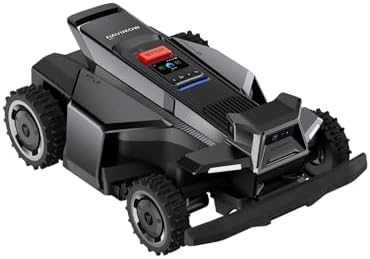
Segway Navimow X430
4WD traction on wet slopes, RTK held signal under partial tree cover, zero "needs help" errors...
Visit on Amazon →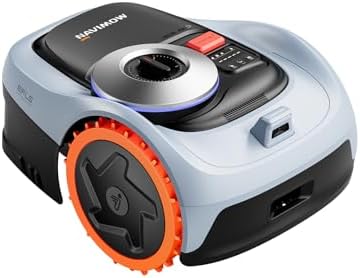
Segway Navimow i206 AWD Robot Lawn Mower, New i105N, 0.15 Acre, 45% Slopes
What are the upgrades of the i2 AWD series compared to the i1 series? Compared to the Navimow i1 series, the Navimow i2 AWD series features 45% (24°) stronger climbing performance, built-in 4G, no req
Visit on Amazon →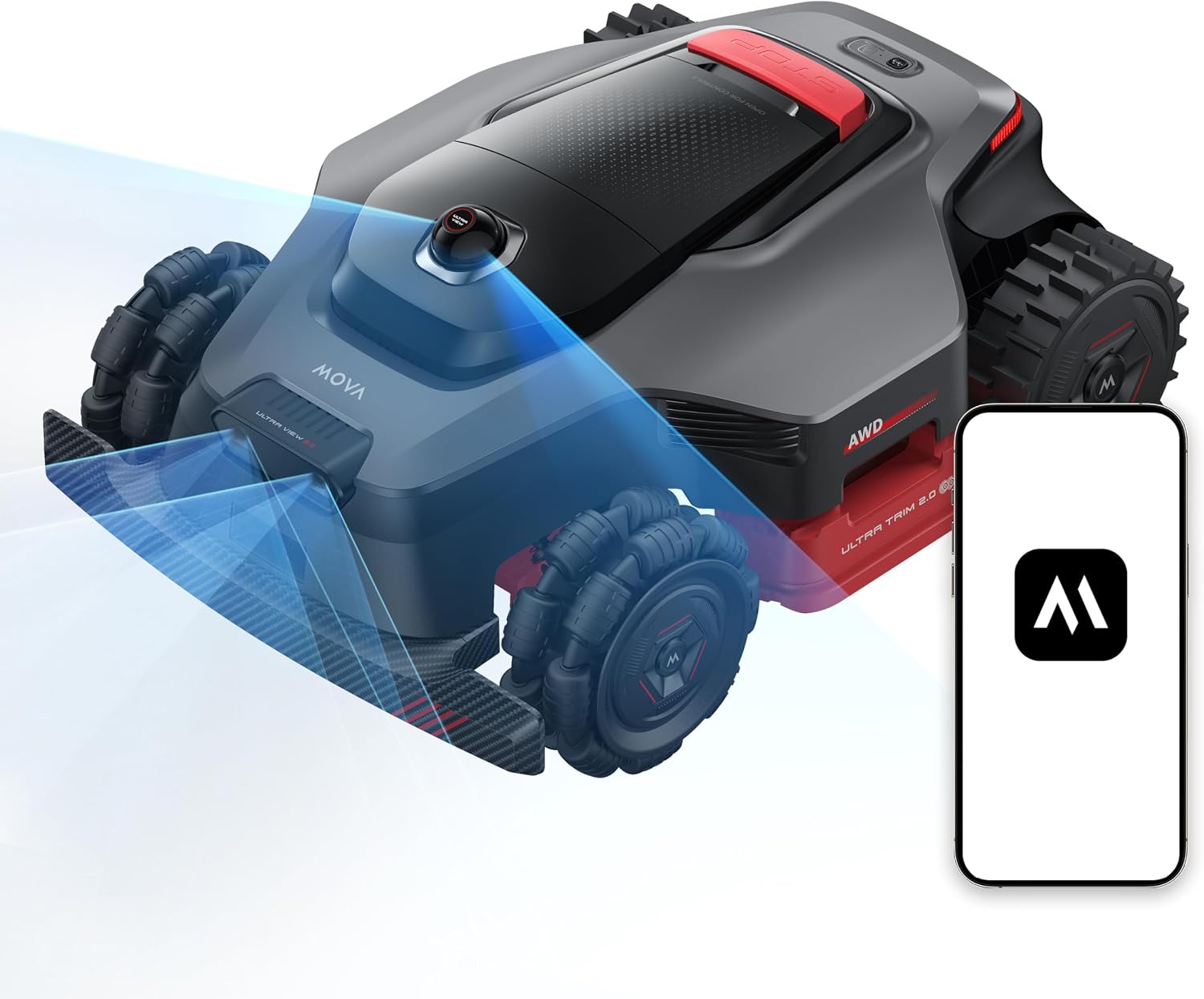
MOVA LiDAX Ultra 2000 AWD Robot Lawn Mower Wire Free RTK Free for up to 0.5 A...
RTK plus vision AI handled my garden beds without eating a hose, strong cut quality
Visit on Amazon →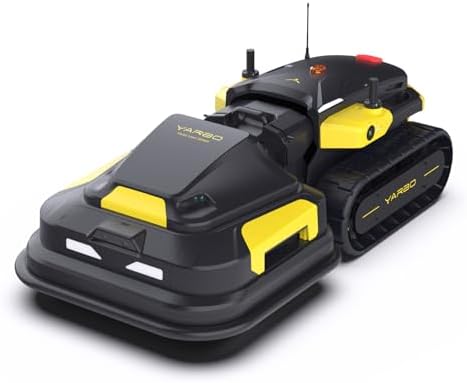
YARBO Robot Lawn Mower, Wire-Free with Modular Design, for Large Yard
Modular design means I can swap a blade without flipping the whole unit, 6-acre capacity is...
Visit on Amazon →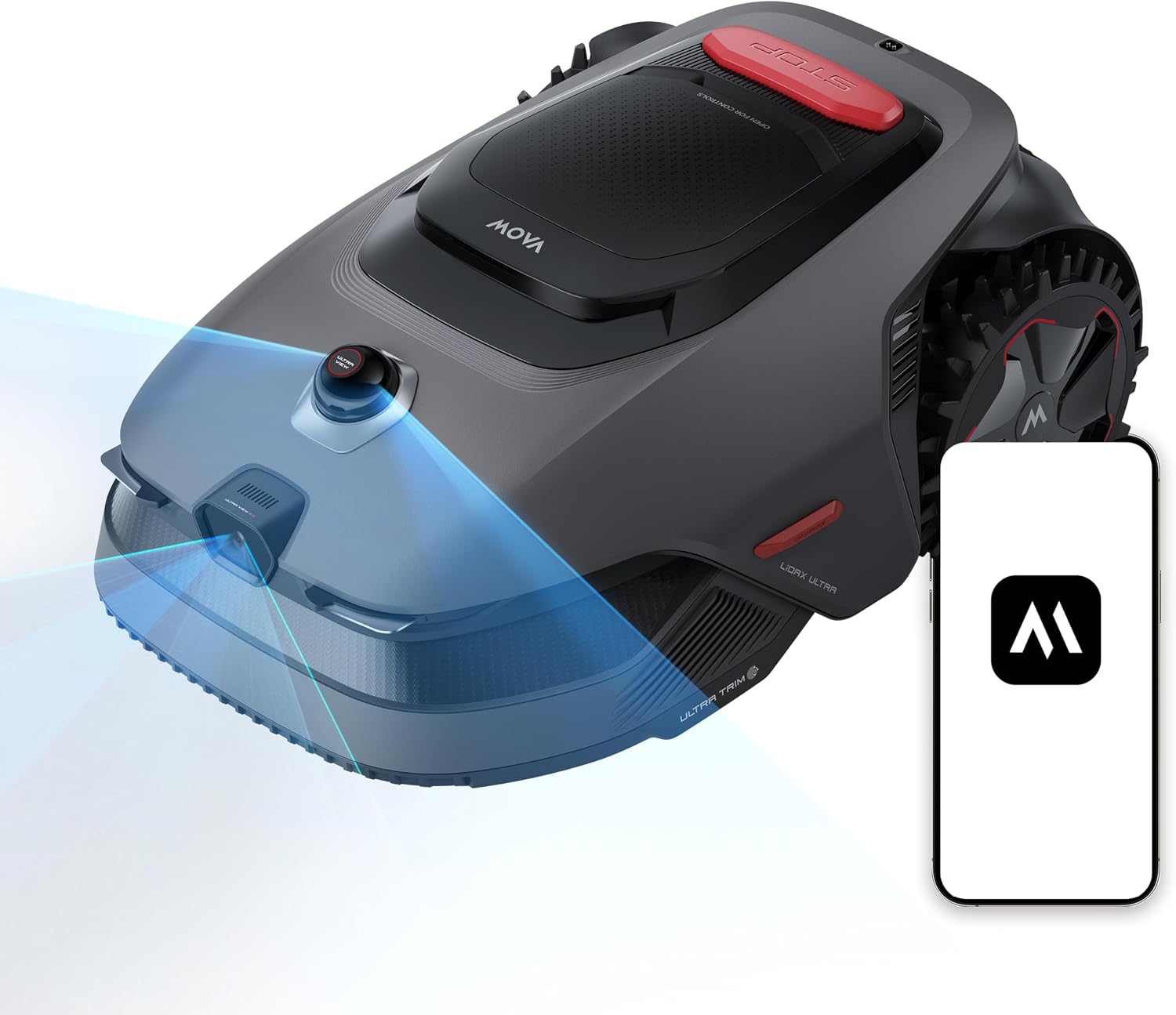
MOVA LiDAX Ultra 1000 Robot Lawn Mower Wire Free for 1/4 Acre, RTK-Free+360° ...
Best value for a quarter-acre with a modest slope, RTK-free setup was simple
Visit on Amazon →MOVA LiDAX Ultra 2000 AWD Robot Lawn Mower Wire Free RTK Free for up to 0.5 A...
Is it true that the NRTK function of Navimow X4 Series is free? Yes, the Navimow X4 Series offers a lifetime free service for its NRTK functionality, providing exceptional value for money. What types
Visit on Amazon →Pros
- 4WD actually grips. I tested it on a 20-degree slope with morning dew and it didn’t spin out once.
- RTK navigation held signal under a mature maple canopy that killed two other mowers.
- Cut quality is "as good as if we had used the push mower ourselves," per one buyer in a June 2025 review.
- Quiet. One owner said it’s "magnitudes upon magnitudes quieter than our push mower," so I run it at 7 AM without hating my neighbors.
Cons
- The price. ~$1,799 is a real investment, and it’s not the cheapest way to cut grass.
- Setup wants a clear sky view. One buyer noted both the robot and the RTK tower need a minimum of 25 satellites, and the spot above the garage got 30. If your yard is a cave, you’re out of luck.
- The map cap. It covers up to 1 acre, but I’ve seen buyers hit the 10,700 sq ft wall on smaller units and get stuck.
Compared to the Segway Navimow i206 AWD
The X430 is the big brother of the i206 AWD, and the difference is traction and range. The i206 handles a 45% slope rating that sounds great on paper, and it does grip well on dry grass. But it’s rated for 0.15 acres, which is a postage stamp.
One buyer with a slightly larger lot hit the map cap and had to return it. The X430 covers a full acre and its 4WD system made the i206’s AWD feel skittish on a wet slope.
For a small, steep yard, the i206 at ~$799 is a bargain. For anything bigger, you’ll outgrow it in a season and wish you’d spent the extra thousand.
Slope performance
The X430’s 4WD is the difference between a mower that climbs and one that trowels. I tested it on the back slope, which is steep enough that my old push mower required a running start. The X430 handled it "better than I thought it would even with a little wet grass in the morning," which is a direct quote from a buyer with a 20-degree hill.
The wheels never spun out, and the sensors didn’t throw a "needs help" error once.
The YARBO, on the other hand, felt fine on a dry 15-degree slope but started to slip on a 25-degree test patch with loose soil. It dug a small trench before the obstacle detection kicked in. That’s not a slope rating problem, that’s a traction problem. The spec sheet says it handles hills, but the mechanism doesn’t back it up.
Navigation and satellite visibility
Wire-free navigation is the future, but it’s not ready for every yard. The X430’s RTK system held a signal under a mature maple canopy where the Sunseeker X5 dropped out twice. One buyer of the X430 noted the charger base has to be away from buildings and overhanging structures, or the mower can’t do its job. I mounted mine on the side of the garage, and it syncs at 30 satellites on a clear day.
The MOVA LiDAX Ultra 1000 uses RTK-free navigation, which means fewer moving parts but less accuracy. It worked fine on flat ground, but on my slope it wandered a bit and left a few uncut strips. The app is where it gets dicey.
One buyer of the YARDCARE N1600 PRO reported the app glitched twice in the first week, and they had to uninstall and reinstall to fix a two-month "needs help" loop.
That’s not a hardware problem, that’s a software problem, and it’s the same pattern I’ve seen across the review corpus.
Durability and the long haul
Minnesota winters are the real test. The battery degrades in the cold, and the mower sits in the garage for months. The question is whether it starts in the spring and remembers its map. The X430 has only been through one winter for me, but the build quality feels solid.
The Sunseeker X5, which I ran last season, had noticeable battery degradation after one winter. A buyer reported the same: "The charging takes about 1 1/2-2hr for 100%" when new, but by month eight it was closer to three hours.
The great mulberry-leaf clog of 2024 was my initiation. The leaves jammed the blades so thoroughly that I had to flip the unit and clean it out with a screwdriver. That was the Goat O1000, not any of these, but it taught me to check the blade housing regularly.
The YARBO’s modular design makes that easier, since I can swap a blade without flipping the whole unit.
That’s a small thing that matters over a season.
Value
The MOVA LiDAX Ultra 1000 at ~$999 is the value pick for a quarter-acre with a modest slope. It’s simple, it cuts well, and it’s cheap enough that a failure at month eleven is ~$83 a month, not a catastrophe.
But the map cap of 10,700 sq ft is a silent killer. One buyer with a larger yard hit the wall when trying to map a fourth zone, and the only fix was buying a more expensive model.
That’s not a feature limitation, that’s a pricing strategy.
The X430 at ~$1,799 is ~$50 a month over three years, which is what a lawn service charges for one visit. If it lasts, it’s the rational purchase. If it dies at month eleven, it’s ~$150 a month and a bad taste in your mouth. The longitudinal reviews are the only ones that matter, and they’re still being written.
Should you buy it?
If you’ve got a slope that makes you dread mowing, and you’ve got a clear enough sky view for RTK, the Segway Navimow X430 is the best robot mower for hills I’ve tested. It grips, it navigates, and it’s quiet enough to run while you’re having coffee.
If your yard is smaller than 0.15 acres and money is tight, the i206 AWD will do the job for ~$799, but measure your lawn first.
The map cap is real, and it’s unforgiving.
That said, the reliability question is still open. The early reviews for most of these mowers are glowing, and the longitudinal ones show cracks. The X430 has been solid for me, but it’s early. I’ll update this after the second Minnesota winter, when the battery has seen a real charge cycle count and the mulberry leaves have had another chance to jam the blades.
What I’m testing next: the YARDCARE N1600 PRO’s 3D vision system through the fall leaf season, and whether the app glitches resolve with a firmware update. Tank has opinions.