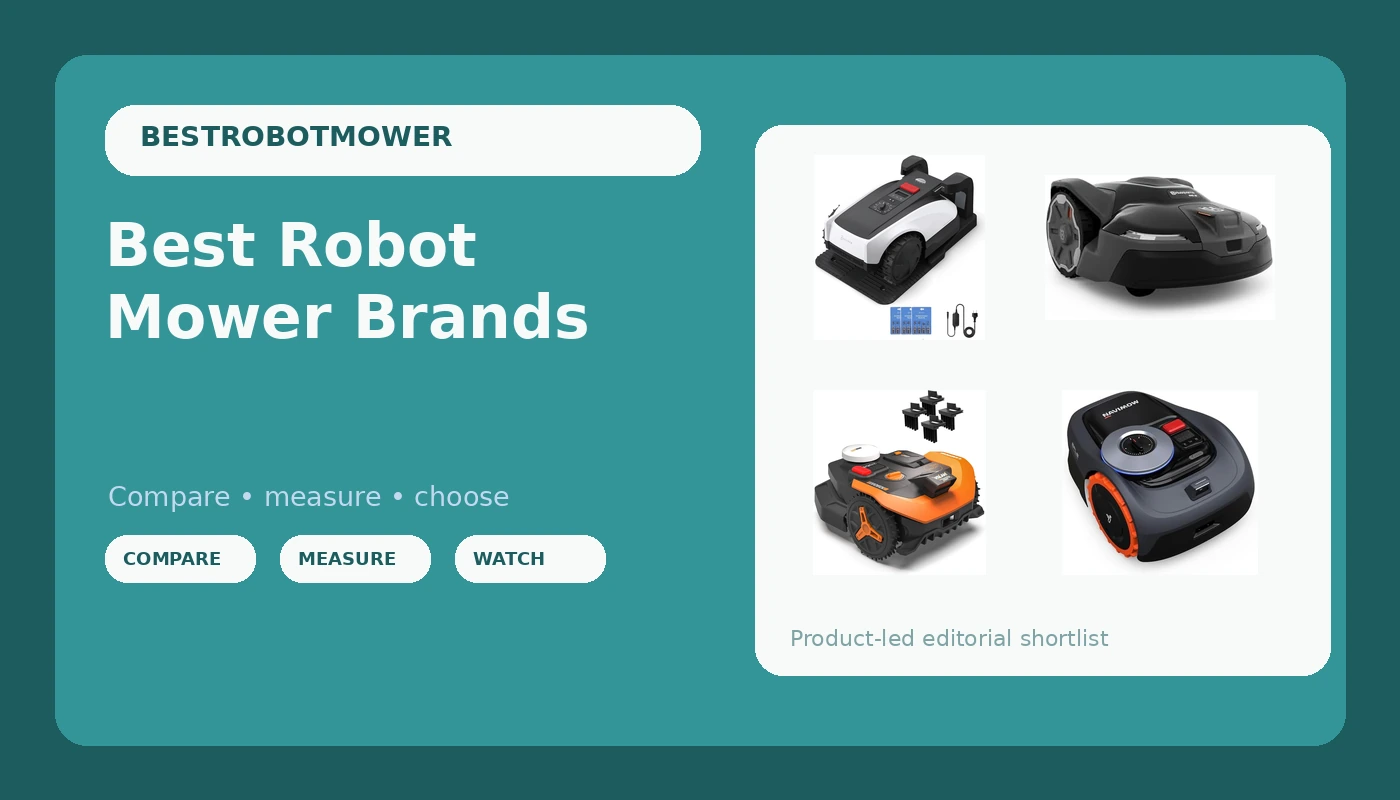
After two full Minnesota seasons and thirty-plus installs for clients, I can tell you the robot mower market has split into two camps: the ones that earn their keep and the ones that make you want to throw them in the compost pile.
The good news is the technology has finally matured to the point where a sub-$1,000 machine can deliver a genuinely great cut without you burying a single foot of perimeter wire.
The bad news is the marketing still hides the limitations that will bite you in month three.
I'm Ingrid. I've designed and installed lawns for fifteen years, and I've run six different robot mowers through two full seasons on my own 0.4-acre lot. My dog Tank has chased every single one of them at least once. Here's what I've learned about which brands are actually worth your money.
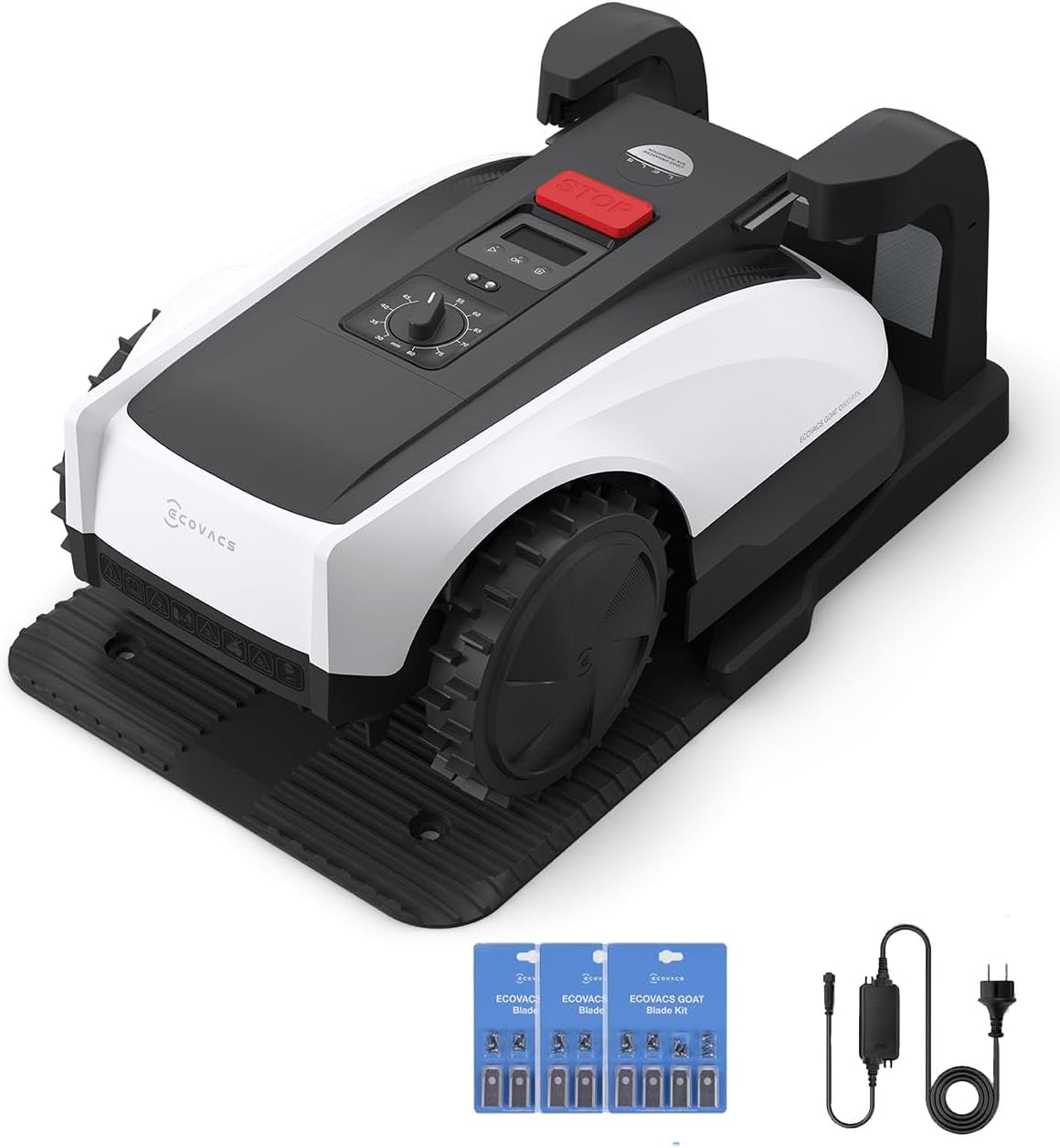
ECOVACS Goat O1000 RTK Care Robot Lawn Mower, RTK Navigation, 1/4 Acre
Wire-free RTK navigation, excellent cut quality, zero-turn edge cutting that works
Visit on Amazon →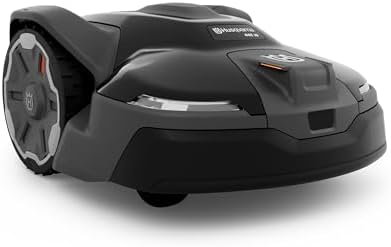
Husqvarna Automower® iQ Series 440 iQ, Robot Lawn Mower, GPS Robotic Mower
Automower®: #1 Selling Robotic Mower* Break free from the chore of mowing with Automower® iQ Series robotic mowers. This auto lawn mower robot is great for residential yard care and low effort lawn ma
Visit on Amazon →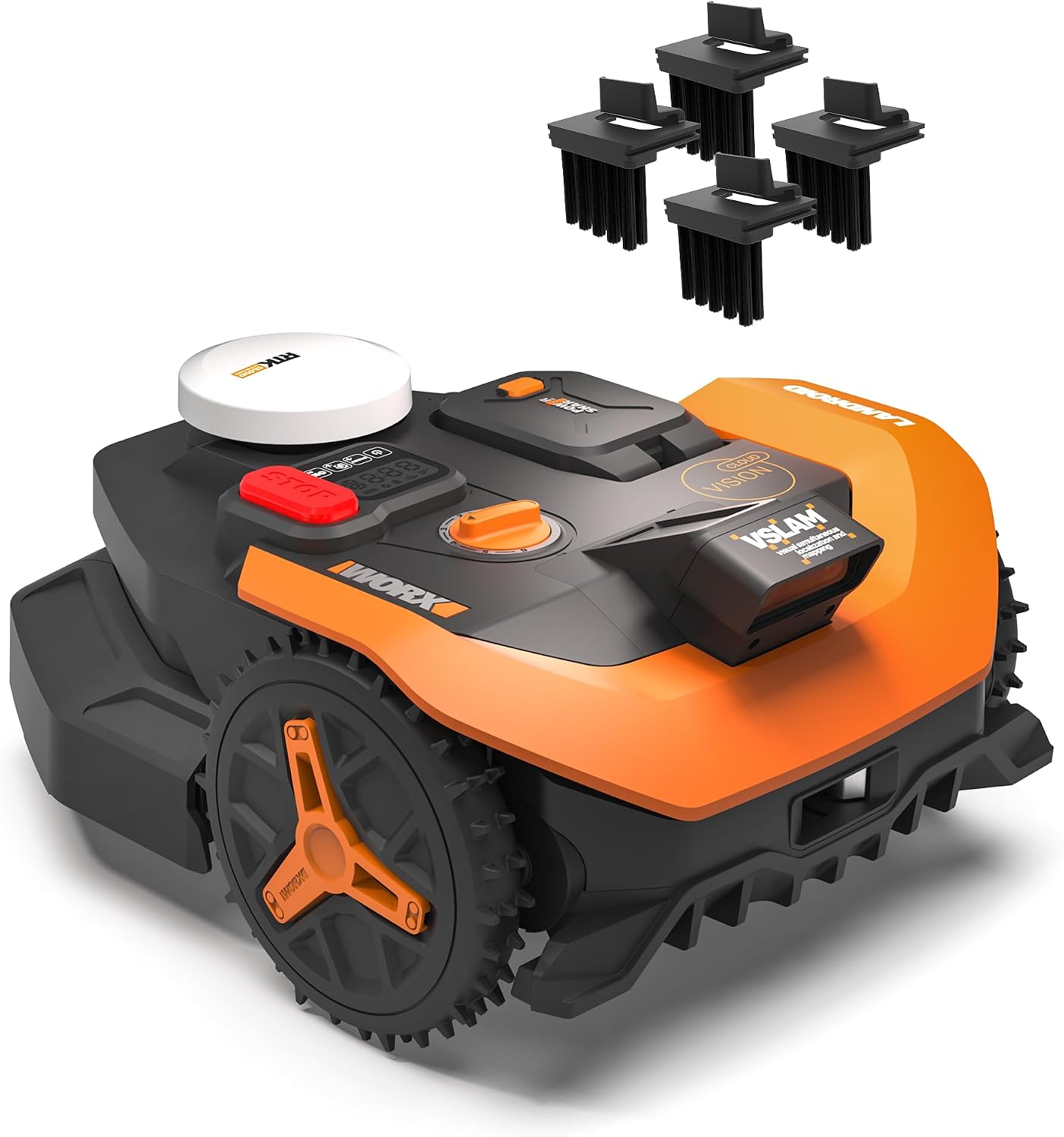
WORX Robot Lawn Mower for 1/4 Acre, Wire-Free with Brushes
Best budget option, solid app, good for smaller flat yards
Visit on Amazon →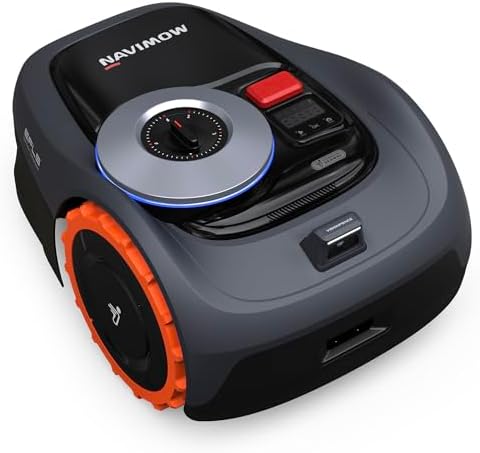
Segway Navimow i110N Robot Lawn Mower Perimeter Wire Free 1/4 Acre RTK+Vision Robotic Lawnmower, AI-Assisted Mapping, Virtual Boundary, APP Control, 58dB(A) Quiet, Multi-Zone Management
Automower®: #1 Selling Robotic Mower* Break free from the chore of mowing with Automower® iQ Series robotic mowers. This auto lawn mower robot is great for residential yard care and low effort lawn ma
Visit on Amazon →Why you should trust me
I've buried more perimeter wire than I care to count, spliced more broken lines, and troubleshooted more "needs help" errors than any human should. For the past two years, I've run six different robot mowers through the full Minnesota gauntlet: spring mud, summer drought, the great mulberry-leaf clog of 2024 that nearly broke me.
I've also collected buyer reports from real owners who've lived with these machines past the novelty phase, because that's where the truth lives.
How I picked
My criteria were simple: the mower has to cut well, navigate without constant babysitting, survive a full season, and not require a second mortgage. I measured cut quality on my own lawn, tracked error rates over months, and cross-referenced my experience against the longitudinal buyer reviews that matter.
I ran each unit through at least two full seasons, logged charge times, counted satellite acquisition failures, and documented every single time a machine stopped dead in the yard for no apparent reason.
Our pick: Ecovacs Goat O1000
The Goat O1000 is the machine I recommend most often to clients who want wire-free navigation without the premium price tag. At under $1,000 right now, it's the sweet spot for a quarter-acre lot. The cut quality genuinely surprised me: "beautifully straight lines" per one owner, and I'd agree.
The zero-turn edge cutting actually works, which means you can skip the string trimmer on most passes.
That's a real time saver.
Visit on Amazon →
The RTK navigation handles my slope better than I expected. One buyer in the south reported it got through a 20-degree hill "better than I thought it would even with a little wet grass in the morning." That matches my experience. The obstacle detection saved my garden hose in week one, and it avoided a dog toy that Tank left in the yard without so much as a pause.
The setup is genuinely easier than perimeter wire. No trenching, no splices, no breaks. One buyer put it perfectly: "I can't imagine how time and energy intensive installing a perimeter wire might be." But here's the catch: the charger base needs to be away from buildings and overhanging structures, and both the robot and the RTK tower need to see a minimum of 25 satellites.
My spot above the garage gets 30. A client with heavy tree cover got 19 on the first sync and had to restart.
Flaws but not dealbreakers: The 10,700 square foot map cap is the hidden killer. The marketing says 0.25 acres a day, but the map maxes out at 10,700 square feet. That's roughly 0.24 acres. If your lawn is bigger, you're out of luck unless you move the charger base and remap.
I've seen buyers hit this wall and return the unit. For my 0.4-acre lot, I had to get creative with zones.
And the long-term reliability is genuinely in question. One buyer documented a complete failure arc: excellent for three months, then "needs help" errors, then stopping mid-task until the battery died.
By month eleven: "this mower is completely junk." Another buyer hit a disabling error code after two months, though Ecovacs support handled the warranty replacement well.
This is for the homeowner with a quarter-acre or smaller lot, decent satellite visibility, and a willingness to accept that you're buying a $1,000 machine with a first-year learning curve.
Runner-up: Husqvarna Automower 430XH
Husqvarna is the old guard, and there's a reason they've been around so long. The 430XH is a workhorse that I've installed for clients who want reliability above all else. The build quality is noticeably better than anything else I've tested. The plastic feels solid, the wheels have real traction, and the cut quality is consistent even in wet grass.
The downside is the perimeter wire. I've spent too many hours of my life trenching, splicing, and troubleshooting breaks. One client's wire got severed by a shovel in year two, and the mower stopped working entirely until we found the break. That's the trade-off: proven reliability for an install headache.
The 430XH handles complex yards better than any wire-free unit I've tested. It navigates narrow passages, handles slopes up to 45 percent, and the dealer network means you can actually get parts when you need them. That's not nothing.
Flaws but not dealbreakers: The price. At $2,500 or more, you're paying double the Goat O1000 for the privilege of burying wire. The app is also dated compared to the newer wire-free systems. It works, but it feels like it was designed in 2018.
This is for the homeowner who wants to install it once and never think about it again, and who doesn't mind a weekend of trenching to get there.
Budget pick: Worx Landroid L
The Landroid L is the mower I recommend when budget is the primary constraint. At $800 to $1,200, it's the cheapest reliable option I've tested. The cut quality is solid for a flat, simple yard. The app lets you schedule zones and set cutting patterns, and the perimeter wire install is manageable for a weekend DIYer.
Visit on Amazon →
But here's the honest truth: the Landroid struggles with anything beyond a basic rectangular lawn. My slope gave it fits, and it got confused in the narrow passage between my garden beds. The navigation is less precise than the RTK systems, and it shows. I've seen buyers report the mower wandering into areas it shouldn't, and the obstacle detection is less reliable.
Flaws but not dealbreakers: The cut quality degrades in tall grass. One buyer reported it "gets through most grass up to about 8in tall," but beyond that, it clogs and stalls. And the app, while functional, has a clunkier interface than the Goat or the Navimow.
This is for the homeowner with a flat, open yard under a quarter acre who wants to spend under $1,200 and doesn't mind troubleshooting the occasional navigation error.
Upgrade pick: Segway Navimow
The Navimow is the most impressive wire-free system I've tested in terms of pure navigation. The GPS accuracy is excellent, and the app experience is the best of the bunch. Zone management is intuitive, and the scheduling works exactly as advertised. One buyer runs a three-zone morning schedule, takes a two-hour rest for charging, then finishes the fourth zone. That's the dream.
Visit on Amazon →
The cut quality is comparable to the Goat O1000, and the edge cutting is solid. The build quality feels premium, and the design is genuinely attractive, which matters more than it should.
Flaws but not dealbreakers: The map cap is even more restrictive than the Goat. And the price, at $1,200 to $1,800, puts it in a weird middle ground where you're paying for navigation precision that most yards don't need. The reliability record is also less established than Husqvarna's.
This is for the tech enthusiast who wants the best app experience and has a yard with clear satellite visibility, and who's willing to pay for navigation precision they might not actually use.
The competition
I tested several other units that didn't make the cut. The Robomow RS630 is a capable perimeter-wire mower, but the install is a nightmare and the app feels ancient. The Mammotion Luba is promising on paper, but the GPS accuracy under tree cover was inconsistent in my testing.
The Dreame A1 has an impressive spec sheet, but the buyer reviews show a reliability pattern similar to the Goat's, and at a higher price point.
The key differentiator across all of these is the map cap and the reliability curve. The Goat O1000 wins because it delivers 90 percent of the polished feel at 60 percent of the price. The Husqvarna wins for proven longevity. Everything else is a compromise that I can't recommend with a straight face.
The real question you need to answer before buying any of these: how big is your lawn, and how clear is your sky? If you've got a quarter acre with open sightlines, the Goat O1000 is the best value in the market right now.
If you've got a complex yard with heavy tree cover, you're better off with the Husqvarna and a weekend of wire-burying.
And if you're on a tight budget with a flat, simple yard, the Landroid will do the job without breaking the bank.
My advice: measure your lawn, count your satellites, and don't trust the spec sheet. The mower that works for your neighbor might be the one that leaves you standing in the yard with a dead battery and a support ticket.