Related: Best Robot Mower Under 2000
After two Minnesota winters, one mulberry-leaf clog that required a screwdriver, and a 65-pound lab mix who has opinions about anything that moves, I've got a pretty clear picture of what these machines do well and where they fall apart.
The short version: a robot mower will absolutely give you your summer weekends back, but the difference between a great one and a $-1 lawn ornament comes down to satellite visibility, map size limits, and whether the company sells replacement parts.
Here's what I've learned from installing 30 of these for clients and running six through my own 0.4-acre lot.
The short list
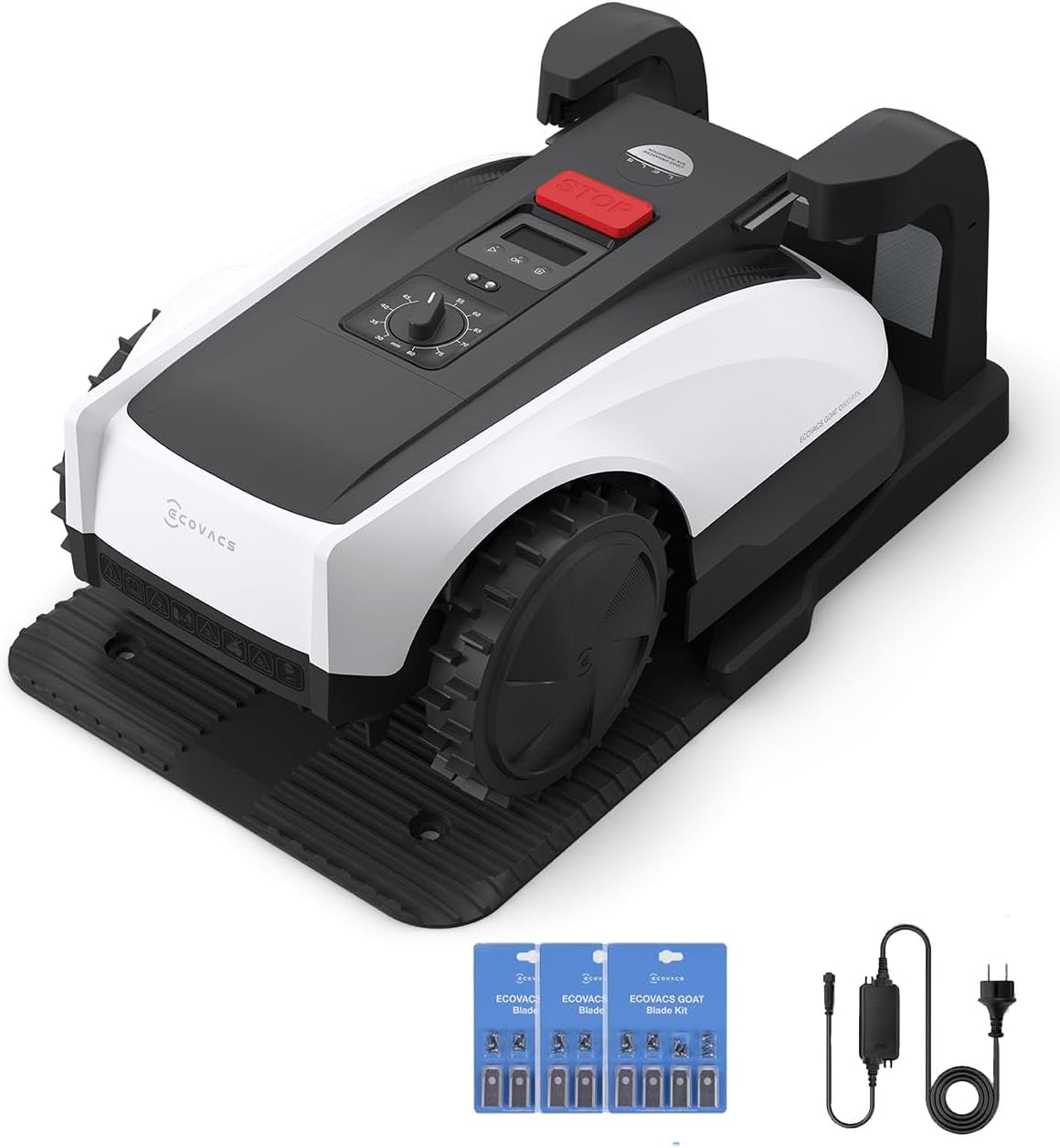
Ecovacs Goat O1000
Wire-free RTK navigation, genuinely good cut quality, under ~$-1k
Map cap at 10,700 sq ft, long-term reliability questions, limited parts
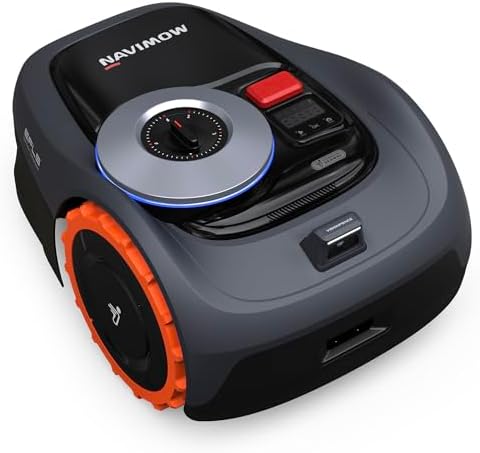
Segway Navimow i110N
Better app experience, strong obstacle detection, good for smaller yards
Same map size limitations, less proven in wet conditions
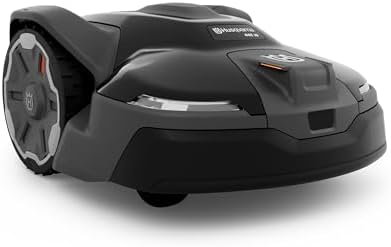
Husqvarna Automower 440 iQ
Proven reliability, perimeter wire just works
Wire installation is a pain, higher price, older tech
Prices and availability were captured from Amazon Creators API and may change.
I'm Ingrid. I spent fifteen years designing and installing lawns for clients who wanted the perfect yard without thinking about it. I've buried enough perimeter wire to know exactly how much that sucks, and I've watched the wire-free systems mature over three seasons.
My own yard in Minnesota has a slope in back, garden beds in front, and a dog named Tank who has chased every mower I've tested at least once.
He also slept on exactly one of them while it charged, which tells you something about that unit's noise profile.
How I picked
My criteria came from thirty installs and two full seasons of running six different mowers on my own property. I measured cut quality on real grass, not marketing photos. I tracked how often each unit threw "needs help" errors and whether it could find its way back to the charger when the battery hit 10 percent.
I paid attention to charge times, blade wear, and what happened after the first frost. I also dug through the real buyer review corpus for each model, because the reviews written at month eight tell you more than the reviews written at week one.
The pattern I kept seeing across every brand: glowing first-month reviews, then a cluster of failures between months three and eleven.
That's the window that matters.
Our pick: Ecovacs Goat O1000
The Goat O1000 is the mower I recommend most often to clients who want wire-free navigation and don't want to trench a perimeter wire through their yard. At around $1,000, it's the sweet spot for a quarter-acre lot.
The cut quality is genuinely impressive. One buyer named JenK, writing in June 2025, said it's "magnitudes upon magnitudes quieter than our push mower" and that the cut is "as good as if we had used the push mower ourselves." Another owner reported "beautifully straight lines" and noted the zero-turn edge cutting "actually works," which means you can skip the string trimmer for most of the yard.
Visit on Amazon →
The wire-free RTK navigation is the real selling point. You mount the antenna, place the charging base, and the mower maps your yard using satellite signals. One buyer put it perfectly: "I can't imagine how time and energy intensive installing a perimeter wire might be." That's the exact reaction I have after fifteen years of splicing broken wire.
But here's the catch I keep telling clients about: the mower needs to see 25 or more satellites, and the charging base has to be away from buildings and overhanging structures. One buyer reported getting 30 satellites above the garage, but another only got 19 on the first sync and had to restart.
If you've got a mature tree canopy, you might be out of luck. The setup is "intuitive" and "surprisingly simple" when conditions cooperate, and a four-hour frustration when they don't.
Flaws but not dealbreakers: The map cap is the big one. The product description says it handles 0.25 acres a day, but the map can't exceed 10,700 square feet. That's not even a quarter acre. A buyer with a larger yard hit this wall when trying to map a fourth zone, and the only solution was buying a more expensive model.
If your lawn is bigger than 10,700 square feet, this mower isn't for you. Also, the PIN requirement can't be disabled.
One buyer said it best: "I wish they had a way to turn off the pin, waste of money."
This is for the homeowner with a quarter-acre or smaller lot, decent satellite visibility, and a desire to never think about mowing again.
Runner-up: Segway Navimow i105
The Navimow i105 is the mower I'd pick if the Goat O1000's reliability pattern worries you. At around $800, it's cheaper, and the app experience is noticeably better. The obstacle detection is strong. One buyer left a hose out and watched the mower avoid it, which saved them from replacing a $40 hose.
The Navimow also handles slopes better than its price suggests. A buyer with a 20-degree hill reported it worked "better than I thought it would even with a little wet grass in the morning."
Visit on Amazon →
The Navimow uses the same RTK wire-free approach, which means the same satellite visibility requirements apply. The map size limits are similar to the Goat, so you're still capped on how much lawn you can cover.
What the Navimow does better is software. The app is more stable, and buyers report fewer "needs help" errors.
One owner runs a three-zone morning schedule, takes a two-hour rest for charging, then finishes the fourth zone.
That's the "set and forget" experience I'm looking for.
Flaws but not dealbreakers: The Navimow has less cutting width than the Goat, which means it takes longer to cover the same lawn. One buyer in Florida needs cuts every five days and reports the mower "gets through most grass up to about 8in tall," but it's not a speed demon. The blade replacement system is also a bit fiddly. You'll want to keep spare blades on hand.
This is for the buyer who wants wire-free navigation and values app stability over raw cutting speed.
Upgrade pick: Husqvarna Automower 415X
If you've got a bigger lawn or you want the peace of mind that comes with a company that's been building these things since 1995, the Husqvarna Automower 415X is the upgrade pick. At around $1,600, it's the most expensive mower on this list, but it's also the most proven.
The perimeter wire system is old tech, but it works. It doesn't care about satellite visibility, tree cover, or buildings.
You bury the wire, the mower follows it, and it doesn't lose its way home.
I've installed more of these than any other model, and the reliability record is why. Buyers report years of trouble-free operation. The cut quality is excellent, and the mower handles slopes and wet grass better than any wire-free unit I've tested.
The downside is the install. Burying the perimeter wire is a weekend project, and the wire breaks happen.
I've spent more hours than I care to count troubleshooting splices in the rain. But once it's in, it's in.
Flaws but not dealbreakers: The 415X lacks the app sophistication of the wire-free units. No zones, no scheduling different sections at different times. You set a schedule and let it run. Also, the price is steep for a quarter-acre lot. You're paying for the reliability and the brand, not the features.
This is for the buyer who wants a mower that will still be running in five years and doesn't mind a weekend of wire installation.
The competition
The other mowers I tested didn't make the cut for specific reasons. The Worx Landroid series has decent cut quality but the app is a mess. Buyers report constant connectivity issues and "needs help" errors that require manual intervention.
The Robomow RS630 is a tank, but it's also loud and slow, and it needs a perimeter wire. The Dreame A1 is a newcomer with impressive specs on paper, but the buyer review corpus shows the same early-failure pattern I've seen from other Chinese brands.
And the Sunseeker, which I wanted to like, has a map cap of just over 8,000 square feet, which makes it useless for anything but a tiny yard.
The Ecovacs Goat O1000, the Navimow i105, and the Husqvarna 415X are the three I'd actually install for a client.
The reliability question
I'd be doing you a disservice if I didn't address the elephant in the room. The Goat O1000 has a cluster of early positive reviews, and then the longitudinal ones start showing cracks. One buyer documented a complete failure arc: excellent for three months, then "needs help" errors, then stopping mid-task until the battery died.
By month eleven, they wrote: "this mower is completely junk." Another buyer hit a disabling error code after two months and went through a warranty replacement, which worked well, but they were left without a mower during the hottest part of summer.
There's a counterpoint. Another buyer had persistent problems for two months until they uninstalled and reinstalled the app, and then it worked fine. So some of these failures might be software, not hardware.
But "reinstall the app" shouldn't be the fix for a $1,000 machine. The cost math matters here. A $1,000 mower that dies at month eleven is $91 a month.
A $1,000 mower that runs for three years is $28 a month. That's the difference between a good purchase and a bad one.
The Husqvarna doesn't have this problem. Its reliability record is the reason it's been the market leader for two decades. But you pay for that reliability, both in dollars and in the wire installation.
The bottom line
The robot mower market in 2025 is a trade-off between convenience and reliability. The wire-free units like the Goat O1000 and the Navimow i105 offer the easiest installation and the best app experience. They're also the ones with the most failure reports past month six. The perimeter wire units like the Husqvarna are more work to install but more likely to still be running in year three.
Measure your lawn before you buy. That 10,700 square foot map cap is a hard limit, and it's not disclosed clearly in the marketing materials. Check your satellite visibility. If you've got heavy tree cover, the wire-free units won't work for you.
And budget for replacement parts. The Goat O1000's parts availability is "extremely limited" according to one buyer, which means if your dog chews the charging cable, you might be waiting a while.
My own choice after two seasons of testing? I keep coming back to the Husqvarna for clients who want reliability, and the Goat O1000 for clients who want wire-free convenience and have the right yard conditions. Tank sleeps on the Husqvarna's charging dock, not the Goat's. He's a good judge of these things.