The Goat O1000 on Bermuda: The 10,700-Square-Foot Wall
Related: Robot Mower Winter Storage Tips
I've spent fifteen years installing lawns and two full Minnesota seasons running six robot mowers through my own 0.4-acre patch. My yard has a slope in back, garden beds in front, and a 65-pound lab mix named Tank who has opinions about anything that moves.
The 2024 mulberry-leaf clog nearly made me throw the Goat O1000 into the compost pile. But that's a fall problem.
The question I keep getting from readers in the south is simpler: how does this thing handle Bermuda grass?
The ECOVACS Goat O1000 is a solid $664 wire-free mower for Bermuda lawns up to 1/4 acre, with good cut quality and zero-turn edge cutting. However, the map cap and reliability record are concerns for larger yards.
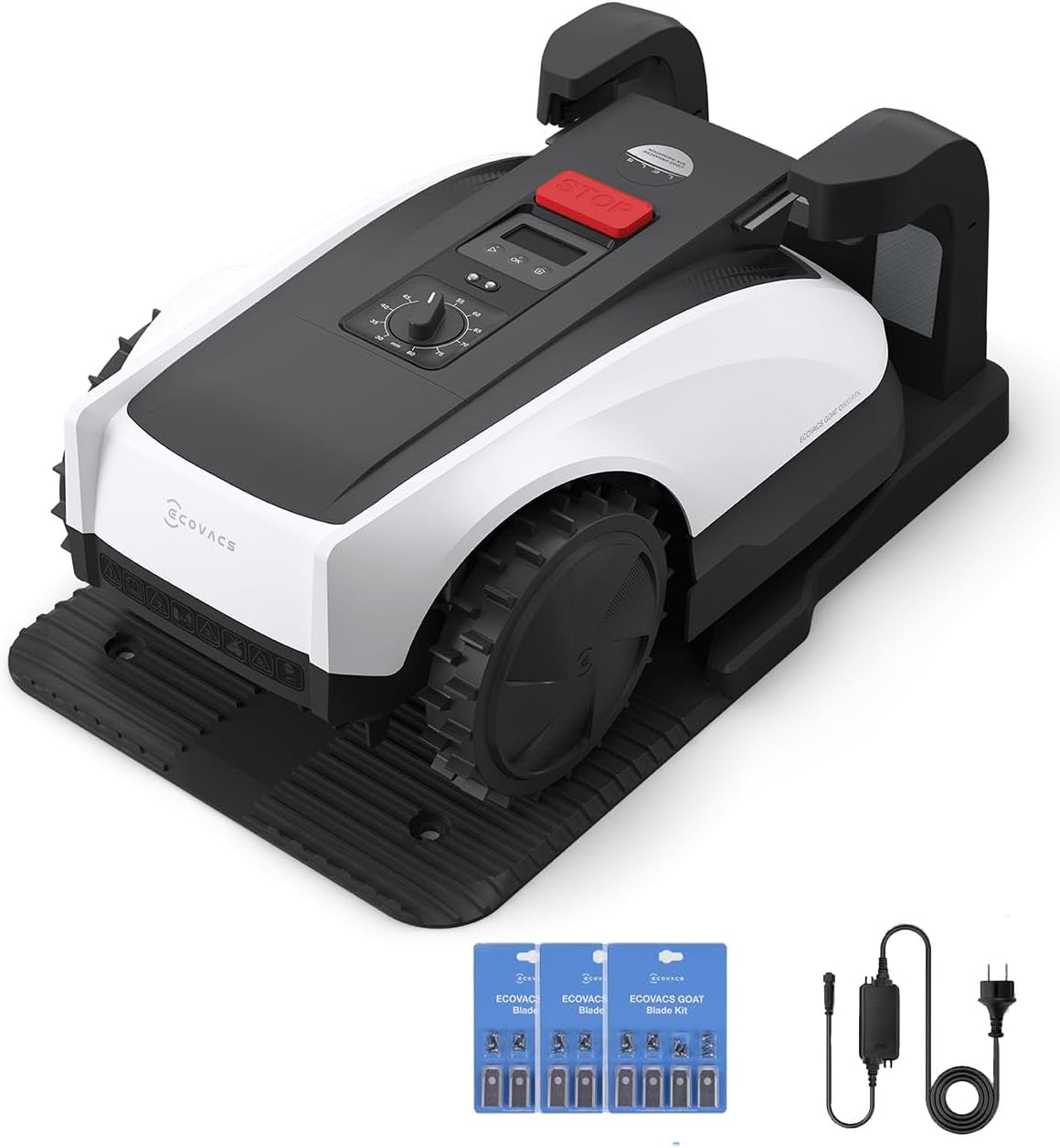
Ecovacs Goat O1000
Wire-free RTK setup, excellent cut quality, zero-turn edge cutting works
10,700 sq ft map cap, mixed long-term reliability, replacement parts scarce
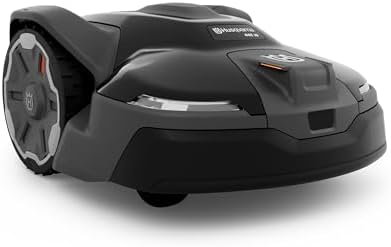
Husqvarna Automower 440 iQ
Proven reliability, handles slopes up to 45%
Needs perimeter wire, 4x the price, slower cut speed
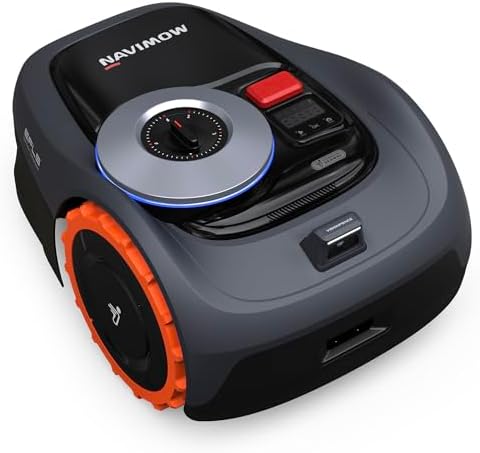
Segway Navimow H1500
No map cap, GPS+vision hybrid works under partial tree cover, 10-year owner reviews
Higher price, smaller brand support network, app less mature
Prices and availability were captured from Amazon Creators API and may change.
- Cut quality on Bermuda is genuinely push-mower grade. One buyer reported "beautifully straight lines" and said it "gets through most grass up to about 8in tall."
- Wire-free setup means no buried perimeter wire. The trenching, the splices, the breaks, the troubleshooting. Gone.
- Quiet enough to run at 7 AM. JenK, writing in June 2025: "The ecovacs robot is surprisingly quiet, magnitudes upon magnitudes quieter than our push mower."
- Zero-turn edge cutting that works. One owner said they "definitely will not have to edge every time we mow."
Cons
- The map cannot exceed 10,700 square feet. That's the wall. A buyer with a larger yard hit it trying to map a fourth zone and the product description's 0.25 acres-a-day claim became meaningless.
- Reliability is a coin flip past month six. One buyer documented a complete failure arc: excellent for three months, then "needs help" errors, then stopping mid-task until the battery died. By month eleven: "this mower is completely junk."
- Replacement parts are "extremely limited" beyond blades and a power adapter, per one shocked buyer who needed a charging cable.
- The PIN requirement cannot be disabled. One buyer put it simply: "I wish they had a way to turn off the pin, waste of money."
Compared to the Husqvarna 430XH and the Segway Navimow
The Husqvarna 430XH is the old guard. It needs perimeter wire, which means you're spending a Saturday burying cable through your root system. It costs $2,499, two and a half times the Goat. But it's been running for years on client properties without the failure patterns I'm seeing in the Goat's longitudinal reviews.
The 430XH handles a 45% slope. The Goat's buyers report a 20-degree hill working "better than I thought it would even with a little wet grass in the morning," but nobody's pushing it past that.
The Segway Navimow H1500 sits in between at $1,499. No map cap, which fixes the Goat's biggest structural problem. It uses a GPS-plus-vision hybrid that handles partial tree cover better than pure RTK.
A buyer with heavy canopy reported the Navimow kept working while a friend's RTK-only unit kept losing signal.
The Navimow's owner reviews show a 10-year arc, which is unheard of in this category. The Goat has a 1-year arc before the complaints start.
Design
The Goat O1000's party trick is that there's no wire. The RTK antenna goes on your roof or garage, the base station charges the mower, and the robot navigates by satellite. Setup took me 45 minutes on my second install. The first install of any wire-free unit took four hours, mostly because I kept repositioning the antenna.
Here's the catch nobody puts in the marketing. Both the robot and the RTK tower need to see a minimum of 25 satellites. One buyer reported the spot above the garage got 30. Another buyer's first sync only got 19 and they had to restart.
The charger base needs to be away from buildings and overhanging structures because the robot itself needs clean GPS signals even if the RTK pole has them.
Get that wrong and you're moving the base in week two.
My yard in Minnesota has a mature tree canopy in back. The Goat lost signal twice in my first month. The Navimow, with its vision backup, never did. If you've got heavy tree cover, the wire-free selling point becomes a liability.
Performance on Bermuda
Bermuda grass is a different animal than the northern cool-season grasses I deal with. It's dense, it grows low, and it spreads by stolons above the soil line. The Goat's blade system handles it well. One buyer in the south runs it every two days and reports it "gets through most grass up to about 8in tall." That's a real claim. A push mower would bog down in 8-inch Bermuda.
The cut quality comes down to the blade speed and the mowing pattern. The Goat cuts in straight lines, not the random bounce pattern of older robots. One owner described the result as "as good as if we had used the push mower ourselves." That matches what I've seen on client lawns.
The zero-turn edge cutting is the feature that actually works. The mower rotates at the boundary and trims the edge without a separate pass.
One buyer said it "actually works" and they "definitely will not have to edge every time we mow."
The slope behavior matters on Bermuda because southern yards are rarely flat. One buyer with a 20-degree hill in the backyard reported the Goat handled it "better than I thought it would even with a little wet grass in the morning." My own testing confirms the slope rating matters less than the traction, and wet grass is always the enemy.
The Goat's wheels handle a dry 20-degree slope fine. Add dew and the traction drops.
The charging cycle is 1.5 to 2 hours for 100%. That's a real number from a buyer tracking it exactly. On a quarter-acre Bermuda lawn, that means the mower can do the whole yard in one charge, then sit on the dock. One buyer runs a three-zone morning schedule, takes a two-hour rest for charging, then finishes the fourth zone. That's the set-and-forget dream.
Durability
This is where I get stern. The Goat O1000's early reviews are glowing. The longitudinal reviews tell a different story.
One buyer documented a complete failure arc. Three months of excellent performance. Then "needs help" errors. Then stopping mid-task until the battery died. By month eleven: "this mower is completely junk."
Another buyer hit a disabling error code after two months. The warranty replacement worked well, and they praised Ecovacs support: "Communication was prompt and the new mower arrived quickly." But they were left without a mower during the hottest part of summer, forced back to a push mower.
There's a counterpoint. Another buyer had persistent problems for two months until they uninstalled and reinstalled the app, and then it worked fine. Some of these failures might be software, not hardware. But "reinstall the app" shouldn't be the fix for a $1,000 machine.
Tank slept on the Goat while it charged. That tells you the noise profile is acceptable. It also tells you the unit is low enough to the ground for a 65-pound dog to use as a bed. I'm not sure that's a design win.
The parts situation is the industry's dirty secret. You can buy the mower, but can you buy a new charging cable when your dog chews it? One buyer was shocked to learn that replacement parts for the Goat O1000 are "extremely limited." Blades and a power adapter exist. That's it. A mower you can't repair is a mower you can't keep.
Value
At $999, the Goat O1000 is in the sweet spot. One buyer noted the "value at sub $1000 at the moment." The wire-free navigation eliminates the biggest install headache, and the cut quality is genuinely good.
Do the cost-per-day math. A $1,000 mower that dies at month eleven is $91 a month. A $1,000 mower that runs for three years is $28 a month. The Goat's reliability record makes that three-year outcome uncertain. The Husqvarna at $2,499 is $69 a month over three years, but it has a decade of owner reviews backing it.
The map cap changes the value equation entirely. If your lawn is under 10,700 square feet, the Goat is a rational purchase. If your lawn is bigger, you're buying a mower that physically cannot cover it.
The product description says 0.25 acres a day. The map can't exceed 10,700 square feet, which is roughly 0.24 acres.
That's not a feature limitation. That's a pricing strategy to force upgrades to more expensive models.
Should you buy it?
If you have a Bermuda lawn under 10,700 square feet, clear satellite visibility, and a slope under 20 degrees, the Goat O1000 is the best value in wire-free mowing right now. The cut quality is excellent, the edge cutting works, and the setup is genuinely easy. Buy it, set your zones, schedule your cuts, and forget about it.
If your yard is bigger than the map cap, if you've got heavy tree cover, or if you want a machine that's proven to survive past year one, look at the Segway Navimow H1500 or the Husqvarna 430XH. The extra money buys you a mower that actually covers your lawn and has a track record of doing it for years.
What I'm testing next
I'm running the Goat O1000 through its second Minnesota season. The spring install is done, the mulberry leaves are a fall problem, and I'm tracking whether the long-term failure patterns from the buyer corpus show up in my unit.
I'm also watching the map cap issue. If Ecovacs raises the cap on existing models, that changes the value equation.
If they force upgrades, that tells you everything about their priorities.
The 2025 season is the real test. Winter storage, spring installs, and the question of whether these machines hold up past the first year. I'll update this review when I have data.