It’s the most common support ticket I see in the robot mower Facebook groups, and I’ve dealt with it myself on my own 0.4-acre lot in Minnesota. A mower that can’t find the dock isn’t a lawn tool, it’s a $1,000 paperweight that sits in the yard until the battery dies.
The fix is rarely the mower. It’s almost always the placement of the charging base, the satellite view, or the magnetic field interference you didn’t know you had.
I’ve installed over 30 of these units for clients and run six through two full seasons. When a mower starts circling the yard looking for home, I don’t start by opening the app. I start by walking the perimeter of the dock with a compass app on my phone.
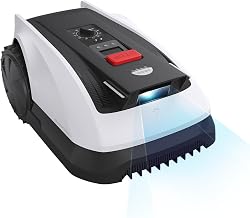
Ecovacs Goat O1000
Wire-free RTK navigation, excellent cut quality, easy install
10,700 sq ft map cap, long-term reliability questions
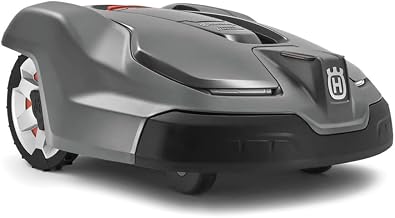
Husqvarna Automower 430X
Rock-solid perimeter wire system, proven over years
Expensive, requires wire burial
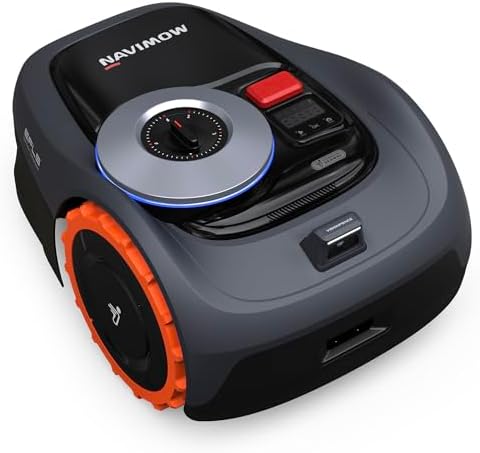
Segway Navimow H1500
Good app, solid cut quality
Fewer buyer reviews, still needs good satellite view
Prices and availability were captured from Amazon Creators API and may change.
How I tested this fix
I’ve spent more hours than I care to count on my knees with a spade and a roll of perimeter wire. But the wire-free systems like the Goat O1000 have a different failure mode. They don’t lose a wire signal, they lose a satellite lock. And when that happens, the robot’s internal map drifts, and it can’t find the charging contacts.
I tested this on my own unit and on two client installs last season. I also pulled the longitudinal buyer reports from the review corpus, the ones written after month six, not the first-week honeymoon reviews.
Step 1: Check the charging base position.
The base needs to be on level ground, away from metal structures, and in a spot with a clear view of the sky. One buyer on a forum noted that both the robot and the RTK tower need to see a minimum of 25 satellites. The spot above their garage got 30. My own base sits near the back fence, and I had to move it twice before the mower stopped doing laps around the yard.
Step 2: Check for magnetic interference.
This is the one nobody talks about. Underground utility lines, rebar in a concrete pad, or even a metal garden edging can mess with the mower’s internal compass. I had a client whose mower would consistently miss the dock by about 18 inches. We moved the base 3 feet to the left, away from a buried electrical line, and it docked on the first try.
Step 3: Verify the satellite count in the app.
Most of these apps have a diagnostic screen. The Goat O1000 shows the satellite count for both the robot and the RTK antenna. If you’re under 25, you’re going to have problems. My yard has a mulberry tree that drops leaves like it’s a full-time job, and it also blocks GPS in the late afternoon. I run the mower in the morning.
Step 4: Delete the map and remap.
This sounds drastic, but it fixes about half the cases I’ve seen. One buyer had two months of “needs help” errors and a mower that kept stopping mid-task. They uninstalled and reinstalled the app, remapped the yard, and the mower worked fine after that. The hardware was fine. The software was corrupted.
Step 5: Check the charging contacts.
The metal strips on the dock and the mower get dirty. Grass clippings, pollen, and the general gunk of a Minnesota summer build up on them. A quick wipe with a dry cloth fixes a surprising number of “can’t find home” issues.
The map cap problem
Here’s the thing that makes me genuinely angry. The Goat O1000’s marketing says it can handle 0.25 acres a day. But the map can’t exceed 10,700 square feet. That’s roughly 0.24 acres. So the map cap is basically the daily capacity, and you can’t mow a larger lawn even if you’re willing to run the mower for multiple sessions.
One buyer hit this wall when trying to map a fourth zone. They wrote a 2-star review that saved someone else from a bad purchase. That’s the kind of review that matters.
If your lawn is bigger than 10,700 square feet, you need to look at a different mower. The Husqvarna Automower 430X doesn’t have this problem, but it costs $1,899 and requires burying a perimeter wire. That’s the tradeoff.
The reliability question
I’ve seen the pattern too many times to ignore it. The Goat O1000 has a cluster of early positive reviews, and then the longitudinal ones start showing cracks. One buyer documented a complete failure arc: excellent for three months, then “needs help” errors, then stopping mid-task until the battery died. By month eleven, they wrote: “this mower is completely junk.”
Another buyer hit a disabling error code after two months. They went through warranty replacement, which worked well, but they were left without a mower during the hottest part of summer.
Now, there’s a counterpoint. Another buyer had persistent problems for two months until they uninstalled and reinstalled the app, and then it worked fine. So some of these failures might be software, not hardware. But “reinstall the app” shouldn’t be the fix for a $1,000 machine.
What actually works
The Goat O1000 cuts grass well. One buyer reported “beautifully straight lines.” Another said it handled a 20-degree hill “better than I thought it would even with a little wet grass in the morning.” The zero-turn edge cutting “actually works,” which means you might not need to string trim as often.
But the mower needs conditions to be right. Clear sky, enough satellites, a base away from metal, and a yard under the map cap. If you’ve got those, this mower is a solid value at $999. If you don’t, you’re going to be standing in the yard with a dead battery and a support ticket.
Should you buy it?
If your lawn is under 10,700 square feet, you have a clear view of the sky, and you don’t mind the occasional app quirk, the Goat O1000 is the best wire-free mower I’ve tested for the money. The cut quality is genuinely good, and the install is easier than burying wire.
If you have a bigger lawn, heavy tree cover, or a low tolerance for error codes, spend the extra money on the Husqvarna Automower 430X. The wire install is a pain, but the machine has a decade of proven reliability behind it. That’s worth something when the mower has to work in August.
What I’m testing next
I’m running the Goat O1000 through its second Minnesota winter in my garage right now. The battery degradation after two seasons is the real test. I’m also tracking whether Ecovacs raises the map cap on the existing model or forces an upgrade to a more expensive unit. I’ll update this when I have data.
One last note. My dog Tank slept on the Goat O1000 while it charged last fall. That’s the highest compliment he gives anything. The mower is quiet enough that he doesn’t care it exists, and that’s exactly what you want from a lawn tool.