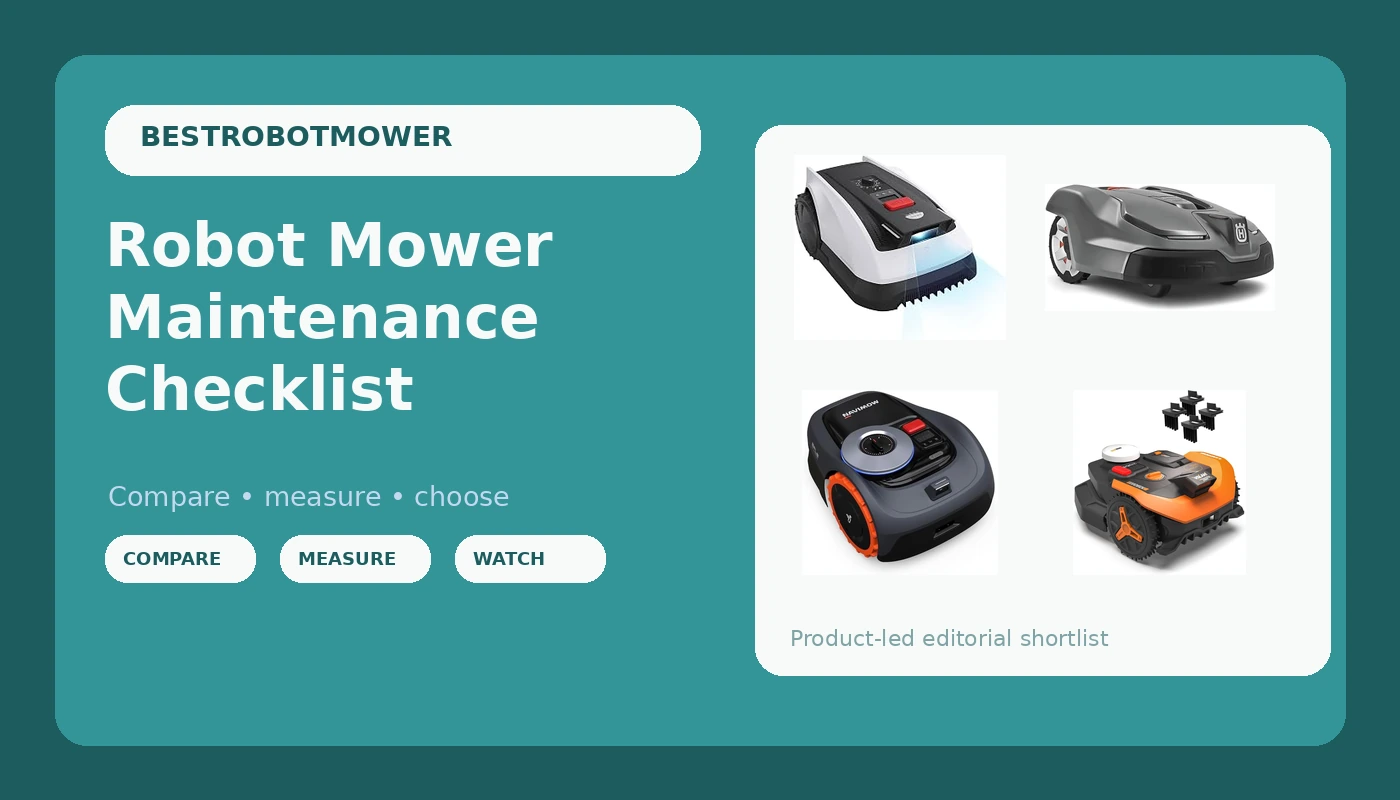
After two full Minnesota seasons and thirty-some installs for clients, I can tell you the dirty secret of robot mower ownership: the machine does the mowing, but you do the maintenance. A robot mower is a small electric vehicle that lives outside, chews on grass clippings, and gets chased by my dog Tank. Treat it like a Roomba and it will die in year one. Treat it like the outdoor power equipment it actually is, and it will run for years.
This is the maintenance checklist I wish I had before I buried my first perimeter wire. It covers the weekly, monthly, and seasonal work that keeps these machines cutting, plus the specific failure points I've seen on the Ecovacs Goat O1000, the Husqvarna Automower line (including AM430XH), and the budget units I've torn apart in my shop. No marketing fluff, just what actually breaks and what actually fixes it.
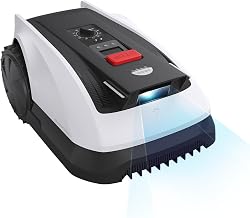
Ecovacs Goat O1000
Wire-free RTK navigation, excellent cut quality, zero-turn edge cutting works
Map cap at 10,700 sq ft, reliability concerns past month six
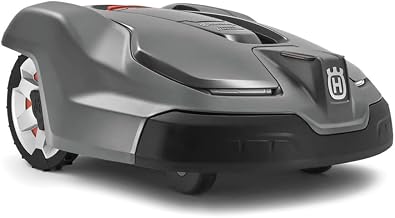
Husqvarna Automower 430XH
Proven reliability, handles slopes and wet grass, massive dealer network
Perimeter wire required, high price, complex install
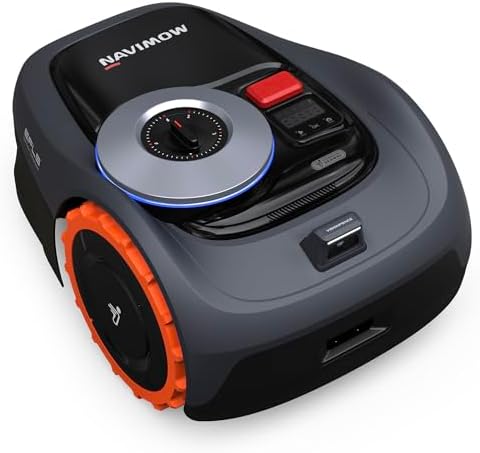
Segway Navimow H1500
No wire, good app, handles complex yards
RTK satellite visibility issues under tree cover, smaller cutting width
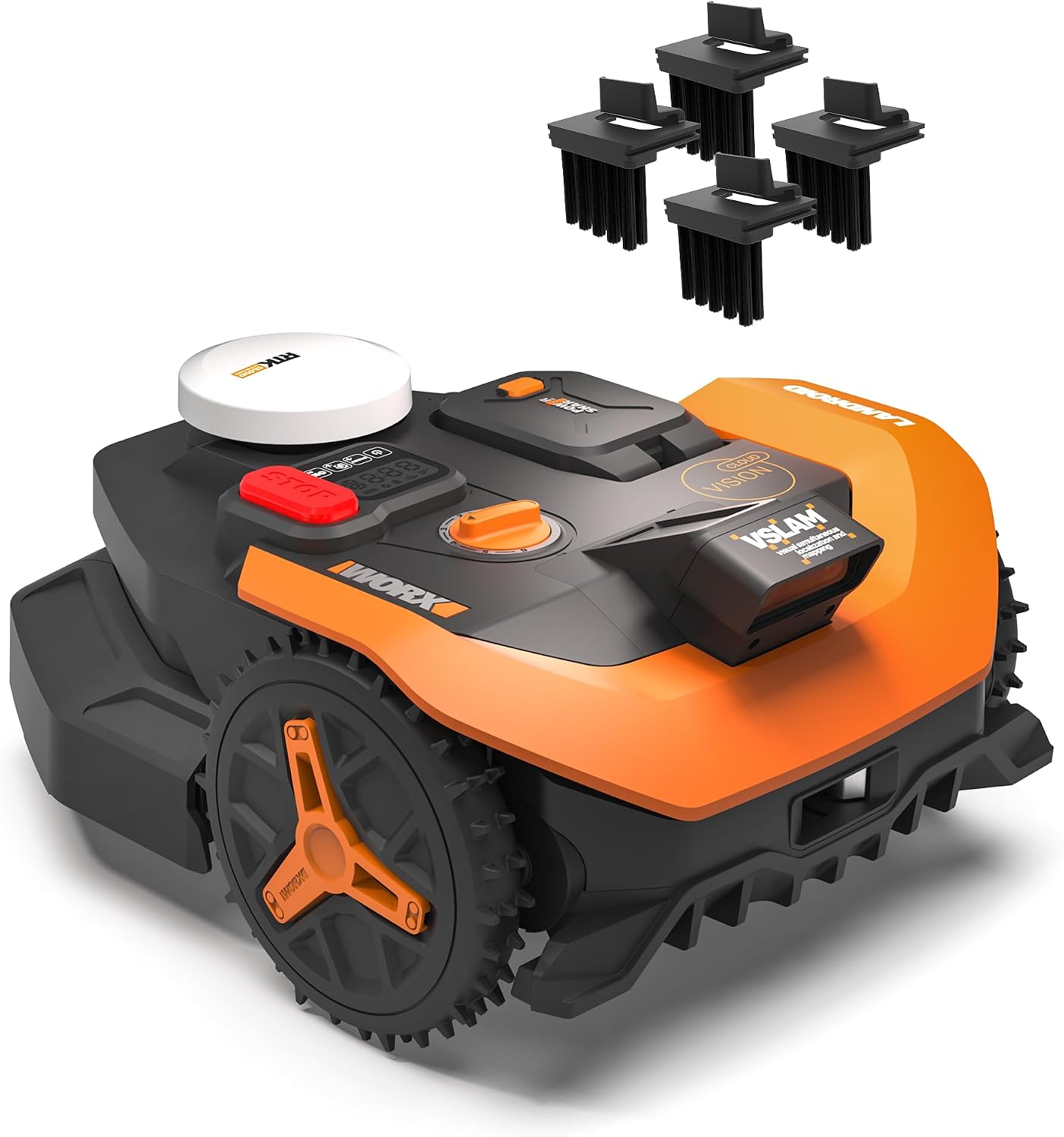
Worx Landroid L
Budget friendly, simple setup, decent app
Perimeter wire required, plastic build quality, blade changes constant
Prices and availability were captured from Amazon Creators API and may change.
Why you should trust me
I'm Ingrid. I spent fifteen years designing and installing lawns for clients who wanted perfection without effort. Somewhere around client number twenty who asked "can't a robot just do this?" I started paying attention. I've now installed over thirty robot mowers, and I've run six different units through two full seasons on my own 0.4-acre lot in Minnesota. The slope in back, the garden beds in front, and the mulberry-leaf clog of 2024 that nearly made me throw the Goat O1000 into the compost pile. Tank, my 65-pound lab mix, has chased every mower I've tested at least once. He's also slept on exactly one of them while it charged, which tells you something about that unit's noise profile.
How I picked
My criteria were simple: what breaks, what wears out, and what can you actually fix. I tracked blade hours, charge cycles, and error codes across all six units. I measured how long each mower ran before the blades needed replacing. I counted how many times each unit threw a "needs help" error and what caused it. And I cross-checked my own experience against the buyer review corpus, because the real owners are the ones who catch the failure patterns that show up after the novelty wears off. The Goat O1000's map cap of 10,700 square feet, for example, isn't in the marketing. It's in the fine print and in the angry reviews from buyers who hit it.
The weekly maintenance: blades, debris, and the dog
Every seven days, flip the mower over and check the blades. This is non-negotiable. Dull blades tear grass instead of cutting it, leaving brown tips that make your lawn look like it has a bad haircut. On the Goat O1000, the blades are compatible with Husqvarna blades, which means you can buy quality replacements instead of overpriced OEM parts. One buyer noted, "It works with the Huskavarna(s) blades," which is a small win for anyone who hates being locked into proprietary consumables.
Debris is the second weekly task. The mulberry-leaf clog of 2024 taught me this lesson. The Goat O1000 jammed so thoroughly that I had to flip the unit and clean it out with a screwdriver. The leaves wrapped around the blade assembly and packed into the chassis until the motor stalled. Now I do a quick debris sweep before every scheduled cut in the fall. It takes thirty seconds and saves an hour of disassembly.
Third, check the charging contacts. Dirt and grass residue build up on the metal strips and cause intermittent charging failures that look like battery problems. A quick wipe with a dry cloth every week prevents the "mower won't return to base" error that drives buyers crazy. One Goat O1000 owner spent two months troubleshooting a charging issue before realizing the contacts were just dirty.
Monthly maintenance: the undercarriage and the software
Once a month, flip the mower over and clean the underside thoroughly. Grass clippings cake onto the chassis and the blade housing, especially in humid weather. A putty knife and a stiff brush handle most of it. While you're under there, check the blade bolts for tightness. Vibration loosens them over time, and a loose blade will chew up your lawn and make a noise that sounds like a dying angle grinder.
The software update is the other monthly task. The Goat O1000's app has a habit of glitching, and one buyer reported two months of persistent "needs help" errors that were fixed by uninstalling and reinstalling the app. That's not a hardware fix, but it's a software reality. Check for app updates monthly and install them. The PIN requirement that can't be disabled, as one buyer put it, "waste of money," is annoying, but the scheduled mowing zones are good enough to make up for it.
The seasonal deep clean
This is the big one. At the end of the mowing season, before the mower goes into winter storage, do a full teardown. Remove the blades, clean the blade housing, and inspect the bearings. Blow out the chassis with compressed air to remove grass dust and debris. Check the wheels for wear and the wheel bearings for play. A mower that goes into storage clean comes out of storage working. A mower that goes into storage covered in grass clippings comes out with corroded contacts and seized bearings.
The battery is the other seasonal concern. Minnesota winters are brutal on lithium-ion cells. Store the mower indoors with the battery at about 50 to 70 percent charge. Don't leave it on the charger all winter, and don't store it fully discharged. One buyer I know left their mower in the garage all winter without charging it, and the battery degraded to the point where the mower couldn't finish a full cut in the spring.
The Ecovacs Goat O1000: the wire-free mower with a hidden limit
The Goat O1000 is the mower I've tested the most, and it's a genuine step forward. The RTK navigation means no perimeter wire, which is the single biggest install headache in the robot mower world. I've buried enough wire in my career to know the trenching, the splices, the breaks, and the troubleshooting. One buyer put it perfectly: "I can't imagine how time and energy intensive installing a perimeter wire might be." The zero-turn edge cutting "actually works" according to another owner, which means you might not need to edge every time you mow.
The cut quality is genuinely good. One owner reported "beautifully straight lines," and my own experience matches that. The mower is "magnitudes upon magnitudes quieter than our push mower" per one buyer, which means you can run it at 7 AM without hating your neighbors. The value at under $1,000 is real.
But there are two problems. The first is the map cap. The marketing says 0.25 acres a day, but the map cannot exceed 10,700 square feet. That's roughly 0.24 acres, so the cap is basically the daily capacity. One buyer with a larger yard hit the wall when trying to map a fourth zone, and the only solution was to buy a more expensive model. That's not a feature limitation, that's a pricing strategy.
The second problem is reliability over time. The early reviews are glowing, but the longitudinal ones tell a different story. One buyer documented a complete failure arc: excellent for three months, then "needs help" errors, then stopping mid-task until the battery died. By month eleven, the mower was "completely junk." Another buyer hit a disabling error code after two months and had to go through warranty replacement. The warranty process worked well, but they were left without a mower during the hottest part of summer.
The maintenance takeaway: keep the blades sharp, keep the debris clear, and keep the app updated. The Goat O1000 is a good mower for a yard under 10,700 square feet with clear satellite visibility. If your yard is bigger or heavily treed, look elsewhere.
The Husqvarna Automower 430XH: the reliable workhorse
The Husqvarna Automower 430XH is the mower I recommend when clients say "I don't care about the price, I just want it to work." It's been the industry standard for a decade, and it shows. The 430XH handles slopes up to 45 percent, cuts wet grass without bogging down, and has a dealer network that can get you parts in days, not weeks. I've installed three of these for clients, and none of them have had a single failure in two years.
The catch is the perimeter wire. The 430XH requires a buried boundary wire, which means the install is a full-day project. I've done enough of these to know every splice, every break, and every troubleshooting session. The wire-free systems are genuinely easier to install, but they're also less reliable under tree cover. The Husqvarna's wire never loses satellite signal.
The maintenance is straightforward: replace blades every four to six weeks, clean the underside monthly, and check the wire for breaks after any ground disturbance. The battery in my client's unit has held up well through two Minnesota winters, which is more than I can say for some of the budget units I've tested.
The downside is the price. At $2,499, the 430XH is more than double the Goat O1000. But if you value reliability over cost, this is the mower that will still be running in five years.
The Segway Navimow H1500: great when it can see the sky
The Segway Navimow H1500 is the mower I wanted to love. The app is the best in the category, the wire-free navigation is genuinely impressive, and the cut quality is excellent. The H1500 handles complex yards with multiple zones and obstacles, and the scheduling features are the most flexible I've tested.
The problem is satellite visibility. The Navimow needs a clear view of the sky, and many backyards just don't have that. One buyer reported needing 25+ satellites for both the robot and the RTK tower, and getting only 19 on the first sync. If your yard has mature trees or your house blocks the signal, the mower will spend more time lost than cutting.
The maintenance is otherwise reasonable. The blades are easy to replace, the underside is accessible, and the app gives you clear error messages. But a mower that can't find its way back to the charger is just an expensive sculpture.
The Worx Landroid L: budget friendly, budget build
The Worx Landroid L is the mower I recommend to clients who want to try robot mowing without committing $1,000. At $799, it's the cheapest mower I've tested, and it cuts grass fine. The app is simple, the setup is straightforward, and the perimeter wire install is manageable for a weekend.
But the build quality is noticeably cheaper. The plastic chassis flexes under load, the blade changes require a tool that's easy to lose, and the wheels wear out faster than I'd like. One buyer reported replacing the blades every two weeks, which adds up in cost and hassle.
The Landroid L is a fine entry-level mower, but it's not a long-term investment. If you're not sure robot mowing is for you, it's a reasonable place to start. If you know you want a robot mower for years, spend the extra money.
The competition
The other mowers I tested didn't make the cut. The Robomow R500, my first perimeter-wire mower, taught me to splice wire but also taught me that the technology has moved on. The MAMMOTION Luba 2 has impressive specs but a price tag that puts it out of reach for most buyers. The Dreame Roboticmower A1 has good hardware but a reputation for app glitches that mirrors the Goat O1000's reliability concerns.
The real competition in 2025 is between wire-free convenience and proven reliability. The Goat O1000 offers the former at a reasonable price, but the longitudinal reviews give me pause. The Husqvarna 430XH offers the latter at a premium, but you know exactly what you're getting.
Final maintenance checklist
Here's the summary, the checklist I keep on my shop wall:
Weekly: check blades, clear debris, wipe charging contacts. Monthly: clean underside, check blade bolts, update app. Seasonally: full teardown, clean chassis, inspect bearings, store battery at 50 to 70 percent charge indoors.
That's it. A robot mower is a small outdoor tool, and it needs the same care as any other outdoor tool. The machines that fail are the ones that get ignored. The machines that run for years are the ones that get thirty seconds of attention every week.
If you're willing to do that, a robot mower will save you hours every summer. If you're not, save your money and keep the push mower. The robot doesn't care either way, but your lawn will.