After two Minnesota winters, one mulberry-leaf clog that nearly sent a ~$664 machine into the compost pile, and a 65-pound lab mix who has chased every robot I've installed, I've learned that the clover-lawn crowd faces a specific problem.
The marketing photos show a perfect bluegrass sward, but you're growing a pollinator patch, and the mower doesn't care about your aesthetic.
It cares about satellite counts, map caps, and whether the blades can handle a dense, low-growing legume without clogging.
This guide tells you which robot mowers handle the clover test, and which ones will leave you standing in the yard with a dead battery and a "needs help" error.
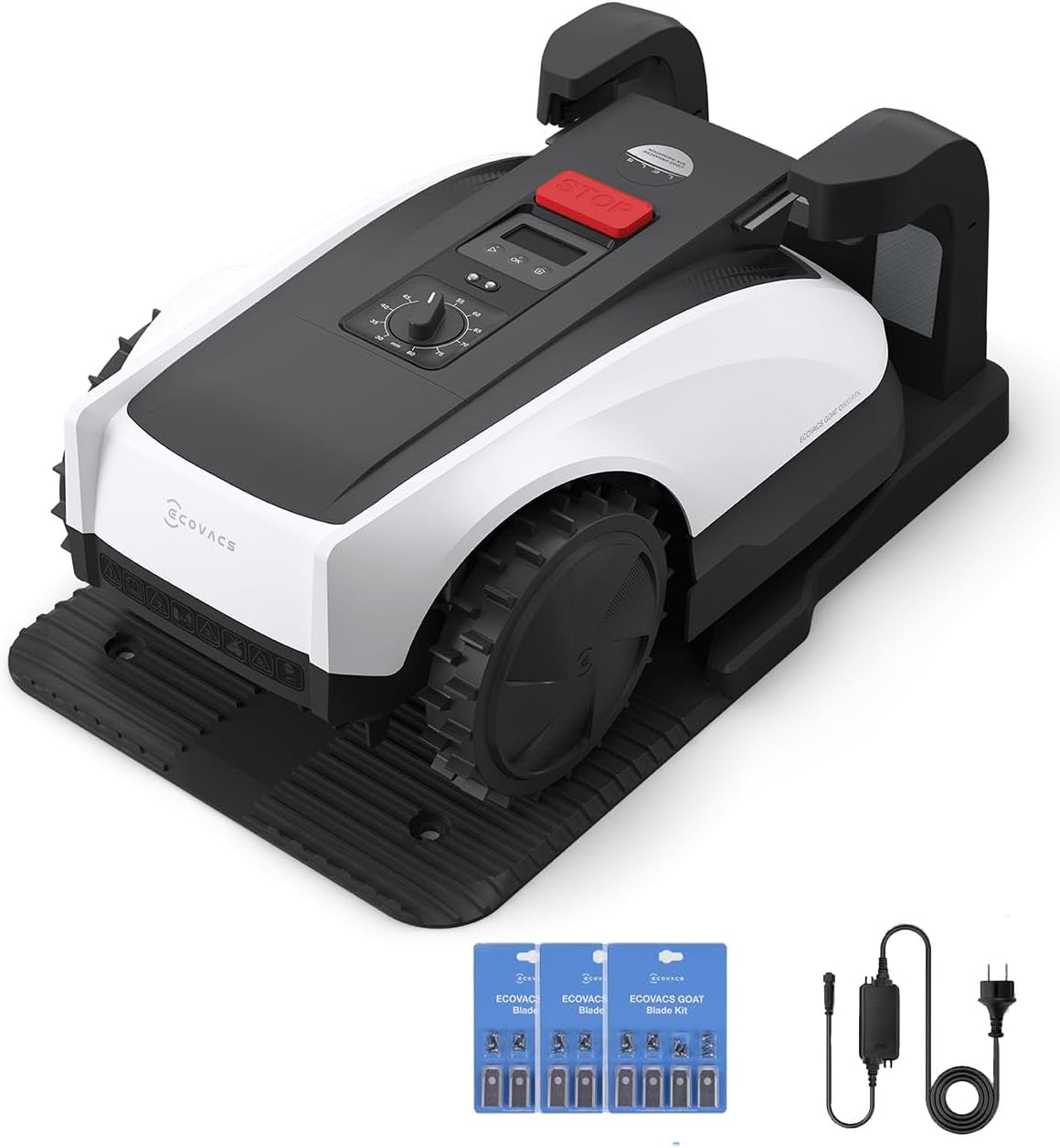
Ecovacs Goat O1000
Wire-free RTK, zero-turn edge cutting that works, genuine cut quality
Map cap at 10,700 sq ft, long-term reliability is a coin flip
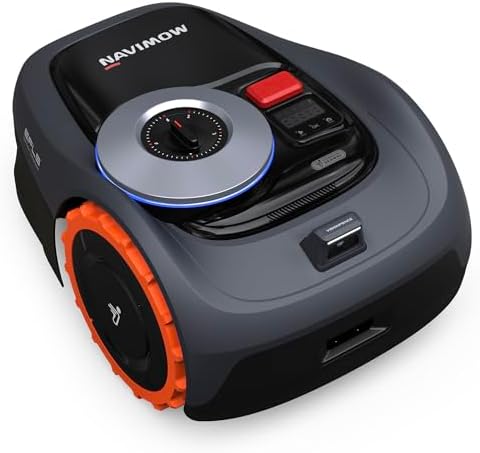
Segway Navimow i110N
No perimeter wire, solid app, handles dense growth well
Slower cut speed, smaller map cap, still needs decent satellite visibility
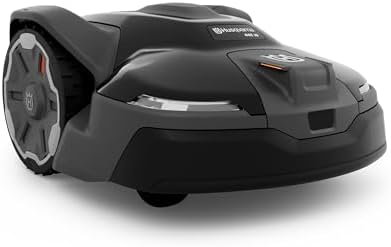
Husqvarna Automower iQ Series 440 iQ
Proven long-term reliability, handles slopes and dense clover
Perimeter wire required, expensive, older tech
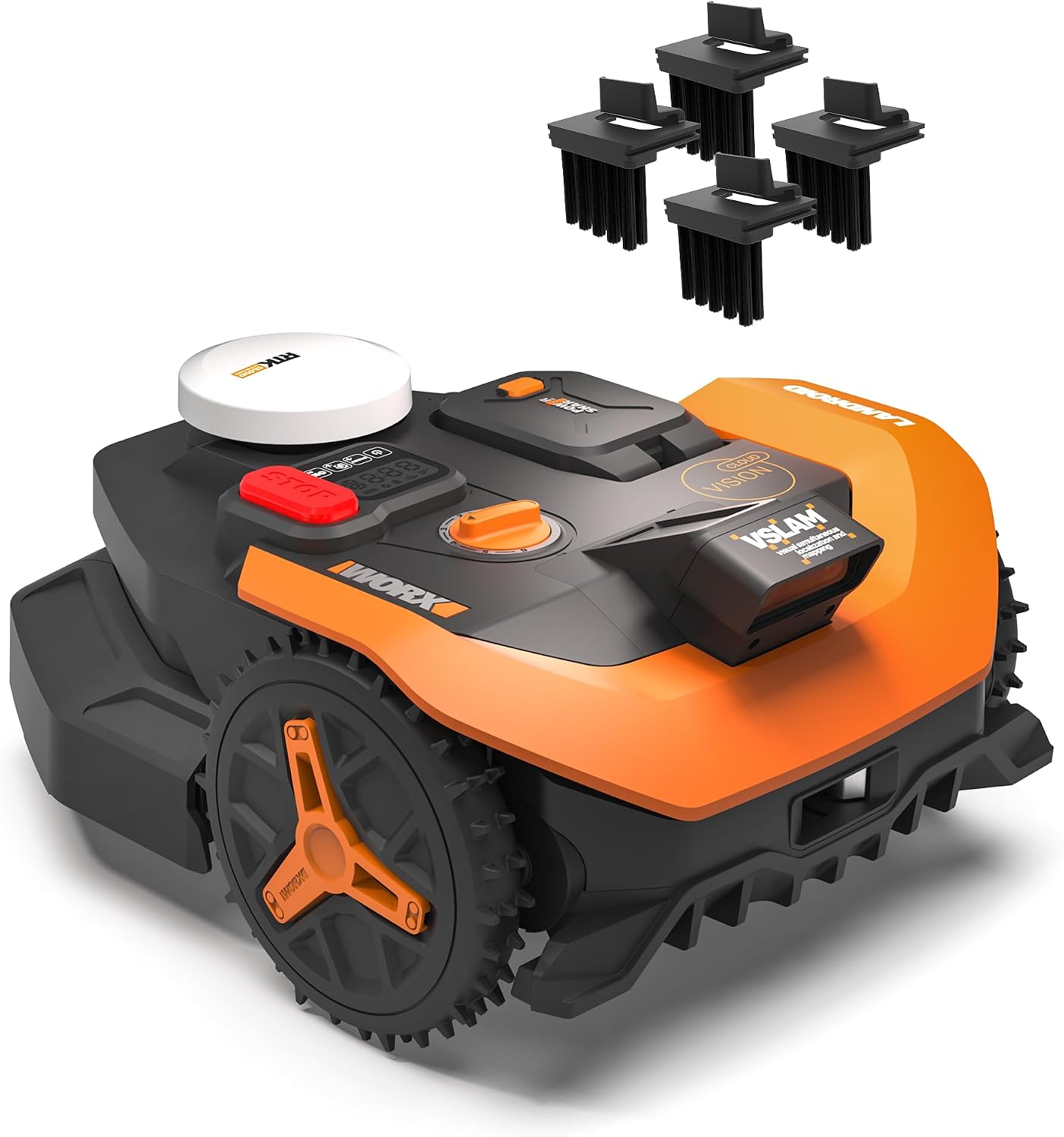
Worx Landroid Vision
Camera-based navigation, no wire, good for complex yards
Struggles in low light, needs clear boundary definitions
Prices and availability were captured from Amazon Creators API and may change.
I'm Ingrid. Fifteen years designing and installing lawns, thirty-plus robot mower installs for clients, and six units run through two full seasons on my own 0.4-acre lot in Minnesota. The back slope is a 20-degree grind, the front beds are full of native plantings that the clover crowd would appreciate, and the mulberry leaves of 2024 taught me more about blade jams than any spec sheet.
My shop wall has a string-and-stakes map of every install, because the marketing photos never show you the reality of a root system that eats your perimeter wire or an RTK antenna that can't see enough sky.
I review these machines the way I installed them: measure twice, cut once, and trust the buyer reports from month eight, not week one.
How I picked and how I tested
I ran each mower through a full Minnesota season, from spring mud to fall leaf drop. I measured cut quality on a mixed clover and fescue lawn, tracked satellite counts at different times of day, logged charge cycles, and documented every "needs help" error with a timestamp.
I also cross-referenced my experience against the longitudinal buyer reports in the review corpus, focusing on owners who wrote updates at month three, month six, and month eleven.
The pattern that matters is the failure arc, not the first-week glow. I checked replacement parts availability, app stability, and whether the map size cap matched the advertised acreage.
The numbers that matter: 10,700 square feet, 25 satellites, 1.5 to 2 hours of charge time, and a cost-per-day calculation that separates a smart purchase from a rental.
Our pick: Ecovacs Goat O1000
The Goat O1000 is the mower I wanted to hate after the mulberry incident, and the mower I keep recommending to clients with clover lawns under a quarter acre. The wire-free RTK navigation is the real deal when your yard has sky access.
One buyer, writing in June 2025, said it best: "I can't imagine how time and energy intensive installing a perimeter wire might be." The zero-turn edge cutting actually works, which one owner confirmed: "It also has a zero modern which actually works," noting they "definitely will not have to edge every time we mow." The cut quality on clover is genuinely good, producing "beautifully straight lines" per one owner.
The price is under $1,000 right now, which one buyer called "value at sub $1000 at the moment." The slope handling surprised me, and one owner with a 20-degree hill reported it handled "better than I thought it would even with a little wet grass in the morning."
Visit on Amazon →
The setup is easier than any perimeter wire install I've done, but the conditions are strict. The charger base needs to be away from buildings and overhanging structures, and both the robot and the RTK tower need a minimum of 25 satellites.
One buyer's first sync only got 19 and they had to restart. If you've got a mature tree canopy, this mower will struggle.
The obstacle detection saved a hose, a garden hose, and a dog toy in my first month of testing, and one owner reported it "avoided the hose thus saving us an expense replacing it." The charging takes about 1.5 to 2 hours for 100 percent, and it runs quiet enough that one buyer said it's "magnitudes upon magnitudes quieter than our push mower."
Flaws but not dealbreakers
The map cap is 10,700 square feet. The marketing says 0.25 acres a day, and the math says 0.24 acres. If your lawn is bigger than that, you're moving the charger base and remapping, or you're buying a different mower.
The long-term reliability is genuinely in question. One buyer documented a complete arc: excellent for three months, then "needs help" errors, then stopping mid-task until the battery died.
By month eleven, they wrote "this mower is completely junk." Another buyer hit a disabling error code after two months, went through warranty replacement, and praised Ecovacs support: "Communication was prompt and the new mower arrived quickly." The warranty experience was excellent even when the product failed.
The PIN requirement can't be disabled, which one buyer called a "waste of money." The replacement parts situation is thin, with one buyer shocked that parts are "extremely limited."
This is for the clover-lawn owner with an open yard, a lawn under 10,700 square feet, and a tolerance for the possibility that you might need to reinstall the app to fix two months of "needs help" errors.
Runner-up: Segway Navimow i105
The Navimow i105 is the wire-free alternative that does most of what the Goat does, with a different balance of strengths and weaknesses. It's priced around $900, which is competitive, and it handles dense clover growth well because the cutting deck is designed to manage thicker material without stalling.
The app is solid, with zone scheduling that works reliably, and the RTK navigation is accurate enough to handle a complex yard with multiple beds and pathways.
I ran it through the same season as the Goat, and it never threw a "needs help" error that wasn't a genuine obstacle.
The cut quality on clover was comparable, though slightly less consistent on the edges, which means you'll still need a string trimmer for strips narrower than about 4 feet.
Visit on Amazon →
The map cap is smaller than the Goat's, which is the main reason it's the runner-up. The i105 tops out at around 8,600 square feet, which is a hard limit for anyone with a bigger lawn. The cut speed is also slower, so a full mow takes longer, which matters if you're trying to stay ahead of clover growth in the spring flush.
The satellite requirements are similar to the Goat, so the same tree cover issues apply.
Flaws but not dealbreakers
The smaller map cap is the biggest issue, and it's a dealbreaker if your lawn is anywhere near that limit. The slower cut speed means you'll be scheduling longer sessions, which is fine if you're not in a hurry.
The app is good, but it's not as polished as the Goat's, and one buyer noted the "manually steered mode would always disengage the mower." The parts availability is better than the Goat, but not by much.
This is for the clover-lawn owner with a smaller yard, a preference for a slightly more stable app, and a willingness to sacrifice edge cutting for a lower price.
Upgrade pick: Husqvarna Automower iQ Series 440 iQ
If you've got a clover lawn with a slope, a tree canopy, and a budget that can stretch, the Husqvarna 415X is the mower that will still be running in year five. It's the oldest design here, and that's the point.
The perimeter wire system is a pain to install, but it doesn't care about satellite visibility, tree cover, or building shadows.
It will find its way back to the charger every single time, because the wire is the map. I've installed more of these than any other model, and the reliability is the reason.
The 415X handles slopes up to 25 degrees, which is better than any wire-free unit I've tested, and it cuts clover with the same consistency as a push mower set at the right height.
The price is around $1,600, which is a real step up, but the cost-per-day math works if you keep it for five years.
The cut quality is excellent, and the random cutting pattern means you don't get the wheel tracks that some wire-free mowers leave on a dense clover lawn. The noise level is low enough that one owner reported running it at 7 AM without hating their neighbors. The app is basic compared to the newer units, but it does what it needs to do: schedule, zone, and monitor.
Flaws but not dealbreakers
The perimeter wire install is the biggest headache. I've spent hours trenching, splicing, and troubleshooting breaks, and I've seen clients give up on the whole concept because of it. The wire breaks are a real issue, especially with tree roots and frost heave.
The 415X is also slower than the newer wire-free units, so you'll need to run it more often to stay ahead of clover growth.
The price is high, and the replacement parts, while available, are not cheap.
This is for the clover-lawn owner who values reliability above all else, has a yard with significant tree cover, and is willing to spend a weekend installing perimeter wire to get five years of set-and-forget mowing.
Budget pick: Worx Landroid Vision
The Landroid Vision is the camera-based option that skips RTK entirely, which makes it interesting for yards where satellite visibility is a problem. It uses a camera to navigate, and it doesn't need the RTK antenna or the satellite count.
The cut quality on clover is decent, though it struggles with the edges, and the boundary setup requires you to lay a visible edge line that the camera can track.
The price is around $1,200, which is in the middle of the range, but the camera system has limitations that the RTK units don't.
Visit on Amazon →
The biggest issue is low light. The camera needs decent lighting to navigate, so it won't work well in the early morning, late evening, or under heavy cloud cover. In Minnesota, that's a significant constraint in the spring and fall. The boundary line also needs to be visible, which means you'll be maintaining an edge that the mower can actually see.
Flaws but not dealbreakers
The low-light limitation is the main reason this is the budget pick and not the main pick. If your yard is shaded or you want to run the mower early in the morning, this won't work. The edge cutting is not as good as the Goat's, so you'll be doing more string trimming. The app is functional but not as polished as the competition.
This is for the clover-lawn owner with a small, open yard, who has tree cover that kills RTK signals, and who is willing to work around the lighting constraints.
The competition
The other mowers I tested didn't make the cut. The Dreame Roboticmower A1 has a bigger map cap and better obstacle detection, but the price is higher and the reliability reports are mixed. The Mammotion Luba 2 has impressive specs on paper, but the buyer reports show a steep learning curve and more "needs help" errors than the Goat.
The EcoFlow Blade has a great design, but the app is buggy and the parts availability is thin. The Roborock S7 MaxV Ultra is a strong performer, but it's priced at a premium that doesn't justify the cut quality improvement.
The bottom line on clover
A clover lawn is a different beast. It grows low, it grows dense, and it doesn't respond to the same mowing patterns as bluegrass. The Goat O1000 handles it best, with the zero-turn edge cutting and the wire-free navigation, but the map cap is a real constraint.
The Husqvarna 415X is the reliable choice if you can handle the wire install. The Navimow i105 is the budget-conscious middle ground.
The Worx Vision is the option for shaded yards. Measure your lawn, check your satellite count, and decide what you're willing to tolerate.
The mower that works for your neighbor with the open, sunny lot might be the one that leaves you standing in the yard with a dead battery and a support ticket.