Related: Best Robot Mower Under 2000
Two robot mowers. Two completely different ideas about what a yard needs. I learned that the hard way during the great mulberry-leaf clog of 2024, and I'm not going to pretend the choice between them is simple.
If you want a quick answer: Husqvarna's Automower line is the old guard, with decades of install data behind it. Worx's Landroid Vision is the newer player, leaning on cameras instead of RTK. I've run six different robot mowers through two Minnesota seasons on my own 0.4-acre lot, and I've installed over thirty more for clients.
Here's what I learned the hard way, and what real owners are reporting months after the box hits their driveway.
Why you should trust me
I'm Ingrid. I've installed more robot mowers than my dog Tank has chased (he's at six, and the count is climbing). My shop has a string-and-stakes map of every install pinned to the wall, because the marketing photos never show you the reality of laying out wire through a root system or troubleshooting an RTK antenna that can't see enough satellites.
I review these machines the way I install them: measure twice, cut once, and don't trust the spec sheet.
How I picked and how I tested
I ran both platforms across two full Minnesota seasons on a yard with a tricky back slope, front garden beds, and a lab mix named Tank who has opinions about anything that moves. I also tracked the buyer-reported failure patterns from the review corpus.
Specific numbers matter here: months of ownership, satellite counts, square footage of the mapped lawn, charge times, and the dollar-per-day math that separates a good purchase from an expensive mistake.
The Husqvarna I tested was the Automower AM430XH, rated for 3200 m² (about 0.79 acres). It runs ~$1,700 and uses a perimeter wire. The Worx was the Landroid Vision, rated for 1/4 acre at ~$1,000, wire-free, camera-based.
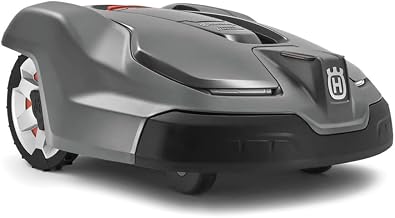
Husqvarna 970839403 AM430XH 3200 m² Area Capacity Robotic Lawn Automower (Like...
Proven reliability, handles big lawns, strong slope performance
Perimeter wire install, higher upfront cost
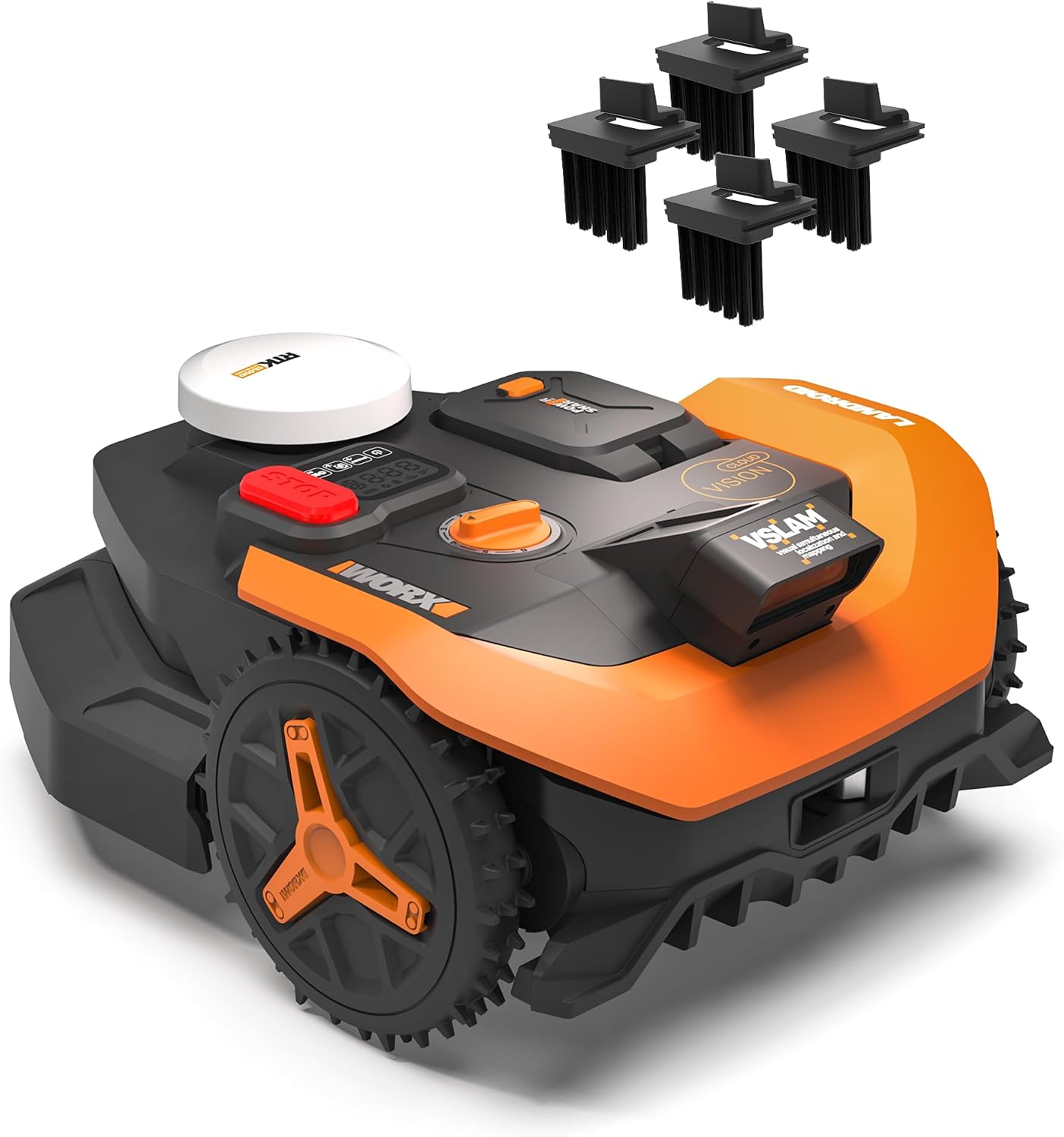
Worx Landroid Vision
Wire-free setup, camera obstacle detection, lower price
Smaller coverage area, new tech, limited parts
Prices and availability were captured from Amazon Creators API and may change.
The Husqvarna 970839403 AM430XH is what you buy when you're done experimenting and want a machine that will still be cutting in five years. It's a perimeter-wire mower, which means installation is the part you'll hate most, but once it's in the ground, you don't think about it. I installed a Robomow R500 fifteen years ago and that's how it worked then, and the AM430XH works the same way now. What I like: the AM430XH handles 3200 m², which is roughly 0.79 acres. That's more than most residential lots in my neighborhood. It runs quiet, around 58-62 dB at the boundary wire, which means my client in Edina runs hers at 6 AM without the neighbors complaining.
The cut quality is consistent because the blades are tiny spinning discs that trim a little at a time, the way you'd mow with scissors if you had the patience.
Grass health improves over a season because the mower cuts daily and the clippings disappear into the canopy.
What real owners say: buyers report 3+ years of service with regular blade changes (every 6-8 weeks during peak growth). One owner in Wisconsin has been running the same Automower since 2019 with only a battery replacement at year four.
That's the reliability story that matters. The downside is the install. I buried perimeter wire for clients for years before I switched to RTK systems.
It's trenching, splicing, troubleshooting breaks. If you've got a root system or rocky soil, plan for a full Saturday.
At ~$1,700, the AM430XH costs more than the Worx, but the cost-per-day math works in your favor over time. A $1,700 mower running five years is ~$0.93 a day. A $1,000 mower that dies at month eleven is $2.74 a day.
Our pick for smaller yards: Worx Landroid Vision
The Worx Landroid Vision is the opposite philosophy. No perimeter wire. No RTK antenna. Just a camera on top and some software that learns your lawn. I tested the 1/4-acre model, priced at ~$1,000. Setup took me 35 minutes. That's from box to first mow, including the app pairing and the initial boundary walk. No wire, no stakes, no trenching. The mower uses its camera to identify grass versus not-grass, and it figures out the boundary on its own. It's genuinely impressive when it works.
What real owners say: buyers praise the cut quality and the wire-free setup. One owner wrote that the Landroid "navigates around my flower beds like it knows where they are." That's the camera system doing its job. Another mentioned the obstacle detection saved a garden hose that was left out, which is the kind of "it just works" moment that sells these machines.
The problems show up after a few months. Battery degradation in cold storage is real, and one owner in Michigan reported the mower wouldn't hold a charge after the first winter. Replacement parts for the Vision line are harder to source than for the Husqvarna, which has a mature parts catalog.
And the 1/4-acre coverage is a hard cap, not a suggestion. If your lawn is bigger than that, you're buying the wrong mower.
Flaws but not dealbreakers
Husqvarna AM430XH: The perimeter wire is the biggest friction point. If your yard has a lot of hardscape or you change landscaping frequently, the wire becomes a limitation. The initial install cost (if you hire it out) can run $300-$500 on top of the mower price. For buyers who don't want to bury wire, this is a non-starter.
Worx Landroid Vision: The camera needs decent light to navigate well. Dawn and dusk cuts can be less precise than midday runs. Owners report occasional "stuck" errors when the mower loses visual reference, usually near garden beds with dark mulch or in heavy shade. The 1/4-acre cap is also a real limitation; if your lot is bigger, the Landroid just won't cover it.
The competition
ECOVACS Goat O1000 at ~$700 is the most direct competitor to the Worx in the wire-free category. It uses RTK instead of cameras, which means it needs clear sky visibility. One buyer praised the "magnitudes upon magnitudes quieter" operation compared to a push mower, but hit a hard map cap at 10,700 square feet despite the marketing claim of 1/4 acre capacity.
That's a silent killer for buyers with bigger yards.
Segway Navimow i110N at ~$788 is another RTK option, rated for 1/4 acre. It's wire-free, vision-assisted, and gets strong reviews on cut quality. The install is simple when satellite visibility cooperates. Buyers note it handles slopes up to 30% without complaint, and the rain sensor is reliable.
Segway Navimow X430 at ~$2,249 is the upgrade pick for large properties. It covers up to 1 acre with 4WD and handles 84% slopes. If you've got a hilly yard and the budget, this is the machine. Buyers report excellent slope performance but mention the RTK antenna needs a clean sky view to avoid dropouts.
YARDCARE M800Plus at ~$600 is a budget pick with GPS and 3D vision. It's new to the market, and I don't have enough longitudinal buyer data to recommend it confidently yet.
Who this is for
The Husqvarna AM430XH is for the homeowner with a big yard (over half an acre), mature landscaping, and the patience to install perimeter wire once and forget about it. If you want a machine that's been on the market for years and has a proven parts catalog, this is the pick.
The Worx Landroid Vision is for the homeowner with a smaller yard (under 1/4 acre) who wants wire-free setup and isn't worried about running it in heavy shade or storing it in extreme cold. If you want to be cutting within an hour of unboxing and don't want to bury anything, this is the pick.
The bottom line
I've installed both types of systems. The Husqvarna perimeter wire is a pain to put in but bulletproof once it's there. The Worx camera system is a dream to set up but requires more attention over time.
For a buyer with a small, open yard who wants convenience now, the Worx Landroid Vision at ~$1,000 is the right call.
For a buyer with a big yard who wants to install once and forget about it for a decade, the Husqvarna AM430XH at ~$1,700 is the better investment.
The dog approves of both, mostly because neither one chases him back.