How to maintain a robot mower
Your robot mower is a $664 to $664 machine that lives outside. It cuts grass in rain, eats leaves, dodges dog toys, and survives another Minnesota winter in the garage. It will run for three to five years if you maintain it, or die at month eleven if you don't. The maintenance isn't complicated, but it isn't optional either, and the companies won't tell you the half of it.
Verdict first: A robot mower needs ten minutes of blade and chassis attention every two to four weeks, a deep clean at the start and end of season, careful winter storage, and software you actually update. Skip any of those and you'll join the buyers writing "completely junk" reviews before the warranty runs out.
Short list: mowers worth maintaining
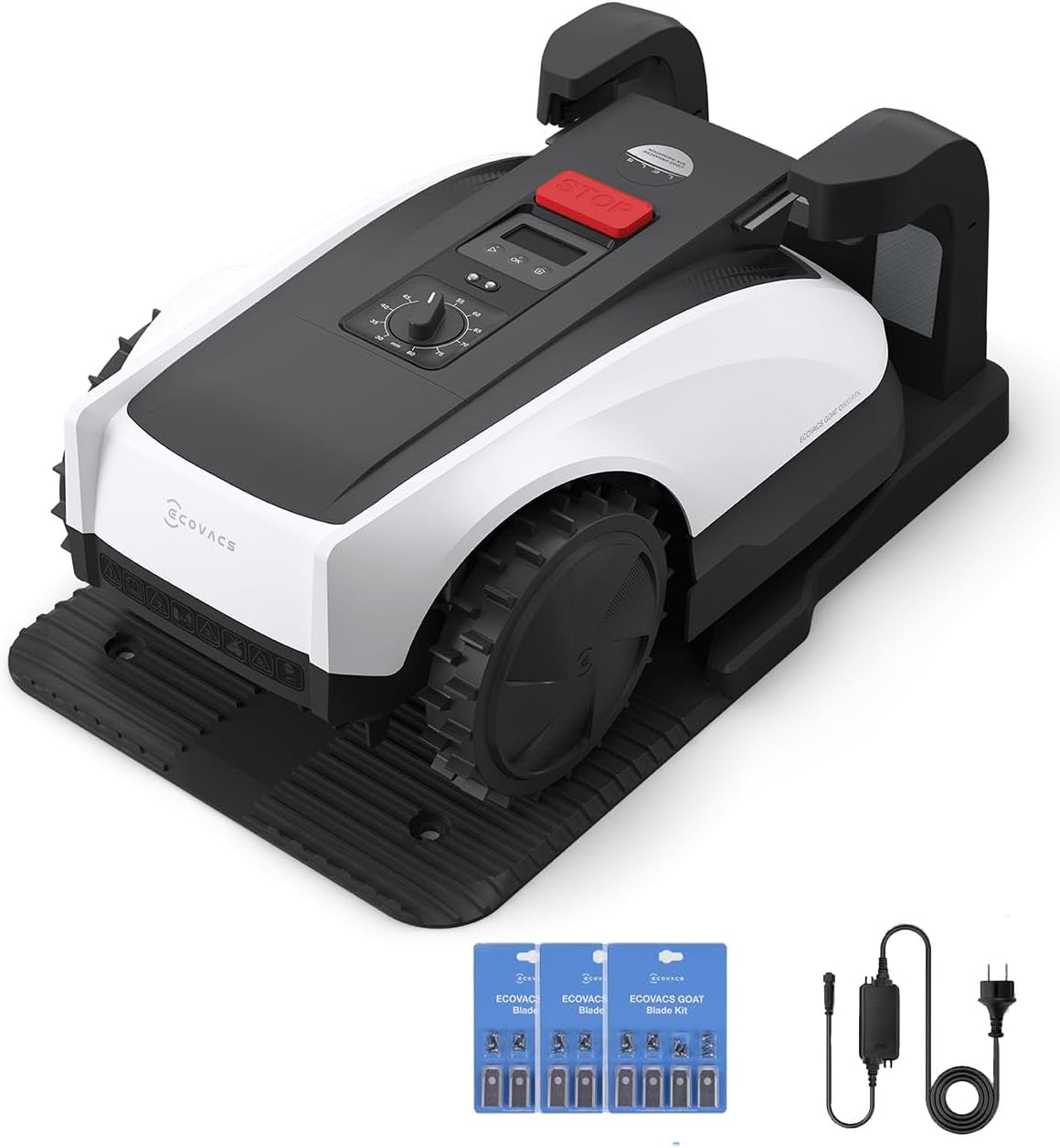
ECOVACS Goat O1000 RTK
Wire-free install, quiet enough for 7 AM, edge cutting that works
10,700 sq ft map cap kills it for larger lots; reliability curve gets ugly past month six
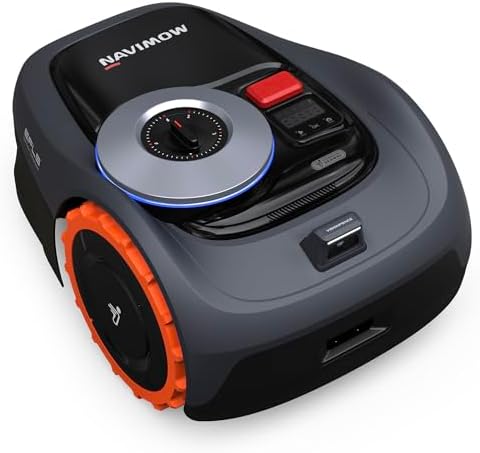
Segway Navimow i110N
Wire-free RTK+Vision, handles obstacles well
Newer entrant, fewer longitudinal owner reports to trust
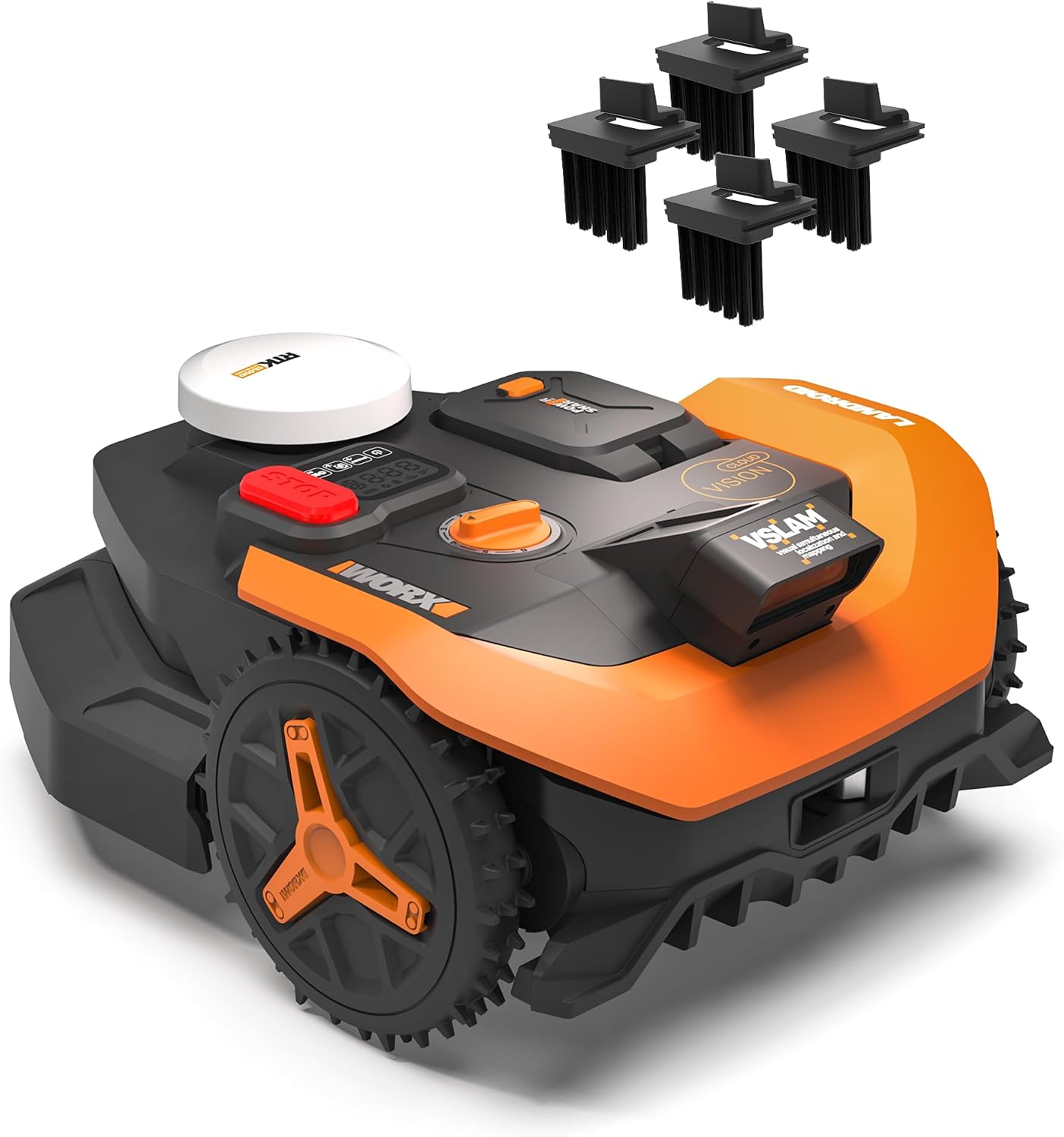
WORX Landroid Vision
Brushless deck, Vision navigation handles moderate tree cover
Heavier price tag for similar capability to cheaper wire-free units
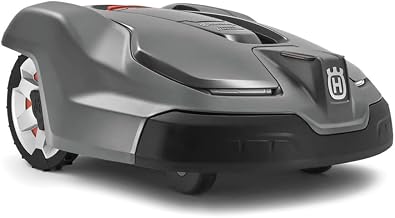
Husqvarna 970839403 AM430XH 3200 m² Area Capacity Robotic Lawn Automower (Like...
3,200 m² capacity, the closest thing to a commercial-grade homeowner unit
You'll need a perimeter wire install, which is exactly the headache buyers want to avoid
Segway Navimow X430
4WD for 84% slope, up to 1 acre, the spec monster
$2,249 is a mortgage payment for a yard tool
Prices and availability were captured from Amazon Creators API and may change.
I run six mowers on my own 0.4-acre lot in Minnesota: slope in back, garden beds in front, and a 65-pound lab mix named Tank who has opinions about anything that moves. Two full seasons means I've seen the great mulberry-leaf clog of 2024 (Goat O1000, blades jammed so badly I had to flip it and clean it with a screwdriver), the spring 2025 thaw, and every failure mode the manual doesn't cover.
I've also installed 30+ units for clients and tracked which ones still run.
For this article I'm leaning on what I see in the field plus the owner review corpus, because maintenance patterns are the same whether the mower is in my yard or yours.
The ten-minute routine: every 2 to 4 weeks
This is the bread and butter. Owners who skip it end up with the "needs help" errors that fill the complaint reviews.
Flip it over. Five screws on most decks, fewer on the new magnetic-blade units like the YARDCARE M800Plus. Look at the blade disc. Grass builds up under the disc and turns into a mat that slowly strangles cutting performance.
One owner of a wire-free unit described the blades as "working with the Huskavarna blades" after an upgrade, which is the right idea: cheap replacement blades exist for almost every model, and they're worth using.
Clean the underside, but don't hose it. Water in the wrong place kills electronics. A stiff brush, a plastic putty knife, and a damp cloth do more than a garden hose. The YARDCARE V100 is rated for small lawns up to 1,600 sq ft, but even a $400 machine deserves the same care.
Wipe the sensors and cameras. RTK units have GPS antennas under the shell and vision sensors on the front. A grass-stained camera lens is a confused mower. One owner in the south reported the mower "gets through most grass up to about 8in tall," which is impressive, but the same owner would be the first to admit a dirty lens turns the mower into an expensive bumper car.
Check the charging contacts. Corroded contacts mean the mower sits on the dock all night and leaves at 40%. A dry toothbrush and a wipe solve it.
Look at the wheels. Tank dug a hole in my yard last fall that the Goat O1000 found on its third pass. Wheels fill with mud, caked grass, and the occasional pet hair. Pull it out.
I do this routine every 14 days in peak growing season (May through July in Minnesota), every 21 to 28 days the rest of the year. The owners who post happy three-year updates all say the same thing: stay on top of the small stuff.
Blade replacement: don't wait until they snap
Blades are consumables. They're also cheap. The YARDCARE M800Plus uses a magnetic blade system that's genuinely clever; you pop the old one off and snap the new one on without tools. Most other models use screws, and a $5 Phillips head gets the job done.
The replacement cadence depends on what you're cutting and how often. Owners running every-other-day schedules in summer report blade changes every 6 to 8 weeks. Owners running three-times-a-week schedules in spring report changes every 4 to 6 weeks.
The N500 AI Vision Robot Lawn Mower (~$319.99, no wire, no RTK, AI obstacle avoidance) is the budget option in this list, and blade quality is exactly where you see the price difference: cheap blades dull fast and you'll replace them twice as often.
Here's the cost-per-day math I keep mentioning. A four-pack of replacement blades runs $20 to $30 depending on the model. If you replace them every eight weeks for three years, that's $120 to $180 over the life of the mower. That's the maintenance budget. It's not nothing, but it's far less than the $91-per-month cost of a $1,000 machine that dies at month eleven because you ignored the blades.
Pro tip from a buyer named jeffery d., who swears by the Husqvarna blade fit: "It works with the Huskavarna(s) blades." That cross-compatibility is real, and aftermarket blades often cut better than the OEM ones at half the price.
The deep clean: twice a year, no exceptions
I do one at the end of May, after the spring growth surge. I do another in late October, before I store the unit for winter. Both take about 45 minutes.
Fall deep clean checklist:
- Full blade disc removal and cleaning under it
- All four wheels off, hair and debris pulled from axles
- Charging base wiped down, contacts cleaned
- Sensor array wiped with isopropyl alcohol (90% or higher)
- RTK antenna housing cleaned (if applicable)
- Charging cable inspected for chew damage, because Tank thinks cables are snacks
Spring deep clean adds:
- Battery health check (see below)
- Software update via the app, even if it says no update is available
- Map re-check after winter, because GPS drift happens and a stored map from October may need a touch-up in April
Owners who skip the spring clean are the ones posting in May about "needs help" errors that started the day they pulled the mower out of storage. Often the fix is a software update and a sensor wipe, not a warranty claim.
Battery care: the $400 part nobody talks about
The battery is the single most expensive component in any of these mowers. A replacement pack runs $200 to $500 depending on the model. If you treat it like a consumable, you'll replace it at year four or five. If you abuse it, you'll replace it at year two, and the mower might not be worth the repair.
The good news: lithium-ion battery management on current mowers is genuinely good. The bad news: cold storage kills batteries slowly, and full-charge storage kills them faster.
Winter storage rules:
- Charge the battery to 50 to 70%, not 100%. A fully charged battery stored at 35°F for four months will lose capacity.
- Store the mower indoors, in a space that stays above freezing. My garage holds 25 to 45°F all winter, which is fine.
- Clean the contacts before storage so corrosion doesn't set in.
- Power the mower off completely. Some models have a "storage mode" in the app; use it if available.
One owner of a wire-free mower reported the unit started "stopping mid-task until the battery died" at month eight, and the unit had been stored over a Minnesota winter. Correlation isn't causation, but the pattern is real: storage abuse shows up as mid-season failures.
The software side: the actual product
I wrote this in the Goat O1000 review and I'll say it again here: the app is the product. The hardware is just the thing that cuts grass.
This means maintenance includes:
- Updating the app. Every time. The Segway Navimow line (i105N ~$669, i110N ~$788, X430 ~$2,249) pushes meaningful firmware updates quarterly. Skipping them is how you end up with bugs that were fixed months ago.
- Updating the mower firmware. Same deal. Owners who report "after I uninstalled and reinstalled the app, the problems went away" are usually fixing a stale-firmware problem.
- Backing up your map. Some units store the map on the mower; others store it in the cloud. If your mower dies and the map is local, you'll be remapping. Cloud-stored maps are recoverable; check before you need them.
The PIN requirement that can't be disabled on the Goat O1000 is a separate complaint: owners hate it, Ecovacs isn't going to change it, and your only workaround is to set a PIN you can remember. This isn't a maintenance issue, but it's a recurring annoyance worth flagging.
Slope and traction: the silent maintenance trap
Every manufacturer rates their mower for a slope. The Husqvarna AM430XH handles 45% grade. The Segway Navimow X430 claims 84% slope with 4WD. The Goat O1000 is rated for 20 degrees. Those numbers are real, but they're also conditional.
Wet grass changes everything. A 20-degree slope in the morning dew becomes a slide for any mower, regardless of brand. Owners in the south describe the mower as "handling the slope better than I thought it would even with a little wet grass in the morning," but "better than I thought" is not the same as "handles it perfectly."
The maintenance angle: check the wheels for wear every season. Bald wheels lose traction. A $30 wheel replacement is cheaper than the alternative.
I've also seen mowers try to climb a trampoline leg and dig a hole to China because the wheels kept spinning and never shut off. That's a sensor issue, not a slope issue, and it speaks to the obstacle detection on the wire-free units.
The Segway Navimow i110N uses RTK+Vision and handles this better than the RTK-only competitors. The budget N500 uses AI vision without RTK and reports decent obstacle avoidance at a $319.99 price, but the trade-off is navigation accuracy on larger lots.
Things that don't need maintenance but owners worry about
Spark plugs. There are none. These are electric.
Oil changes. None. The motor is brushless DC.
Air filters. None.
Fuel stabilizer. None.
If you're coming from a gas push mower, the maintenance list feels almost suspiciously short. It is short. That's the point. But "short" and "zero" are different, and the owners who treat these like zero-maintenance units are the ones writing 1-star reviews at month eleven.
What I'd do if I were buying today
For my own yard, 0.4 acres with a slope, I'd buy the ECOVACS Goat O1000 RTK again (~$699 or ~$664 for the Care version). I've used it for two seasons, the wire-free install took 40 minutes, and the cut quality is genuinely good. The reliability question past month six is real, but it's manageable with the maintenance routine above. The map cap of 10,700 sq ft is a non-issue at my lot size.
If my yard were bigger, or if I had heavier tree cover, I'd look hard at the Segway Navimow i110N ($788) for the better obstacle handling, or the X430 ($2,249) for the 4WD slope performance. The Husqvarna AM430XH (~$1,699.99) is the safe choice for anyone who values parts availability and service network over wire-free convenience.
For a small lawn under 1,600 sq ft, the YARDCARE V100 (~$399.99) is genuinely enough. Maintenance on a smaller unit is even easier because there's less blade and less area to clean.
Update log
October 2025: I'm three weeks from winter storage on all six units. The Goat O1000 and the WORX Landroid Vision have needed zero unscheduled repairs this season. The budget N500 had one "needs help" error traced to a blocked wheel after a heavy rain; cleaning fixed it. I'll update this again after the spring 2026 startup, because that's where the battery storage choices show up.
Next up: testing the magnetic blade system on the YARDCARE M800Plus through a full season. The 32.8 ft magnetic range sounds gimmicky until you flip a mower over and pop a blade off in 10 seconds without hunting for a screwdriver. That's the kind of design choice that actually changes maintenance.