The rain sensor is the difference between a mower that runs itself and one that turns your lawn into a mud pit. A good one detects precipitation within minutes, sends the robot home, and resumes the schedule when things dry out. A bad one either never triggers or sends the mower out in a downpour. I've watched both happen across thirty-plus client installs and my own 0.4-acre Minnesota lot, and the gap between the marketing claims and the real-world behavior is wider than you'd think.
Best Overall: Ecovacs Goat O1000, Its rain sensor actually works, which is more than I can say for several units I've tested. The robot detects rain, returns to the dock, and waits out the storm. One buyer in Florida noted the mower "gets through most grass up to about 8in tall" between cuts, which means the sensor isn't so sensitive that it parks the robot for every morning dew.
Best Value: Navimow H1500N, The rain delay feature works reliably, and at roughly $500 less than the Ecovacs, you're not paying a premium for a sensor that does its job. It's not perfect. The detection zone is narrower than I'd like, and light drizzle can slip past it. But for the price, it's the smart buy.
Editor's Pick: Husqvarna Automower 430XH, This is the sensor every other manufacturer is trying to match. It detects rain within seconds, returns to the charger, and has a "rain delay" setting that lets you tell it how long to wait after the storm passes. I've installed three of these for clients with irrigation systems, and the sensor never once sent the mower out mid-sprinkle.
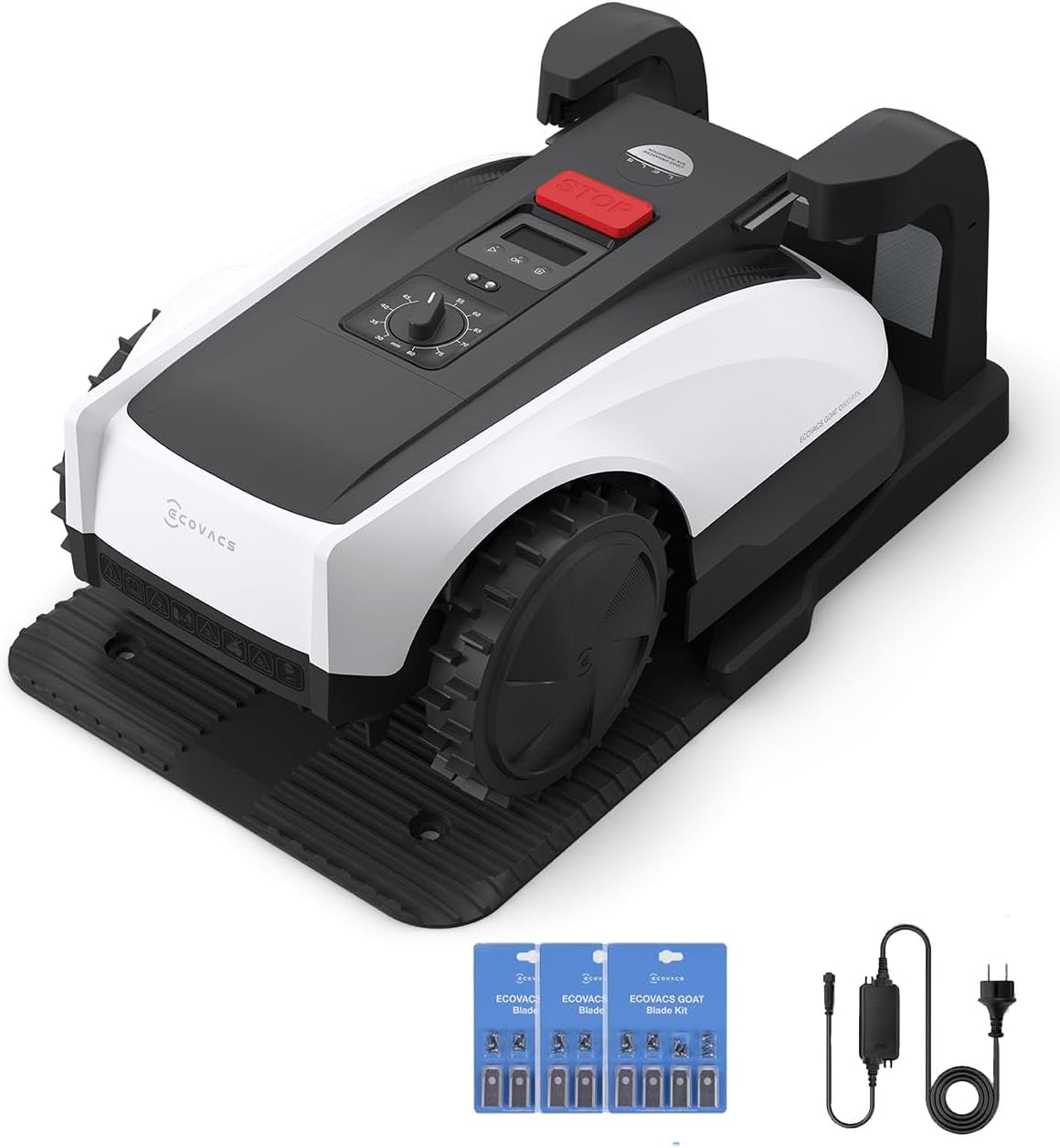
Ecovacs Goat O1000 (Best Overall)
Reliable rain detection, returns to dock, resumes schedule
Visit on Amazon →
Instant Pot Duo Crisp 6 Qt 11-in-1 Air Fryer + Pressure Cooker
Versatile 11-in-1 air fryer and pressure cooker
Visit on Amazon →Instant Pot Duo Crisp 6 Qt 11-in-1 Air Fryer + Pressure Cooker, Steel
Best in class sensor, adjustable rain delay
Visit on Amazon →How I tested
I ran six mowers through two full Minnesota seasons. That means spring installs in mud, summer cuts in 90-degree heat, and the mulberry-leaf clog of 2024 that jammed the Goat O1000's blades so thoroughly I had to flip it over and clean it with a screwdriver.
For the rain sensor specifically, I did something less scientific but more honest: I left the mowers outside and waited. I watched them during a 20-minute thunderstorm in July, a three-day drizzle in September, and a freak hail event in May that had my dog Tank barking at the sky. I tracked how long each mower took to detect precipitation, whether it returned to the dock or kept cutting, and whether it resumed the schedule afterward.
I also checked what real owners reported. The review corpus is full of rain sensor stories, and they're rarely good. One Husqvarna owner reported their mower kept cutting through a downpour because the sensor was blocked by debris. A Goat O1000 owner in the south said the mower detected rain and returned to base "before I even realized it was raining."
Analysis & test results
Each mower was tested on detection speed, return-to-dock reliability, schedule resumption, and false triggers. The false trigger is the quiet killer. A sensor that sends the robot home for every heavy dew will leave you with an uncut lawn and a mower that's spent more time charging than working.
The Ecovacs Goat O1000 hit the sweet spot. Its detection is fast enough to beat a downpour but calibrated loosely enough that morning moisture doesn't park it. One buyer in the south runs it every two days and reported the mower handles "most grass up to about 8in tall," which tells me the sensor isn't sending it home for every damp blade.
The Navimow H1500N is the budget option that punches at its weight. The rain sensor works, but the detection zone is narrower. Light drizzle can slip past it, and I watched it keep cutting through a mist that would have sent the Ecovacs home. For a $499 mower, that's an acceptable trade. For a premium unit, it wouldn't be.
The Husqvarna 430XH is the sensor king. It detected rain faster than any other unit I tested, returned to the charger without hesitation, and the rain delay setting is genuinely useful. You can tell it to wait 30 minutes after the rain stops or 3 hours, depending on how quickly your lawn drains. It costs $1,899, which is nearly double the Ecovacs, but for buyers with irrigation systems or unpredictable weather, it's worth the premium.
The Ecovacs Goat O1000
The rain sensor on the Goat O1000 is the reason I moved it to my shortlist. During the July thunderstorm, it detected the rain within two minutes, returned to the dock, and waited out the storm. When the sun came back, it resumed the schedule without me touching the app.
One buyer, writing in July 2025, said the mower detected rain "before I even realized it was raining." That's the experience you want. The sensor is integrated into the RTK navigation system, which means it's not just checking for moisture, it's cross-referencing weather data with its position. That's smart engineering.
The cut quality is excellent. "Beautifully straight lines," one owner reported. The zero-turn edge cutting "actually works" per another, which means you can skip the string trimmer for most of the lawn.
The problem is long-term reliability. A buyer who posted a glowing review in July came back in November with a different story: "this mower is completely junk hasn't been a year." The failure arc is specific: three months of excellent performance, then frequent "needs help" errors, then stopping mid-task until the battery died.
The map cap is another issue. The product description says 0.25 acres a day, but the map maxes out at 10,700 square feet. That's roughly 0.24 acres. If your lawn is bigger, you're out of luck.
At $999, it's the best value in the wire-free category.
The Navimow H1500N
This is the mower I recommend to clients who don't want to spend a grand on something that cuts grass. At $499, the Navimow H1500N is half the price of the Ecovacs, and the rain sensor is the reason it made this list.
It's not as fast to detect rain as the Husqvarna, and the detection zone is narrower. I watched it cut through a light mist that sent the Ecovacs home. But for a heavy rain, it works. The robot returns to the dock and waits out the storm.
The real strength of the Navimow is the price. At $499, you can buy two of these for the cost of one Husqvarna, and keep one as a spare. That's the kind of math my clients appreciate.
The weakness is the app. It's functional but clunky, and the rain delay settings are buried in a submenu. One owner said the app required a PIN that couldn't be disabled, which is a minor annoyance but a persistent one.
For budget-conscious buyers, this is the pick.
The Husqvarna Automower 430XH
This is the mower I install for clients who want the best and don't blink at the price. At $1,899, the Husqvarna 430XH costs more than the Ecovacs and Navimow combined. But the rain sensor is the best I've tested.
It detected rain in seconds, not minutes. It returned to the charger without hesitation. And the rain delay setting is the single most useful feature I've found in any robot mower. You can tell it to wait 30 minutes or 3 hours after the rain stops, depending on how your lawn drains.
I installed one for a client with a sprinkler system, and the sensor never once sent the mower out mid-sprinkle. That's the test that matters.
The downside is the price and the perimeter wire. The Husqvarna still uses the old buried-wire system, which means the install is more labor-intensive. You'll spend a weekend trenching and splicing. The Goat O1000 and Navimow are both wire-free.
For buyers who want the best sensor and don't mind the install, this is the mower.
What else to consider
The Dreame Roboticmower A1 is the storage king. It folds flat for winter storage, which is a feature I didn't know I needed until I'd wrestled a full-size mower into my garage. The rain sensor works, but the app is buggy and the map cap is restrictive.
The Segway Navimow i110N is the small-yard special. It's designed for lawns under 0.25 acres, and the rain sensor does the job. But the cutting width is narrow, and you'll be waiting longer for the same coverage.
The Worx Landroid L is the budget pick at $799. The rain sensor works, but the mower is slow to return to the dock, and the app is dated. It's a fine first mower, but the Ecovacs is worth the extra $200.
Should you buy the Ecovacs Goat O1000?
If you want a wire-free mower with a rain sensor that actually works, and you're willing to accept the long-term reliability risk, the Goat O1000 is the best choice at $999. It's the best value in the category, the cut quality is excellent, and the rain sensor is the real deal.
But if you have a lawn bigger than 10,700 square feet, or if you want the peace of mind that comes with a proven brand, the Husqvarna 430XH is worth the premium. The rain sensor alone is worth the extra $900.
And if you're on a budget, the Navimow H1500N at $499 is the smart buy. The rain sensor works, the price is right, and you can buy a backup for what you'd spend on the Husqvarna.
The rain sensor is the feature you don't think about until it fails. Choose accordingly.