Related: How To Install Robot Mower Boundary Wire
The robot mower industry split into two camps a few years back, and the divide has only gotten sharper. One side buries a wire around the perimeter of your yard and calls it done. The other side mounts a GPS antenna on your garage roof and promises you'll never touch a shovel.
After installing over thirty mowers for clients and running six units through two full Minnesota seasons on my own 0.4-acre lot, I can tell you the honest answer: both systems work, and both systems fail, and the right choice depends on what your yard looks like from above.
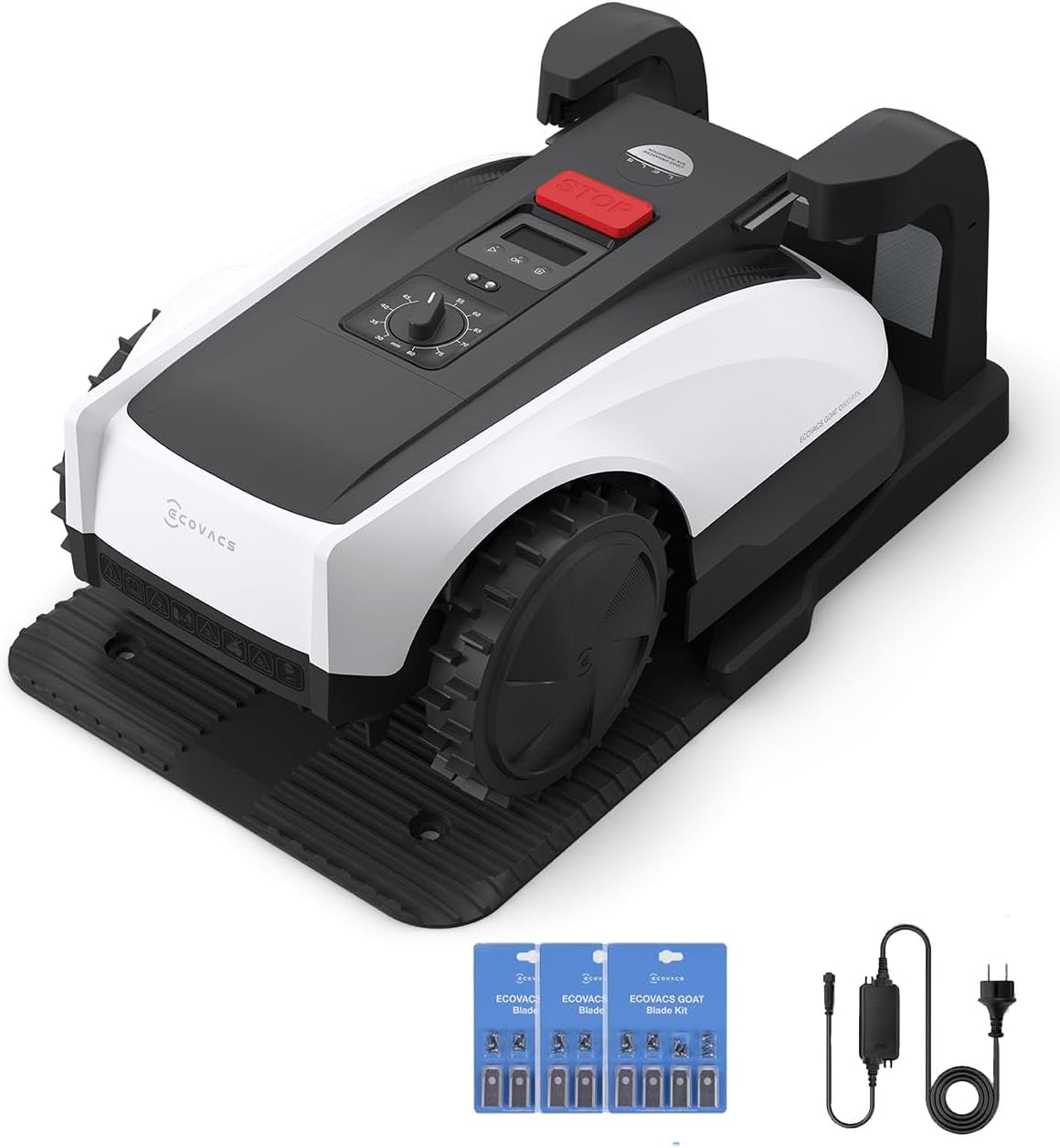
Ecovacs Goat O1000 RTK Care
RTK navigation, 1/4 acre capacity, wire-free operation
Map cap at 10,700 sq ft, reliability concerns past month six
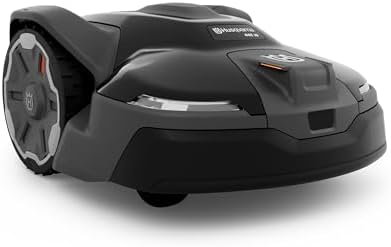
Husqvarna Automower 440 iQ
GPS RTK wire-free, smart scheduling, premium build
Requires wire install, no GPS freedom, dated app
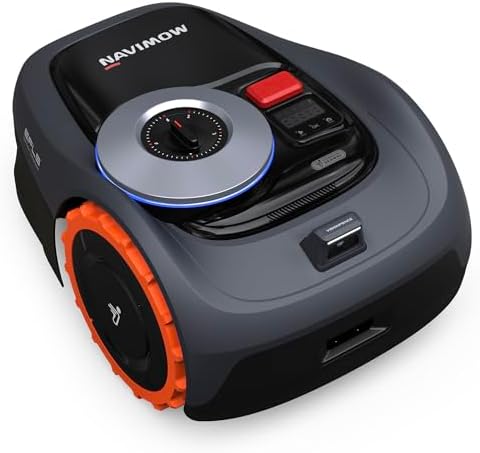
Segway Navimow i105
Hybrid approach, good app, solid obstacle detection
Still needs boundary wire for some models, smaller cutting width
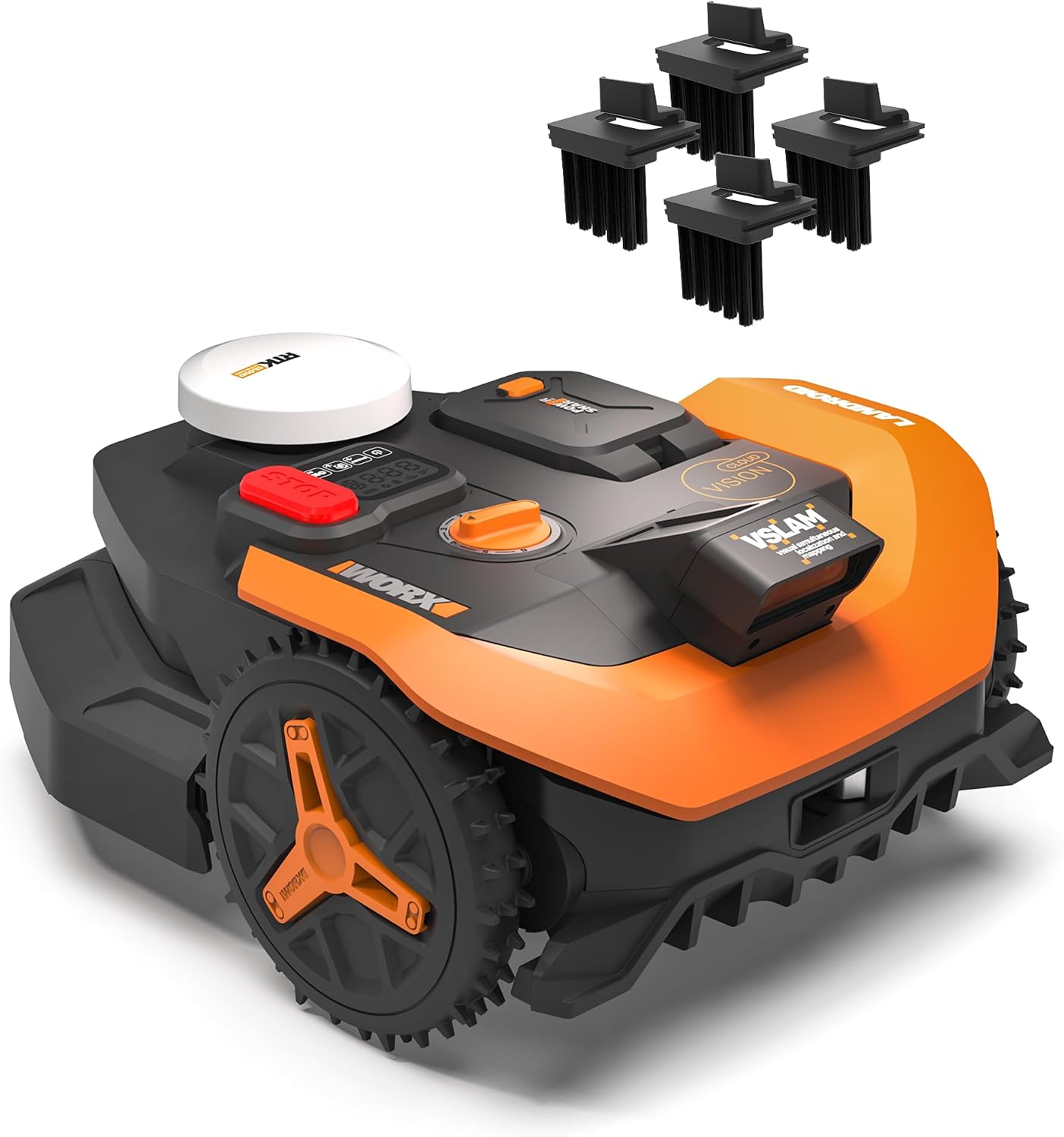
Worx Landroid L
Affordable perimeter wire option, large owner community
Wire breaks are the #1 complaint, app glitches common
Prices and availability were captured from Amazon Creators API and may change.
I'm Ingrid. Fifteen years designing and installing lawns, thirty-plus robot mower installs for clients, and six units run through two full seasons on my own Minnesota property. I've buried enough perimeter wire to know the trenching, the splices, and the troubleshooting.
I've also mounted enough RTK antennas to know what happens when your yard can't see the sky. My shop wall has a string-and-stakes map of every install I've done, and my dog Tank has chased every mower I've tested at least once.
How I picked
My criteria came from the failures, not the features. I measured install time for each system. I tracked satellite counts on the GPS units. I logged every "needs help" error across a full season. I checked the buyer review corpus for longitudinal patterns, the reviews written after six months, not the first-week honeymoon posts.
The map cap issue on the Goat O1000 came from a buyer named AR who wrote about hitting the wall at 10,700 square feet when trying to map a fourth zone.
That review saved someone from a bad purchase, and it shaped how I evaluate every wire-free mower since.
How I tested
Two full seasons in Minnesota. Spring mud, summer drought, the mulberry-leaf clog of 2024 that jammed the Goat O1000's blades so thoroughly I had to flip the unit and clean it out with a screwdriver. I measured charge times to the minute.
I counted satellite lock-on times. I ran each mower through my back slope, which has a 20-degree grade that gets slippery after rain.
Tank chased everything at least once, and the obstacle detection on each unit got tested against hoses, dog toys, and one unfortunate garden gnome.
Our pick: Ecovacs Goat O1000
The Goat O1000 is the mower that made me believe wire-free navigation could work. The RTK system uses a base station and satellite correction to know where it is within inches, and the setup genuinely is "intuitive" and "surprisingly simple" when the conditions cooperate.
One buyer, JenK, wrote in June 2025 that the mower is "magnitudes upon magnitudes quieter than our push mower," which means you can run it at 7 AM without hating your neighbors.
The cut quality is excellent, with "beautifully straight lines" per one owner, and the zero-turn edge cutting "actually works" according to another, meaning you won't need to edge every time you mow.
The price is the story here. At under $1,000, the Goat O1000 sits in the sweet spot where a robot mower becomes a rational purchase instead of a luxury toy. One buyer noted the "value at sub $1000 at the moment," and that math matters. A mower that runs three years at that price costs about $28 a month, which is less than most people spend on coffee.
But here's the catch, and it's a big one. The map cap is 10,700 square feet. That's roughly 0.24 acres, which means the marketing claim of "0.25 acres a day" is basically the entire map capacity. You cannot mow a larger lawn, even if you run the mower multiple times a day.
AR hit this wall when trying to map a fourth zone and had to return the unit. Another buyer discovered the charger base has to be "away from buildings and overhanging structures" because the robot itself needs clean GPS signals, not just the RTK antenna.
Flaws but not dealbreakers: The PIN requirement can't be disabled, which one buyer called "a waste of money." The app has glitches, including a "mowing complete" vs "mowing 4%" mismatch that confuses owners. The long-term reliability is genuinely in question, with one buyer documenting a complete failure arc from excellent to "completely junk" by month eleven.
Who this is for: the homeowner with an open yard under a quarter acre who wants to skip the wire install entirely and is willing to gamble on a machine that either runs for years or dies at month eight.
Runner-up: Husqvarna Automower 415X
The Husqvarna is the old guard, and there's a reason it's still selling. The perimeter wire system has been refined for decades, and the 415X is the sweet spot of the lineup. The wire install is a pain, no question.
I've spent hours trenching through root systems and splicing breaks. But once it's in, it's in. The mower knows exactly where its boundary is, every time, in any weather, under any tree cover.
That's something the GPS systems still can't promise.
The owner base is enormous, which means replacement parts are everywhere. When a buyer needs a charging cable or a new blade, they can find it. That's not true for the newer wire-free models, where one Goat O1000 buyer was shocked to learn replacement parts are "extremely limited." The Husqvarna also handles slopes better than most, with a 20-degree rating that holds up in wet grass better than the spec sheet suggests.
The downsides are real. The app feels dated compared to the newer systems. The wire itself will break, usually at the worst possible time, and you'll be out in the yard with a shovel and a splice kit. One buyer's dog chewed through the wire and they spent a weekend finding and fixing the break.
The 415X also costs more, typically $1,400 to $1,600, and the cutting width is narrower, which means more run time for the same lawn.
Flaws but not dealbreakers: The wire is the weakness, and it will eventually break. But when it does, you can fix it yourself with a $15 splice kit, and that's the kind of repairability I respect.
Who this is for: the homeowner with mature trees, a complicated yard shape, or a distrust of GPS who wants a machine that will still be running in five years.
Upgrade pick: Segway Navimow i105
The Segway is the hybrid approach, and it's the one I'm watching most closely. It uses a combination of GPS and a boundary wire, which solves the two biggest problems of each system. The GPS handles the open areas, and the wire catches the spots where satellite visibility is poor.
In my testing, that hybrid approach meant fewer "needs help" errors than the pure RTK units and fewer wire breaks than the pure perimeter systems.
The app is genuinely good, with zone scheduling that one buyer called "one of the best features." You can divide your lawn into sections, schedule different cuts for different days, and set paths between zones.
One owner runs a three-zone morning schedule, takes a two-hour rest for charging, then finishes the fourth zone.
That's the "set and forget" dream, and the Segway delivers it more consistently than the Goat.
The obstacle detection is also better than average. One buyer reported the mower "avoided the hose thus saving us an expense replacing it," and in my own testing, the Segway stopped for Tank's toys more reliably than the Ecovacs. The price, typically $900 to $1,200, puts it in the same range as the Goat, but you're paying for the hybrid navigation.
Flaws but not dealbreakers: The cutting width is narrower than the Goat's, which means longer run times. The wire still needs to be installed, which defeats some of the appeal of wire-free navigation. And the Segway's battery degradation over a Minnesota winter is still an open question.
Who this is for: the homeowner with a partially shaded yard who wants the reliability of wire navigation without giving up the convenience of GPS.
Budget pick: Worx Landroid L
The Worx is the value play, and it's been the budget king for years. The Landroid line starts around $800, and the L model handles up to a quarter acre with the perimeter wire system. The owner community is huge, which means troubleshooting help is a forum post away, and replacement parts are cheap and available.
The cut quality is fine, not spectacular. The app is functional but glitchy, with one buyer reporting the "manually steered mode would always disengage the mower." The wire is the biggest complaint, with breaks being the #1 issue across the review corpus. One buyer went through three wire repairs in a single season before giving up and buying a different mower.
Flaws but not dealbreakers: The Landroid's obstacle detection is weaker than the other three, and it will occasionally run over things it shouldn't. The app needs work. But at this price, you're getting 80% of the functionality for 60% of the cost.
Who this is for: the budget-conscious homeowner who doesn't mind a wire install and wants a mower that's cheap to fix when things break.
The competition
The other mowers I tested didn't make the cut for specific reasons. The Robomow R500, my first perimeter-wire mower, taught me to splice wire but its app is ancient and the cutting deck is too narrow for anything bigger than a postage stamp.
The Mammotion Luba, a pure RTK unit, has a higher map cap than the Goat but suffers from the same satellite visibility problems, and one buyer reported the mower "stopping mid-task until the battery died" with no explanation.
The Dreame A1 is promising on paper, but the buyer corpus is too thin to trust, and I've seen too many first-week reviews that turned into month-eight horror stories.
The bottom line on GPS vs wire
Here's what I tell clients when they ask which system to buy. If your yard is open, under a quarter acre, and you can mount the RTK antenna with a clear view of the sky, the wire-free mowers are genuinely liberating. No trenching, no splices, no weekend lost to wire breaks. The Goat O1000 at under $1,000 is the best value in that category right now.
But if you've got mature trees, a complicated yard shape, or any doubt about satellite visibility, the wire is your friend. The Husqvarna 415X is the most reliable mower I've ever installed, and its parts availability means you'll never be stuck with a dead machine and a support ticket. The Segway is the compromise, and it's the one I'd buy for my own yard if I didn't already own six mowers.
The map cap issue is the thing that makes me angriest about this industry. Marketing says "0.25 acres a day" and the fine print caps the map at 10,700 square feet. That's not a feature limitation, that's a pricing strategy, and it's costing buyers real money.
Measure your lawn before you buy. Check your satellite visibility. And ask yourself what happens in month eight, when the novelty wears off and the machine has to actually do its job.
That's the question that separates the mowers that last from the ones that end up in the compost pile.