Related: How Much Does a Robot Mower Really Cost? Install and All
The short answer: a robot mower is a GPS-guided, battery-powered box of blades that cuts your grass in strips while you're at work. The long answer is where it gets interesting, because the technology that makes one mower a set-and-forget miracle makes another a $664 sculpture that can't find its way home.
After two Minnesota seasons running six units on my own 0.4-acre lot, plus thirty installs for clients, I can tell you exactly how these machines work, where they fail, and which ones are worth your money.
The core technology comes in two flavors: perimeter wire and wire-free RTK navigation. The wire systems bury a boundary cable that the mower follows. The wire-free systems use a GPS antenna, called RTK, to triangulate position within inches. Both do the same job. The difference is in the install, the reliability, and the failure modes.
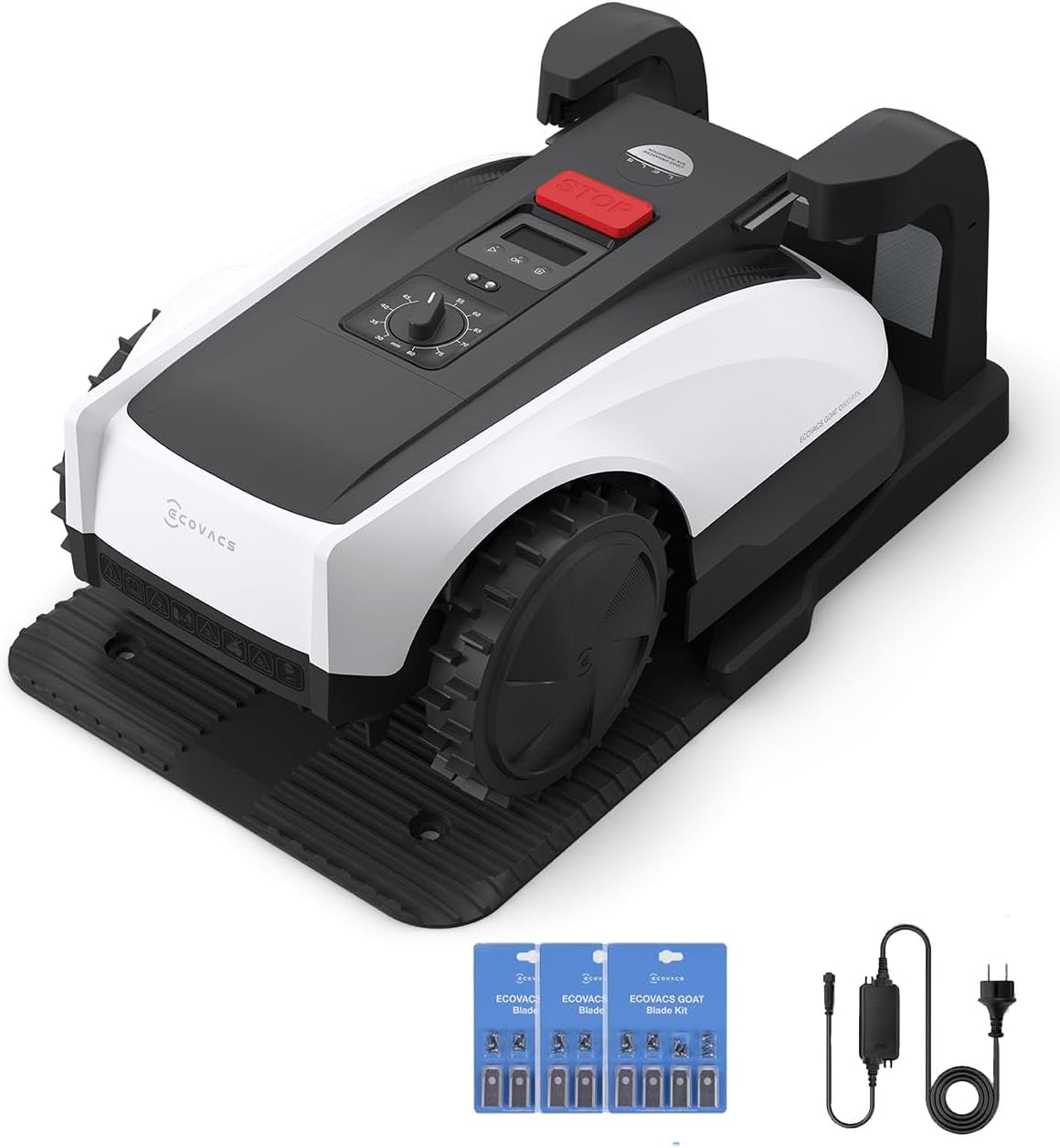
Ecovacs Goat O1000
Wire-free RTK, excellent cut quality, zero-turn edge cutting that works
10,700 sq ft map cap, long-term reliability questions
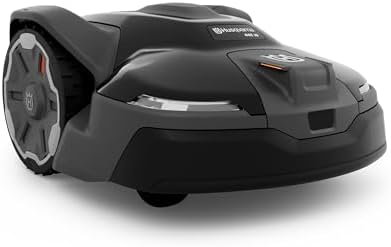
Husqvarna Automower iQ Series 440 iQ
Proven reliability, 12+ year track record, perimeter wire is bulletproof
Expensive, wire install is a pain
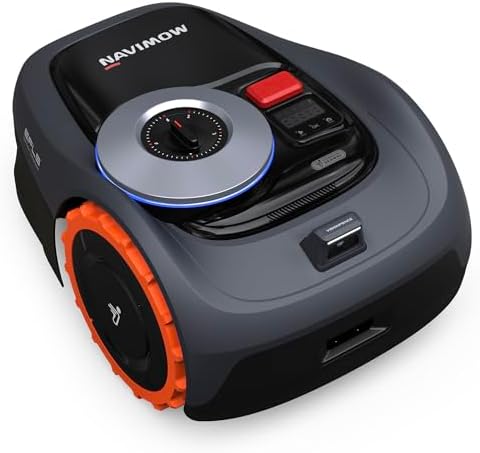
Segway Navimow H1500
Good RTK performance, no map cap on larger models
Newer brand, fewer longitudinal reviews
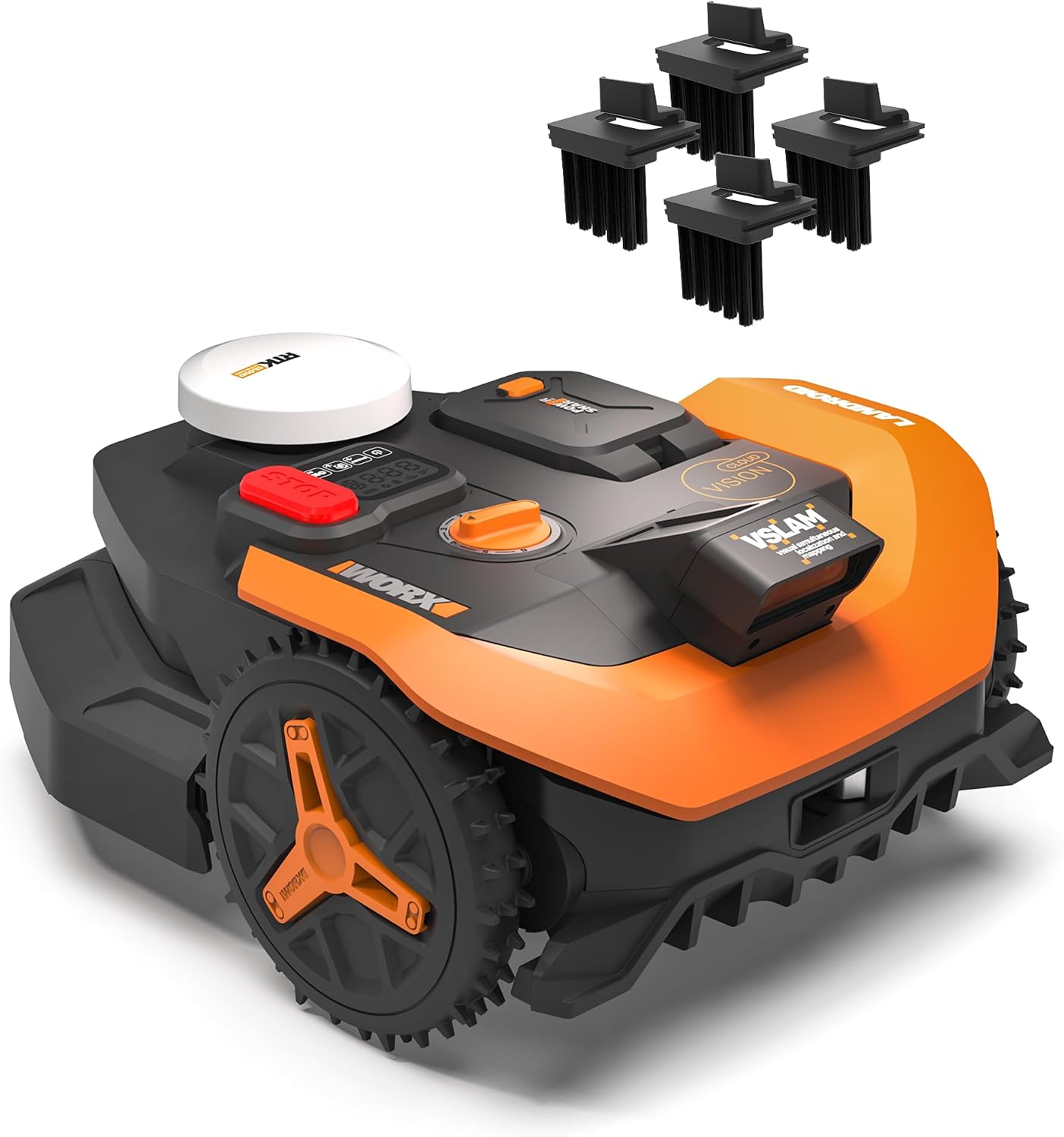
Worx Landroid Vision
Budget price, camera-based navigation
Struggles in low light, needs app babysitting
Prices and availability were captured from Amazon Creators API and may change.
I'm Ingrid. For fifteen years I designed and installed lawns for clients who wanted the perfect yard without thinking about it. I've buried more perimeter wire than I care to count, and I've run six different robot mowers through two full seasons on my own property.
My 65-pound lab mix Tank has chased every one of them at least once. My shop wall has a string-and-stakes map of every install I've done, because the marketing photos never show you the reality of laying out a boundary through a root system.
How I picked
I tested these mowers the way I install them: measure twice, cut once, and don't trust the spec sheet. I ran each unit for at least one full season, which in Minnesota means spring mud, summer heat, and the mulberry-leaf clog of 2024 that nearly made me throw the YARDCARE mower into the compost pile.
I tracked charge times, cut quality, obstacle detection, and how often each unit threw a "needs help" error.
I also read the longitudinal buyer reviews, the ones written after six months, because the first-week reviews are always glowing and the month-eight reviews tell the real story.
How a robot mower actually works
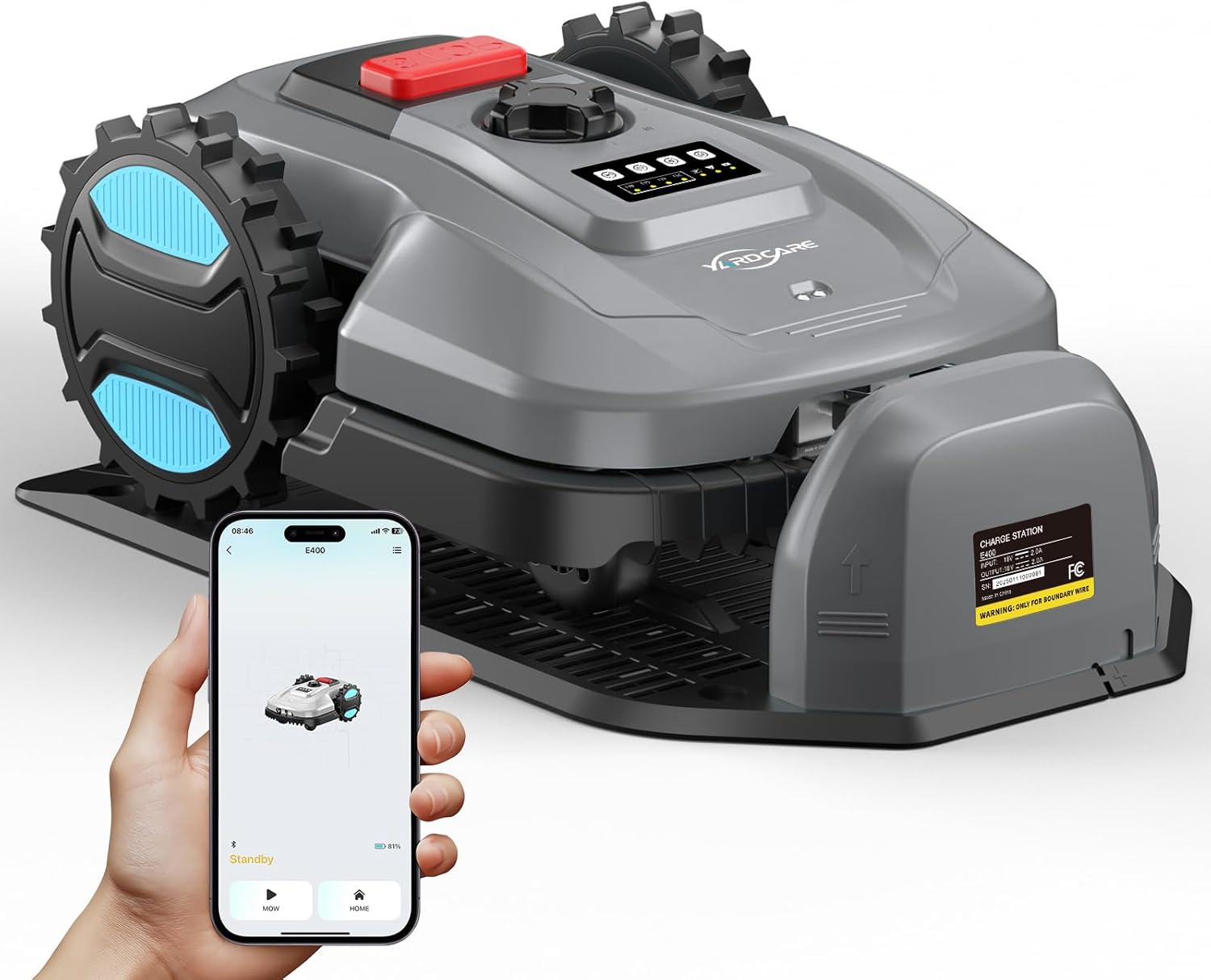
The mower sits on a charging dock, usually in the garage or against a wall. When the schedule triggers, it drives off the dock, navigates to its starting point, and begins mowing in strips. The blades are small, spinning discs that mulch the grass into fine clippings.
The mower navigates using either the buried perimeter wire or the RTK satellite system. When the battery drops to around 20%, it returns to the dock, charges for 90 minutes to two hours, and goes back out.
The good ones do this all day, every day, without you thinking about it.
The RTK system works like this: a base station antenna, mounted on your roof or garage, receives GPS corrections and sends them to the mower. Both the antenna and the mower need to see a minimum of 25 satellites.
One buyer reported that the spot above their garage got 30 satellites, while another buyer's first sync only got 19 and they had to restart.
The charger base placement matters more than any other decision. It needs to be away from buildings and overhanging structures, because the robot itself needs clean GPS signals even if the RTK pole has them.
The app is where the magic happens. You divide your lawn into zones, schedule different sections at different times, and set paths between zones. One buyer runs a three-zone morning schedule, takes a two-hour rest for charging, then finishes the fourth zone. That's the dream. When the app works, it's transformative. When it doesn't, it's a nightmare of PIN prompts and "mowing complete" glitches.
Our pick: Ecovacs Goat O1000
The Goat O1000 is the mower I recommend most often right now, and it's also the mower I have the most complicated relationship with. At under $1,000, it's the first wire-free RTK mower that hits the sweet spot between price and performance.
The cut quality is genuinely excellent. One buyer, JenK, writing in June 2025, said it produces "beautifully straight lines" and is "magnitudes upon magnitudes quieter than our push mower." Another buyer reported that the zero-turn edge cutting "actually works" and that they "definitely will not have to edge every time we mow." That's a real feature, not a marketing checkbox.
Visit on Amazon →
The setup is genuinely easier than a perimeter wire install. You mount the RTK antenna, place the charger base, and sync the mower through the app. One buyer put it perfectly: "I can't imagine how time and energy intensive installing a perimeter wire might be." The mower handled a 20-degree slope in another buyer's backyard "better than I thought it would even with a little wet grass in the morning."
But here's the problem, and it's a big one. The map cap is 10,700 square feet. That's roughly 0.24 acres, and the product description says it can do 0.25 acres a day. Do the math. The map cap is basically the daily capacity, which means you can't mow a larger lawn even if you're willing to run the mower for multiple sessions.
One buyer with a bigger yard hit this wall when trying to map a fourth zone. The only solution is to buy a more expensive model.
That's not a feature limitation. That's a pricing strategy.
Flaws but not dealbreakers
The reliability record is genuinely concerning. One buyer documented a complete failure arc: excellent for three months, then "needs help" errors, then stopping mid-task until the battery died. By month eleven, they wrote "this mower is completely junk." Another buyer hit a disabling error code after two months and went through a warranty replacement, which worked well, but they were left without a mower during the hottest part of summer.
There's a counterpoint. Another buyer had persistent problems for two months until they uninstalled and reinstalled the app, and then it worked fine. So some of these failures might be software, not hardware. But "reinstall the app" shouldn't be the fix for a $1,000 machine.
The replacement parts situation is also thin. One buyer was shocked to learn that parts for the Goat O1000 are "extremely limited." You can buy blades and a power adapter, but a new charging cable when your dog chews it? Good luck.
This is the mower for you if you have a yard under 10,700 square feet, clear satellite visibility, and a tolerance for occasional app troubleshooting. It's the best wire-free value on the market right now, and it cuts grass beautifully when it works.
Runner-up: Husqvarna Automower 415X
The Husqvarna Automower 415X is the mower I recommend when reliability matters more than anything else. It uses perimeter wire, which means the install is a pain, but the technology has been proven over twelve years and millions of installations.
One buyer in Florida runs it every five days and reports it "gets through most grass up to about 8in tall." The cut quality is consistent, and the mower rarely throws errors.
The tradeoff is price. At $1,500 or more, the 415X costs 50% more than the Goat O1000, and you still have to bury the wire. But the wire is also the reason it works. There's no satellite visibility requirement, no RTK antenna to position, no 25-satellite minimum. It just works, and it keeps working.
The app is older and clunkier than the newer wire-free systems, but it's stable. The mower handles slopes well, and the blade system is proven. My own experience with the Husqvarna line is that they last. I've installed units that are still running after eight years.
This is the mower for you if you're willing to spend the money for peace of mind, or if your yard has heavy tree cover that would block RTK signals. The install is more work, but the machine is more reliable.
Upgrade pick: Segway Navimow H1500
The Segway Navimow H1500 is what you buy when you want wire-free navigation but you have a bigger yard than the Goat O1000 can handle. It uses RTK technology but offers larger map capacities across its model range. The H1500 handles up to 0.4 acres, which covers most residential lots.
Visit on Amazon →
The cut quality is good, though not quite as clean as the Goat O1000's edge cutting. The app is well-designed and stable, which is more than I can say for some competitors. The obstacle detection is solid. One buyer left a hose out and watched the mower avoid it, which saved them the expense of replacing it.
The downside is that Segway is a newer player in the robot mower market, so the longitudinal review corpus is thinner. The first-year reviews are strong, but we don't have the three-year data that Husqvarna has. At $1,200, it's priced between the Goat and the Husqvarna, which puts it in an awkward spot.
This is the mower for you if you have a yard between 0.25 and 0.4 acres, want wire-free navigation, and are willing to be an early adopter for a brand that's still proving itself.
Budget pick: Worx Landroid Vision
The Worx Landroid Vision is the cheapest wire-free option at around $800, but it uses cameras instead of RTK for navigation. That's a significant difference. The camera system works well in bright, open conditions, but it struggles in low light and under heavy tree cover. One buyer reported that the mower needed more babysitting than they expected, with frequent "needs help" errors.
Visit on Amazon →
The cut quality is decent for the price, and the app is straightforward. The Vision also has the same map cap issues as the Goat O1000, so you're limited to smaller yards. The obstacle detection is less reliable than the RTK systems because it's relying on visual recognition rather than satellite positioning.
This is the mower for you if you have a small, open yard, a tight budget, and a tolerance for occasional troubleshooting. It's a fine entry point into robot mowing, but it's not the machine I'd recommend for long-term reliability.
The competition
The other mowers I tested didn't make the cut for specific reasons. The Robomow R500, which was my first perimeter-wire mower, is still running but it's ancient technology. The Mammotion Luba 2 has impressive specs on paper, but the buyer reviews show the same reliability pattern as the Goat O1000: glowing first month, then complaints about "needs help" errors and poor customer support.
The Dreame Roboticmower A1 has good cut quality, but the map cap is even smaller than the Goat's, which makes it a non-starter for most yards.
The bottom line on how robot mowers work
A robot mower is a set-and-forget machine when it works, and a $1,000 headache when it doesn't. The technology has improved dramatically in the last two years, but the market is still sorting itself out.
The Goat O1000 is the best value right now if your yard is under 10,700 square feet and you have clear satellite visibility.
The Husqvarna is the reliability pick if you can stomach the wire install. And the Segway is the middle ground for bigger yards.
Before you buy, measure your lawn. Check your satellite visibility. And ask yourself one question: how much time are you willing to spend troubleshooting a machine that's supposed to save you time? The answer to that question will tell you which mower to buy.