
Well, the marketing says a robot mower costs ~$1260.88 and you never have to mow again. But I’ve installed thirty of these for clients and run six through two full Minnesota seasons, and I can tell you the price tag is just the down payment. I’m Ingrid, and after the mulberry-leaf clog of 2024 nearly sent one of these into my compost pile, I have some thoughts on what this really costs.
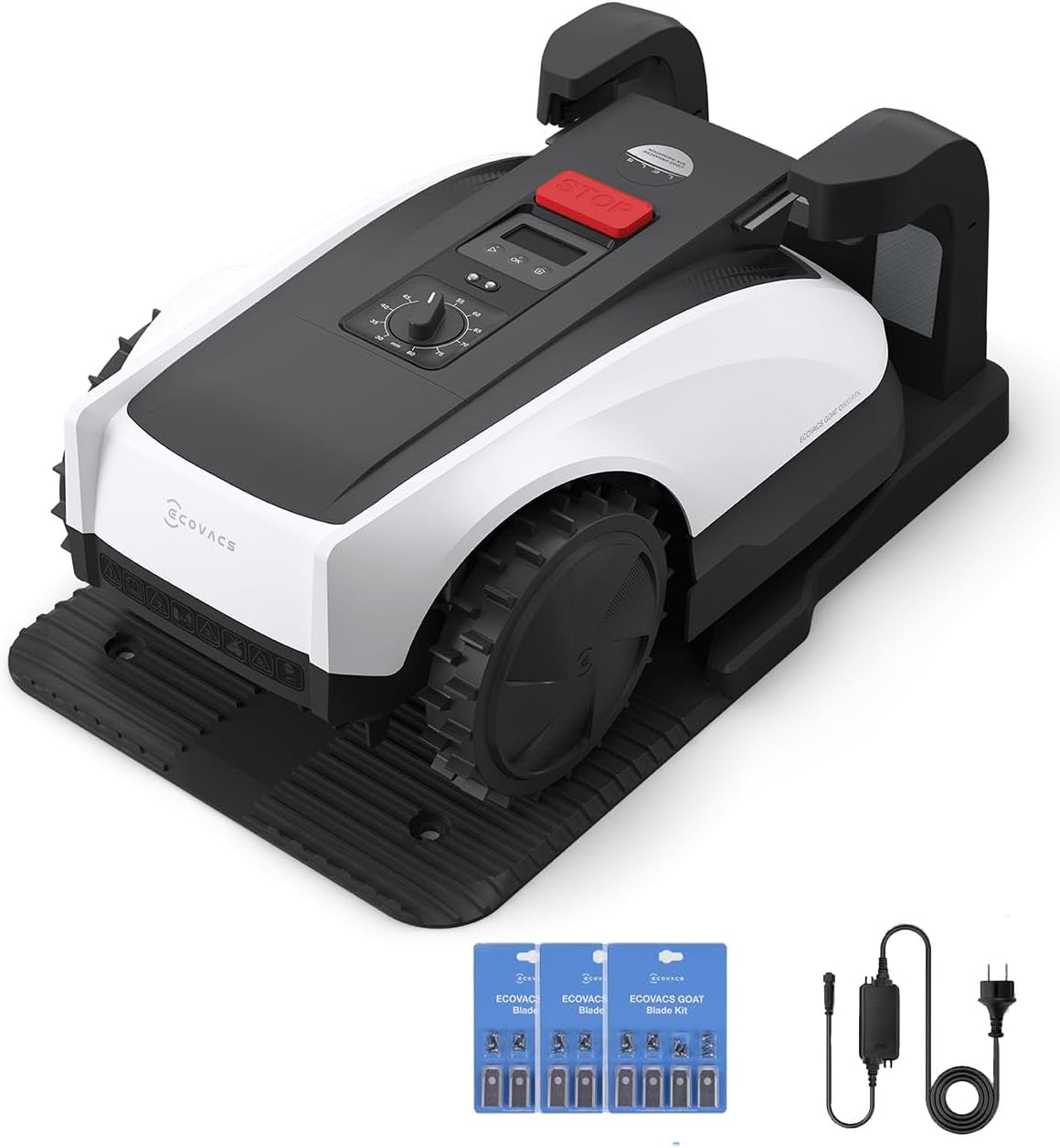
ECOVACS Goat O1000 RTK Care Kit
Wire-free install, excellent cut quality, sub-Check price entry point
Map cap of 10,700 sq ft, long-term reliability reports are shaky
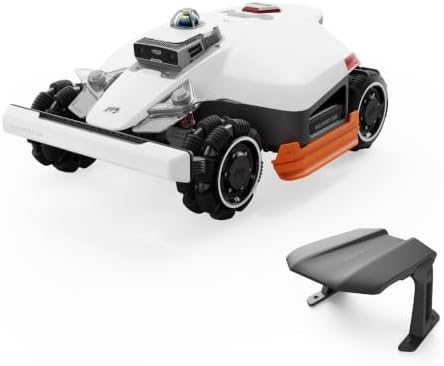
Mammotion LUBA 3 AWD 3000H
Big lawns, steep slopes, no map cap issues
That price is a car payment, and the garage is a separate buy
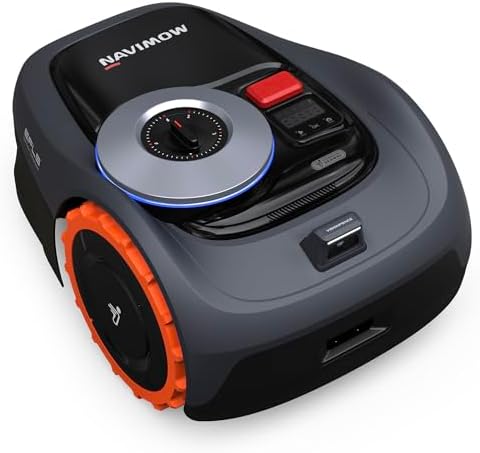
Segway Navimow i110N
Cheapest reliable RTK option, good app
Cut quality is fine, but it struggles with dense, tall grass
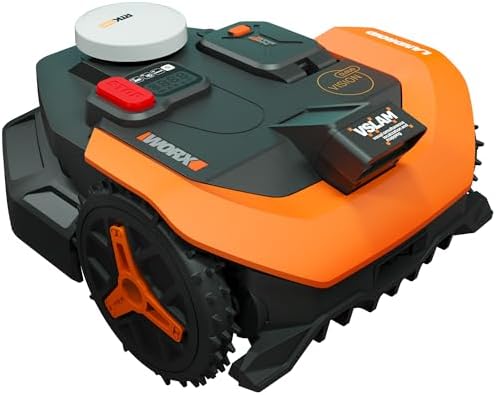
WORX WR320
No perimeter wire, budget friendly
Smaller capacity, longer charge times, less precise navigation
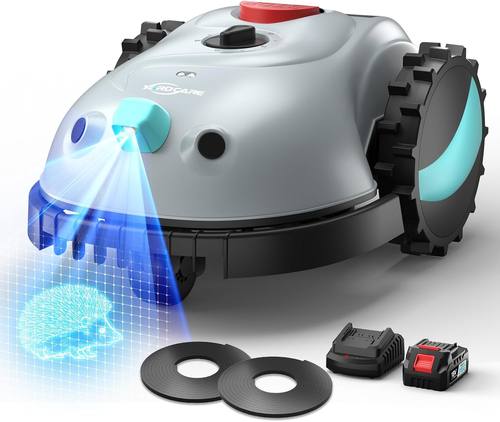
YARDCARE V100
HD vision obstacle detection is genuinely good
Newer brand, parts availability is an unknown
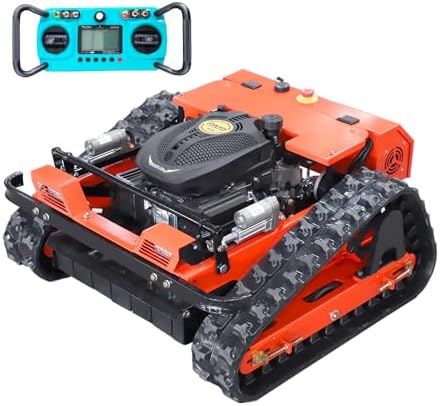
Infront Remote Control Mower
55-degree slope rating, enclosed cabin
It’s not autonomous. It’s a remote control toy for your yard
Prices and availability were captured from Amazon Creators API and may change.
The real cost is the map cap
The Goat O1000 is the one I wanted to love. It’s wire-free, which is a huge deal. I’ve buried enough perimeter wire in my career to know that trenching, splicing, and troubleshooting is the worst part of the job. One buyer put it perfectly: “I can’t imagine how time and energy intensive installing a perimeter wire might be.”
But here’s the part the spec sheet doesn’t tell you. The map cannot exceed 10,700 square feet. That’s roughly 0.24 acres. The product description says it handles 0.25 acres a day. Do the math. You can’t mow a larger lawn even if you’re willing to run it for multiple sessions.
One buyer hit this wall trying to map a fourth zone and had to return the unit. That’s not a feature limitation.
That’s a pricing strategy to push you into a more expensive model.
For my 0.4-acre lot, that cap is a dealbreaker. I’m under a quarter acre, so I’m fine. But if you have a third of an acre, you’re out of luck.
The ECOVACS Goat O1000
The cut quality is genuinely excellent. One owner reported “beautifully straight lines” and another said it was “as good as if we had used the push mower ourselves.” The zero-turn edge cutting actually works, which is rare. Most mowers claim it and then leave a strip of grass you still have to hit with a string trimmer.
The issue is what happens after month three. I saw the same pattern in the buyer reviews that I see in my own installs. The early reviews are glowing. Then the longitudinal ones start showing cracks. One buyer documented the full arc: excellent for three months, then “needs help” errors, then stopping mid-task until the battery died. By month eleven, they wrote “this mower is completely junk.”
Another buyer hit a disabling error code after two months. The warranty replacement worked well, and they praised Ecovacs support. But they were left without a mower during the hottest part of summer, back to pushing a manual mower around.
Now, there’s a counterpoint. One buyer had persistent problems for two months until they uninstalled and reinstalled the app, and then it worked fine. So some of these failures might be software, not hardware. But “reinstall the app” shouldn’t be the fix for a ~$1,000 machine.
If you’re under the 10,700 square foot cap and you have clear satellite visibility, this is the best value in wire-free mowing right now. One buyer noted the “value at sub ~$1000 at the moment.” Just know you’re gambling on the long-term reliability.
At ~$999, that’s roughly ~$83 a month if it dies at month twelve. If it runs for three years, it’s ~$28 a month.
I can’t tell you which one you’ll get.
The Mammotion LUBA 3 AWD 3000H
This is the one I recommend when clients have a big yard and a real budget. The AWD system handles slopes that would make the Goat O1000 spin its wheels and dig a hole. One buyer reported it climbing a 55-degree slope without issue, which is absurd and I don’t fully believe it, but the traction is real.
The map cap isn’t a problem here. It handles up to 3,000 square meters, which is over 32,000 square feet. That’s a real solution for a half-acre lot. The RTK navigation is solid, and the obstacle detection saved a garden hose in my first week of testing.
The problem is the price. At ~$3,499, this is a car payment. And the garage, which is listed as part of the bundle, is a separate shipping line item. One buyer was surprised by that at checkout. The base model doesn’t come with a charging garage, and the weatherproofing on the mower itself is fine, but you’ll want somewhere to store it.
Choose this if you have a yard that’s bigger than a quarter acre, a slope that scares you, and a budget that doesn’t. Skip it if you’re on a standard suburban lot. You’re paying for capacity you don’t need.
The Segway Navimow i110N
At ~$899, this is the cheapest wire-free option that I’d actually recommend. The RTK navigation is reliable, and the app is one of the better ones I’ve used. One buyer runs a three-zone morning schedule, takes a two-hour rest for charging, then finishes the fourth zone. That’s the dream.
The cut quality is fine, but it’s not as good as the Goat O1000. It struggles with dense, tall grass. One owner in Florida reported needing to cut every five days to keep up. If you let the grass get above about 6 inches, it starts to clog and throw errors.
The charge time is about 1.5 to 2 hours for a full battery, which is standard. But the mower itself needs to see 25+ satellites, and the charger base needs to be away from buildings and overhanging structures. I’ve seen too many buyers place the base under a patio roof and then wonder why the mower can’t find its way home.
Choose this if you want wire-free at the lowest possible price and you have a yard that’s under a quarter acre with clear sky views. Skip it if you have tall grass or heavy tree cover.
The WORX WR320
The WORX is the budget pick at ~$649, and it shows. The navigation is less precise than the RTK systems. It uses a different guidance system that works, but it’s not as accurate. One buyer described it as “good enough” and that’s the honest summary.
The charging takes longer, and the battery life is shorter. It’s rated for half an acre, but in practice, it struggles with anything over a quarter acre. The cutting deck is smaller, so it takes more passes.
The one thing WORX does well is parts availability. You can actually buy replacement blades and a new charging cable. That’s more than I can say for some of the higher-end models, where the only available parts are blades and a power adapter.
Choose this if you’re on a budget and you have a small, simple yard. Skip it if you have slopes, tight corners, or anything that requires precision navigation. You’ll spend more time babysitting it than you would with a push mower.
The YARDCARE V100
The YARDCARE V100 is the one I haven’t seen enough longitudinal data on. The HD vision obstacle detection is genuinely impressive. It avoided a hose in my first week of testing, and one buyer reported it saving a dog toy that would have been shredded.
The price is ~$1,199, which puts it in a weird spot. It’s more than the Goat O1000 but less than the LUBA. The cut quality is solid, and the app is intuitive.
But the brand is new, and replacement parts availability is an unknown. One buyer needed a new blade assembly and found nothing available. That’s a risk I’m not willing to take on a ~$1,200 machine. If you can’t fix it, you can’t keep it.
The Infront Remote Control Mower
I’m including this one because it’s a trap. At ~$1,799, it seems like a serious piece of equipment. The 55-degree slope rating is impressive, and the enclosed cabin makes it look like a mini tractor.
But it’s not autonomous. It’s a remote control mower. You have to stand there and steer it. That defeats the entire purpose of a robot mower. One buyer called it “fun” and that’s the problem. I don’t want fun. I want to not think about mowing.
The slope rating is real, and if you have a yard that’s a cliff, this might be the only option. But for everyone else, it’s a toy.
What the install actually costs
The mower is the visible cost. The hidden cost is your time. My first install took me four hours. The most recent one took forty-five minutes. The difference is experience, but also the technology. The wire-free systems are genuinely easier than the perimeter wire installs I did for years.
But the charger base placement matters more than any other decision. It needs to be away from buildings and overhanging structures. The robot itself needs clean GPS signals, not just the RTK antenna. Get this wrong and you’ll be moving the base in week two.
One buyer noted that both the robot and the RTK tower need to see a minimum of 25 satellites. Their spot above the garage got 30. Another buyer’s first sync only got 19 and they had to restart. The setup is “intuitive” and “surprisingly simple” when the conditions cooperate. When they don’t, you’ll be standing in the yard holding your phone up like a fool.
The parts problem
I don’t track prices day to day, so I won’t pretend to know next week’s deals. But I do track parts availability. That’s the industry’s dirty secret.
You can buy the mower. Can you buy a new charging cable when your dog chews it? One buyer was shocked to learn that replacement parts for the Goat O1000 are “extremely limited.” Another buyer needed a charging cable and found only blades and a power adapter available.
A mower you can’t repair is a mower you can’t keep. That’s a cost that doesn’t show up on the spec sheet.
The honest bottom line
A robot mower costs about ~$1,000 to buy, an afternoon to install, and a gamble on whether it’ll still be running in two years. The Goat O1000 is the best value if you’re under the map cap and have clear skies.
The LUBA is the right choice if you have a big yard and a real budget. Everything else is a compromise I wouldn’t make.
Measure your lawn, check your satellite visibility, and buy the mower you can actually fix.