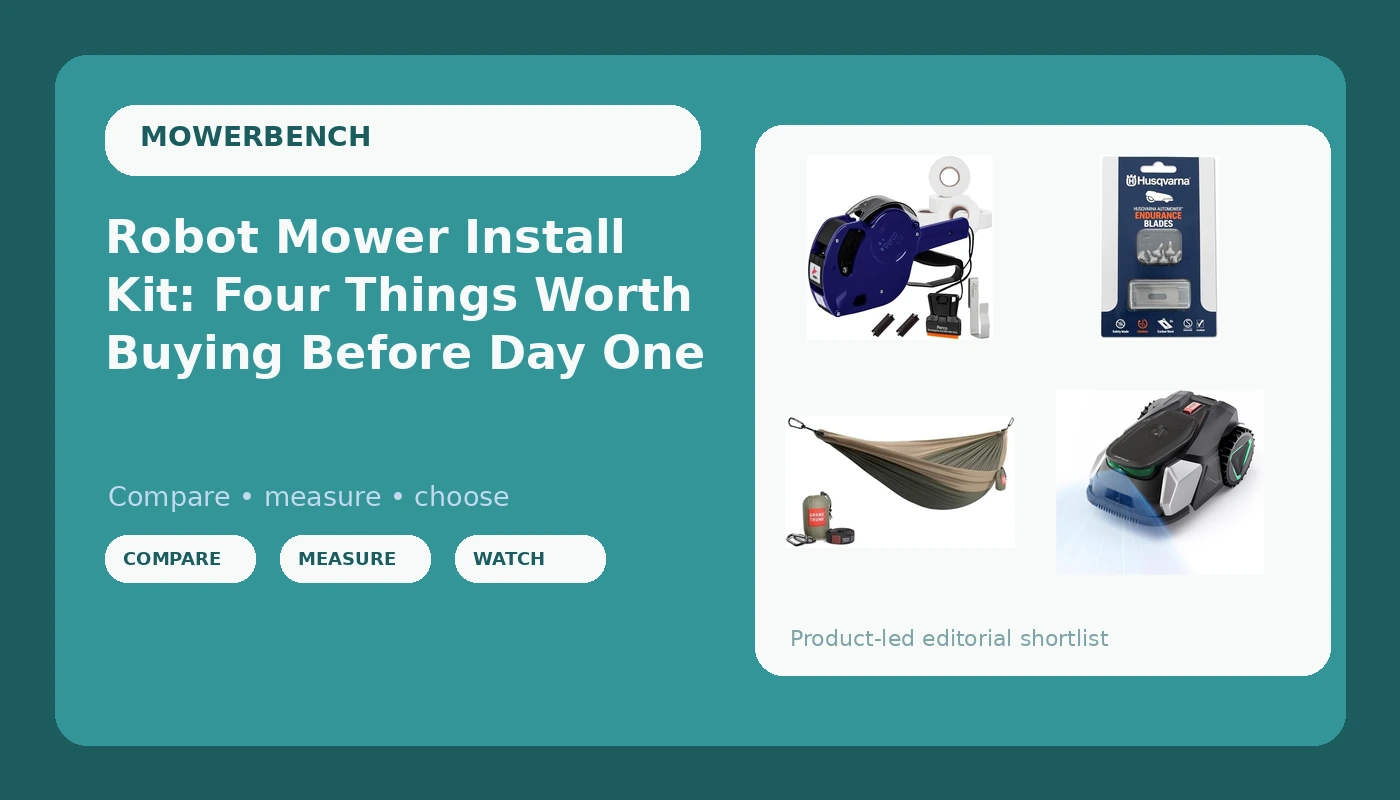
Every March my phone starts ringing, and every March I hear the same sentence: "I bought the mower, now what?" People think the purchase ends at the mower. It doesn't. A robot mower install kit is a small system, and after fifteen years of installing lawns and six robot mowers of my own through two Minnesota seasons, I can tell you the machine is maybe sixty percent of the job. The rest is consumables, labels, and the small comforts that keep you on site past hour four instead of rolling up the wire and going home.
Related: Perimeter Wire Layout Mistakes I Keep Seeing
The short version: the mower is the purchase, the blades are the subscription, the labels are what save you in July, and the hammock is the reason you finish the install at all. Two of the four items below are not mower parts, and that is the entire point. An install kit is a job site kit, and job site kits have always included things that have nothing to do with the machine.
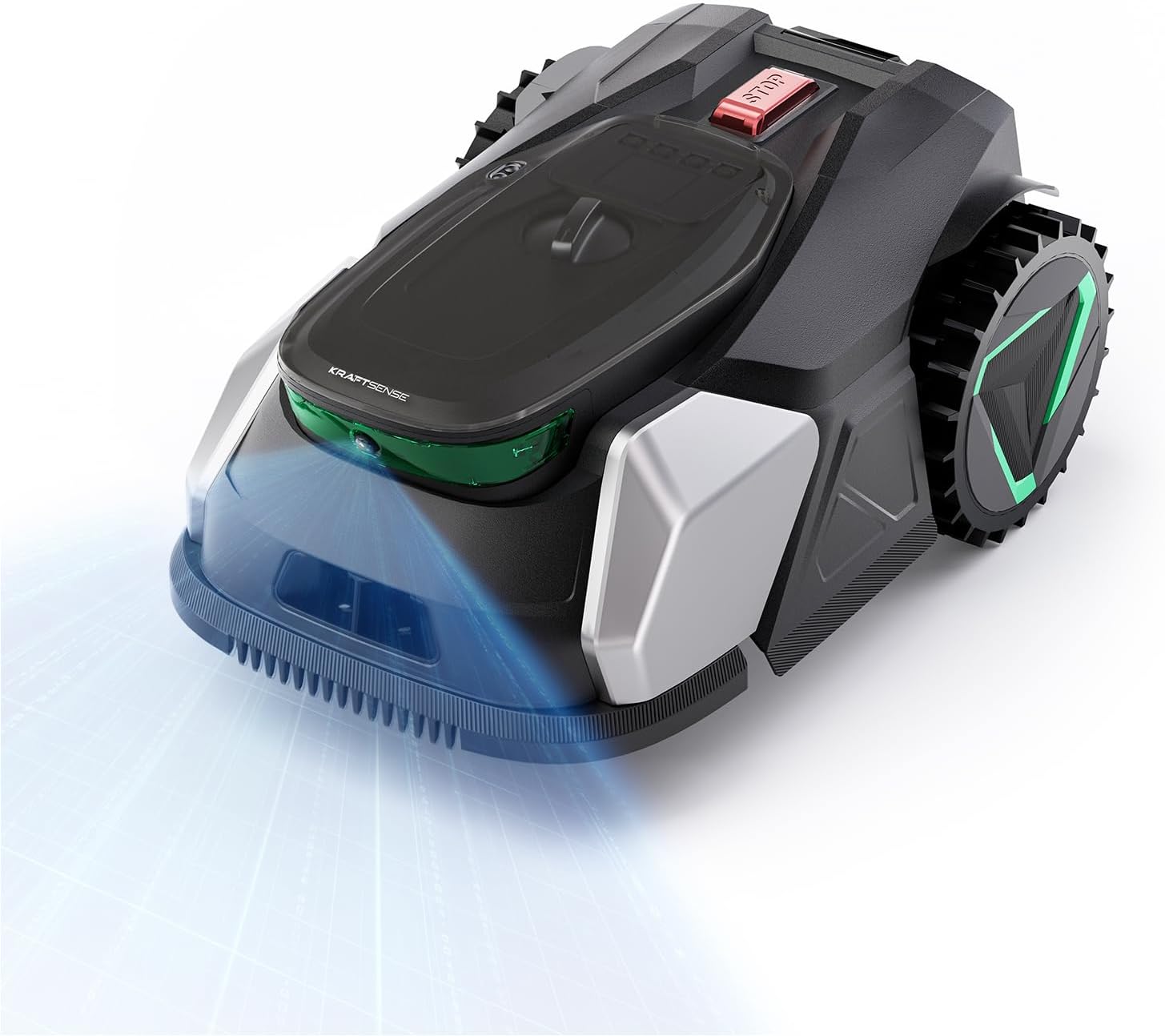
20V Brushless Robotic Lawn Mower
The machine itself. A brushless motor means fewer wear parts and no cord to drag, and a 20V platform is the kind of battery family you may already own
The name is all we get, so confirm cutting height range, slope behavior on wet grass, and whether perimeter wire is in the box before you commit
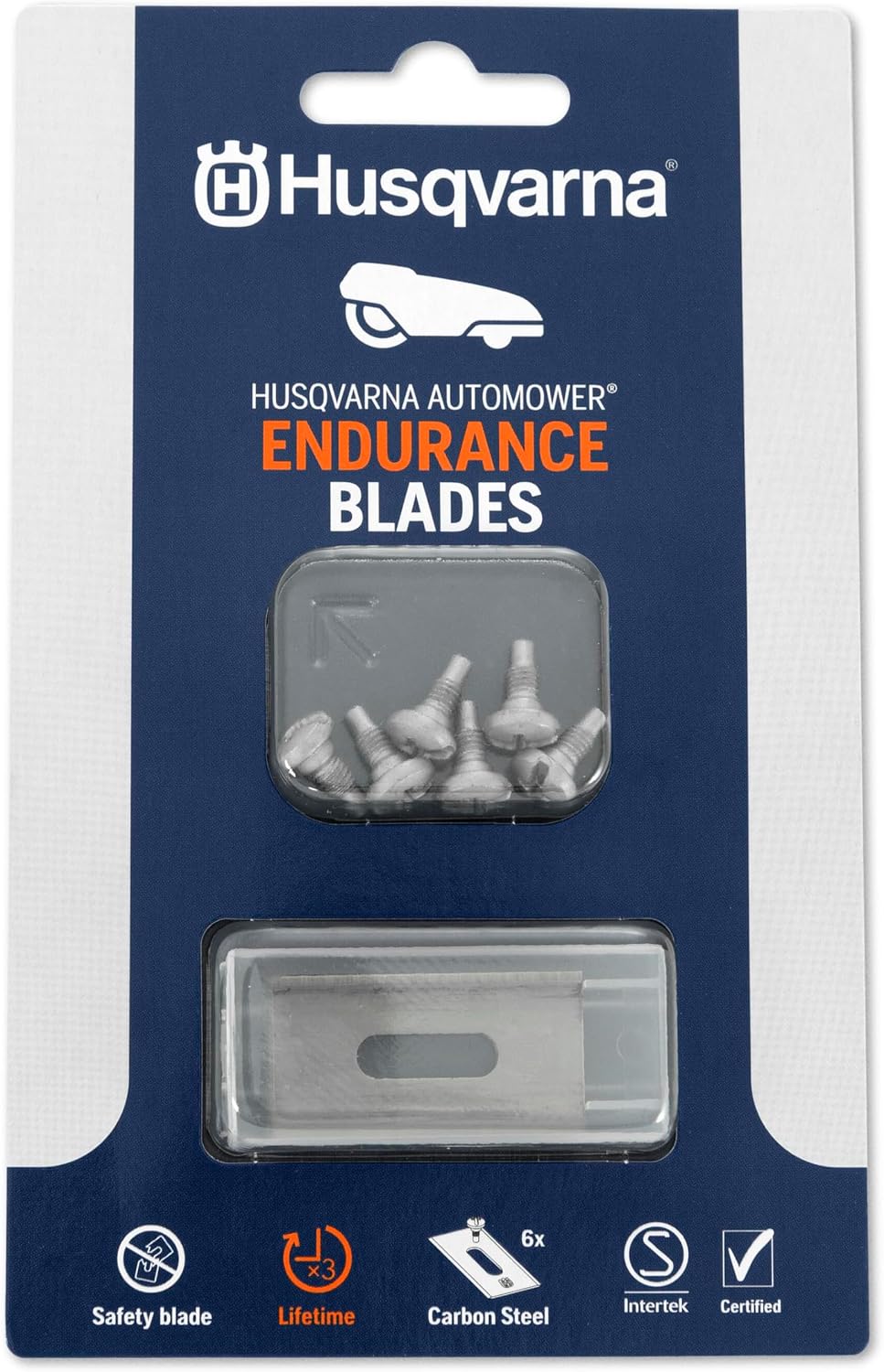
Husqvarna 595084411 Endurance Automower Blades, Silver
The consumable you will buy more of than anything else, from the brand with the longest reliability record in this category
Only correct if your deck takes this blade pattern, and OEM blades are never the cheapest per unit

Perco Price Gun 1-Line Kit with 5 White Label Rolls, Clip & Ink Rollers
Labels the things that make an install serviceable: wire zones, dock position, blade bins, plant beds
It is a labeling tool, not a mower part. If you never label anything, this is the first thing to cut
<img src="/images/products/B08JMDTMJB.jpg" alt="GRAND TRUNK Double Deluxe Hammock
The best install-day morale purchase on this list. You will sit and watch the first boundary lap, every time
Prices and availability were captured from Amazon Creators API and may change.
What earns a spot in the truck
My criteria are boring and they have not changed in a decade. Does it shorten install day? Does it reduce rescue calls in July? Does it survive a Minnesota winter in an unheated garage? A robot mower is a lawn system, not an appliance. The install is the product, and the mower is the robot that executes it. So the kit has to support the system, not just the robot.
That framing is why a hammock and a price gun show up in a comparison against mower blades. I know how that looks. But the failure modes I actually get called about are not motor failures. They are corroded wire splices, a dock that moved two inches, a map that vanished after a firmware update, and a homeowner who gave up mid-install because the job was miserable. Every item below attacks one of those problems.
The mower: 20V Brushless Robotic Lawn Mower
The headline item. Read the name and you get two real facts and a lot of questions. Brushless means no carbon brushes to wear out, which generally means a longer service life and less heat. A 20V platform means the battery is likely part of a family of tools, and if you already run 20V batteries in your garage, that is a genuine advantage. Swappable packs beat proprietary sealed cells every time.
What the name does not tell you is what I would check first. Cutting height range, because a machine that bottoms out at two inches will scalp a fescue lawn in July. Slope behavior, because slope ratings are marketing. I have watched a machine advertised at 25 percent slide sideways on wet grass at 18 percent, and a wet Minnesota spring is exactly when you need it to hold. Whether perimeter wire is included, because that wire is the real cost of the install. And how the blades attach, because a deck that needs a special tool to change blades turns a five-minute job into a twenty-minute one, and you will do it many times a season.
The app matters too, but less than people think. The app is a feature, not the mower. If scheduling fails, you own a very slow Roomba. Ask whether the schedule survives a firmware update before you fall in love with the map view.
If the machine fits your yard and your slope, Visit on Amazon → and read the included-parts list twice. Visit on Amazon →.
Blades are the subscription you forgot to budget for
Nobody warns new owners about blades. Blade life is the hidden cost of robot mowing, and it is not a small one. Cheap blades dull in about a month on a real lawn, and a dull robot does not stop cutting. It starts tearing grass instead of slicing it. Torn tips brown out, the lawn looks stressed, and the homeowner blames the mower. I have seen that exact sequence three times.
The Husqvarna Endurance blades are the OEM consumable for the Automower line, and the brand has the longest reliability record in this category. The "Endurance" name is a promise about how long the edge lasts, and that promise is the entire reason to pay OEM money instead of buying a bag of generics. My honest position on blades is simple: replace on schedule, not on symptoms. If you wait until the lawn looks ragged, you have already lost two weeks of cut quality.
Two caveats. First, confirm your deck takes this blade pattern, because blade mounting is not universal and the wrong pattern is useless. Second, buy in quantity. One pack is a month of denial; a season's worth is a plan. If your machine takes this pattern, Visit on Amazon → and buy enough to get through spring green-up.
The price gun is not a joke
I keep a string-and-stakes map of every install, and I still label everything on site. A one-line label gun with five rolls, a clip, and ink rollers is a ten-dollar answer to the most expensive problem in robot mowing: nobody remembers what is under the grass.
Here is what gets labeled at my installs. Wire zone flags, so a future repair starts at the right stake instead of a shovel. The dock position, because docks migrate and a shifted dock breaks the return-to-charge routine. Blade storage bins, so the spare set is not a mystery box in the garage. Plant bed boundaries, because a robot that finds a flower bed finds it at speed.
The trade-off is honest: this is not a mower part. Nothing about it makes the machine cut better. It makes the system serviceable, which matters in year two and year three when the map resets or a splice corrodes and you need to know which loop is which. Paper labels also fade in direct sun, so put them on shaded tags, flags, and indoor bins rather than on a south-facing stake you plan to read in August. If you want a kit that survives a season of repairs, Visit on Amazon →.
The hammock is install-day infrastructure
An 11 ft double hammock in a mower comparison sounds like a joke. It is not. Install day is four to six hours of kneeling, staking, and re-walking a boundary you already walked. The single biggest predictor of a well-installed system is whether the installer finishes carefully instead of rushing the last fifty feet of wire. A place to sit down, watch the first lap, and catch the one corner where the robot hesitates is worth more than any accessory on this list.
There is a second use, and it is the one I actually care about. Tree cover kills RTK signals, and the best shade on my lot is under a maple. That is where I sit and watch a wire-free machine lose its position fix, which is why I install wire for clients who want reliability. The hammock is where the diagnosis happens.
Measure before you buy. An 11 ft hammock needs more tree spacing than a nine-footer, and a stand costs extra. It does nothing for your lawn. It does a lot for whether you are still maintaining the system in August. Visit on Amazon → if you have two healthy trees and a lawn that needs watching.
How the four fit together
If you are buying in order, buy the mower first, because everything else is support. Then blades, because a robot with a dull blade is a robot that damages the lawn it was hired to improve. Then labels, because a serviceable system outlives an unlabeled one. The hammock is last on the budget and first on the list of things that keep a homeowner from quitting.
What you are really comparing here is not four products. It is one machine and three answers to the question "what breaks next." Blades wear. Wire gets hit by a shovel or a dog. Maps reset. A kit that anticipates those three failures costs less than one service call, and service calls are the part of robot mowing nobody puts in the brochure.
The trade-offs are real. Two of these items are not mower parts and will look odd on a receipt. The blades only work with the right deck. The labels only pay off if you are the kind of person who writes things down. The hammock requires trees. If none of that describes you, the mower alone is still a complete purchase, and the rest is optional.
What I would skip and what I would add later
Skip the extended warranty before you skip blades. Skip any accessory that promises to make a robot handle a slope it was not built for, because physics does not care about your receipt. Skip cheap generic blades if your machine is under warranty.
Add later: a spare set of stakes, a wire repair kit, and a second battery if the machine runs one pack. Those are the items that turn a weekend project into a system you stop thinking about. That is the goal. A robot mower should become invisible. Mowing frequency beats mower quality, and a cheap robot running daily beats an expensive one running weekly.
The bottom line
The 20V Brushless Robotic Lawn Mower is the purchase. The Husqvarna Endurance blades are the maintenance line item you should budget before spring. The Perco price gun is the cheapest insurance against a system you cannot service. The GRAND TRUNK hammock is the reason install day ends with a finished boundary instead of a pile of wire in the garage.
If you only buy one thing today, buy the mower. If you buy two, buy blades. If you buy all four, you have an install kit that will still make sense in three years, and you will be sitting down when the maple eats the signal.