I have installed more than 30 robot mowers on client lawns around Minneapolis, and I have run six of my own through two full Minnesota seasons, which means I have done the winter storage, the spring re-stake, and the mulberry leaf clog of 2024 that I still bring up at dinner parties. This robot lawn mower comparison is the conversation I have at the kitchen table with clients, before anyone opens a shopping app. Four products, one table, and the install questions that decide whether any of them actually work on your property.
Related: Perimeter Wire vs RTK: What Survives a Maple Canopy
The short answer: if you have 0.75 to 0.9 acre, real slope, and tree cover, the Mammotion LUBA 2 AWD 3000HX is where I would start, and the L2500-NEO is the one I would make it beat. If your yard is complicated but small, or you are still deciding whether a robot belongs on your property at all, the handbook in this table is the cheapest line item and the one I hand to clients first. But the short answer is not the useful answer. The useful answer is that a robot mower is a lawn system, and the install is the product. The mower is just the robot that executes it.
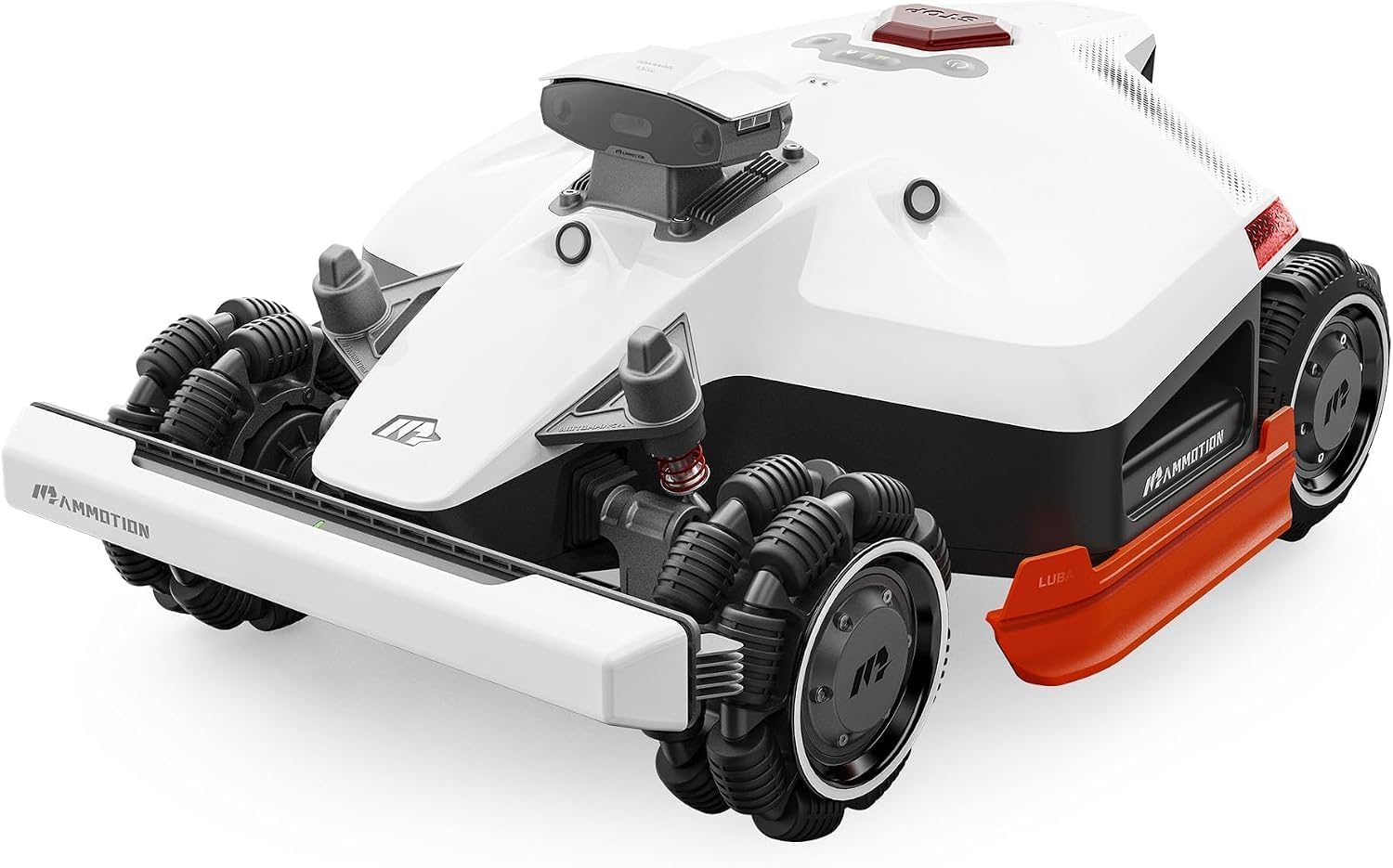
Mammotion LUBA 2 AWD 3000HX
All-wheel drive and an 80% slope rating, wire-free coverage of 0.75 acre, RTK auto-mapping paired with UltraSense AI Vision, 4G so the mower is not hostage to your home network, and a 2.2 to 4.0 inch adjustable cutting height
The most expensive mower in this table, and RTK still wants a clear view of the sky, so tree cover is the install risk
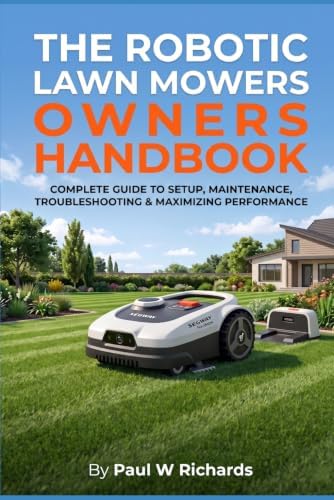
The Robotic Lawn Mower Owners Handbook
Covers managing complex yards, maximizing efficiency, and eliminating edging in plain language, and it is the only item here that improves your install before you spend on hardware
It is a book. It will not cut a single blade of grass, and it will not warn you that your dog will try to herd it
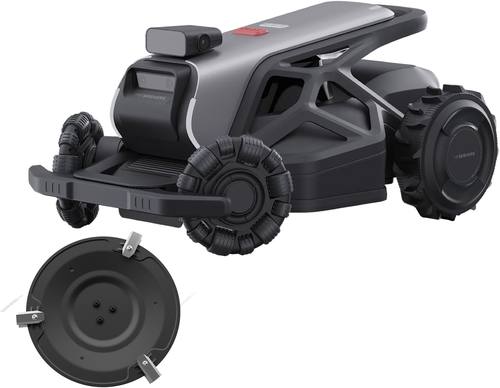
TRON Robot Lawn Mower with Large Mowing Disk
A large mowing disk means wider passes and fewer of them, and it is the lowest hardware spend in this comparison
The published spec sheet is thin, and it ships separately, so you have to plan delivery and install as two separate events
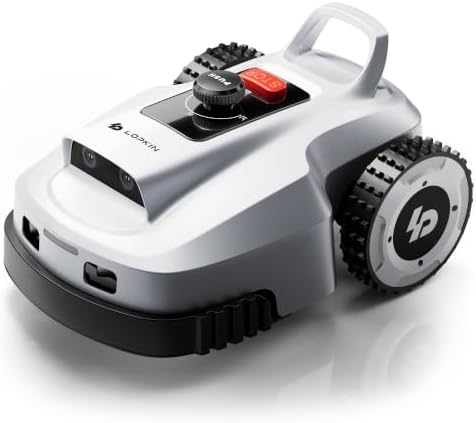
L2500-NEO Robot Lawn Mower
0.9 acre coverage, NetRTK plus AI vision, Wi-Fi HaLow connectivity, no boundary wire, AI obstacle avoidance, multi-zone management, and a 60dB noise figure
NetRTK and vision still want a clean look at the sky, and a multi-zone install lives or dies on how good the app is
Prices and availability were captured from Amazon Creators API and may change.
How I judge a robot lawn mower comparison
I judge it on install day, not on the product page. A robot mower that arrives without a plan for the docking station, the power run, and the boundary is a robot that will spend its first month parked in the garage while you argue with an app.
So the first question I ask about any mower is where the dock goes. It needs shade, it needs level ground, and it needs a path to the lawn that the robot can follow in the dark. My own dock sits behind a lilac hedge, and I have moved it twice in four years because the grass under it thinned out and turned to mud. That is not a mower flaw. That is a system flaw, and every mower in this table would have suffered from it equally.
The second question is the perimeter. Both wire-free mowers here use RTK positioning, one with AI vision layered on top, and the handbook covers the edging problem that wire-free mowers create when they cannot decide where the lawn ends. This is the part of the comparison that actually matters, and it is the part the marketing copy skips.
Slope ratings are marketing until you watch one slide
I have watched a mower with a 25% slope rating slide sideways on wet grass at 18%. I was standing on the hill when it happened, holding a cup of coffee, and I have never trusted a slope number since.
That is why all-wheel drive matters more than the number printed next to it. The LUBA 2 AWD 3000HX carries an 80% slope rating and all-wheel drive, which is the combination that gives you a fighting chance on a real Minnesota hill in May, when the grass is wet and the ground is still soft. Slope ratings are tested somewhere. I would like to know where, because it is not my clients' yards.
If your lawn is flat, this whole section is a discount. Buy the mower with the coverage you need and put the savings into the handbook and a spare set of blades.
The two wire-free flagships, side by side
The Mammotion LUBA 2 AWD 3000HX is the one I would install on a client's sloped 0.75 acre tomorrow. All-wheel drive, RTK auto-mapping, UltraSense AI Vision, 4G for connectivity away from the house, and a cutting height range from 2.2 to 4.0 inches, which is the range I want for a lawn that gets tall in a wet week.
The L2500-NEO is the one I would make it beat. It claims 0.9 acre of coverage, which is more lawn than the Mammotion, and it does it with NetRTK plus AI vision, Wi-Fi HaLow connectivity, AI obstacle avoidance, multi-zone management, and a 60dB noise figure. Sixty decibels is the number that gets my attention, because a robot that runs at night is a robot your neighbors can live with, and a robot your neighbors can live with is a robot you can actually schedule daily.
Both are wire-free. Neither is wire-free in the way the box wants you to believe. RTK needs satellites, satellites need sky, and a mature maple canopy is the enemy of both. If your lawn is ringed by trees, read the handbook section on complex yards before you buy anything, then budget for a hybrid approach or accept that the robot will work the open middle and leave the shade alone.
The TRON and the sparse spec sheet problem
The TRON Robot Lawn Mower with Large Mowing Disk is the interesting wildcard here, and it is interesting for two reasons.
First, the large mowing disk. A wider disk means wider passes, fewer passes, and less time on the lawn per cycle. On paper that is a genuine efficiency win, and if you are mowing daily to stay ahead of growth, efficiency compounds.
Second, and this is the honest part: the published specification is thin. When a listing tells you less than its competitors, you are doing research at your own risk. I do not fill those gaps with guesses, and neither should you. What I can tell you is that it ships separately, which is a real logistical fact and not a small one. Delivery day and install day become two different days, and install day is the day that decides whether this whole project succeeds.
Why a book is in a mower comparison
Because I have never installed a robot mower for a client who understood the edging problem on day one, and The Robotic Lawn Mower Owners Handbook is the fastest way to fix that.
It is written for real-world yard management: complex layouts, efficiency, and eliminating edging with robotic mowing. That last one is the promise every wire-free mower makes and very few deliver without some planning. A robot that cuts to the edge of a bed but leaves a two inch fringe turns your weekly mowing into a weekly string trimming session, and that is exactly the labor you were trying to eliminate.
If you are installing a mower on a yard with beds, a garden, a fence, or a dog that chases anything that moves, read this first. It is the cheapest item in the table and the one with the best return.
Cutting height, mulching, and the blade bill nobody mentions
The LUBA 2 AWD 3000HX gives you 2.2 to 4.0 inches of adjustable cutting height. That range matters more than most buyers think. Taller cuts in summer shade the soil, which means less watering and fewer weeds. Shorter cuts in spring help you clean up the flush of growth that arrives in a single wet week.
Mulching efficiency is the other half of this. A robot that cuts a little every day mulches fine clippings back into the lawn, and those clippings are free fertilizer. A robot that runs weekly is not mulching. It is scattering hay.
And then there is the blade bill. Blade life is the hidden cost of robot mowing, and cheap blades dull in a month. When they dull, the robot stops cutting and starts tearing, and you get brown tips on every leaf. Buy spares when you buy the mower, and check them monthly. No mower in this comparison escapes that rule.
Connectivity is an install decision, not a spec
The LUBA 2 AWD 3000HX has 4G. The L2500-NEO has Wi-Fi HaLow. Those are different answers to the same problem, which is that your lawn extends past your router.
I have stood in a client's backyard with a phone showing one bar of Wi-Fi and watched an install stall for an hour. Wi-Fi HaLow is built for longer range than standard Wi-Fi, and 4G does not care about your router at all, but it does care about cell coverage at the far corner of your property. Check both before you commit. Stand where the mower will work and look at your phone. That is the whole test.
Yard size math, honestly
Coverage claims assume an open rectangle. Your yard is not an open rectangle.
The Mammotion lists 0.75 acre. The L2500-NEO lists 0.9 acre. My own lot is 0.4 acre and my robot handles it comfortably, but it handles it comfortably because I schedule it daily and I do not ask it to cross the gravel path more than once per cycle. Obstacles, narrow passages, and multiple zones all eat into a coverage number.
If you are at 0.75 acre or below and mostly open, either flagship is more machine than you need, and the TRON becomes a reasonable place to look. If you are near an acre, or you have zones separated by a driveway, buy the coverage headroom. You will not regret it.
What I would do in your position
For a sloped, mostly open 0.75 acre with a dog and a garden: Mammotion LUBA 2 AWD 3000HX, installed with the handbook open on the kitchen counter.
For a flatter 0.9 acre with multiple zones and neighbors close enough to hear a mower at midnight: L2500-NEO, because 60dB and multi-zone management are the two features that make night scheduling realistic.
For a smaller, simpler yard where you want to test the whole idea before committing: the TRON, with eyes open about the thin spec sheet.
For everyone, before any of the above: the handbook.
What I am watching next
Two things. First, whether hybrid mowers that combine a perimeter wire with RTK positioning become the default, because that is the setup I already trust most for tree cover. Second, the blade war. Self-sharpening blades are the next premium tier, and the first brand that gets them right takes the maintenance complaint off the table entirely.
I keep a dated list of these predictions and score it every January. Last January I was wrong about prices falling under a thousand dollars for a real mower, though the trend line is still pointing that way.
The bottom line
A robot mower is a lawn system. The install is the product. The mower is the robot that executes it, and the app is a feature, not the machine. If scheduling fails, you have bought a very slow Roomba with a blade on it.
Pick the coverage and the traction you actually need, plan the dock before the delivery truck arrives, buy the handbook, buy spare blades, and run the thing daily. Frequency beats quality every time. A modest mower running every day will give you a better lawn than a flagship running on Sundays.