I have installed more than thirty robot mowers on other people's lawns, and I still cut my own 0.4-acre lot with a machine that cost less than my phone. So when I write a robot mower comparison, I am not ranking spec sheets against each other. I am ranking the systems I would stake wire for, level a dock for, and trust to run at 2 a.m. in a Minnesota spring while the dog patrols the fence line. The four products below cover the whole spread of that decision: two wire-free mowers at very different budgets, one all-wheel-drive machine for the lawns that break lesser robots, and the eighty-dollar accessory that most people buy in November, after the first hard freeze, when it is already too late.
Related: Perimeter Wire vs RTK: What Actually Survives a Minnesota Spring
For a normal quarter-acre suburban lawn, the Segway Navimow i110N is where I would start, because it skips the perimeter wire entirely and still runs separate zones on separate schedules. If your lawn is bigger, steeper, or wetter than you want to admit, the Mammotion LUBA 3 AWD 1500H is the machine that justifies the top of this price range, and it comes bundled with a garage. The LawnMaster OcuMow is the honest budget experiment for a small flat city lot, and the standalone garage is the accessory that protects whichever mower you choose.
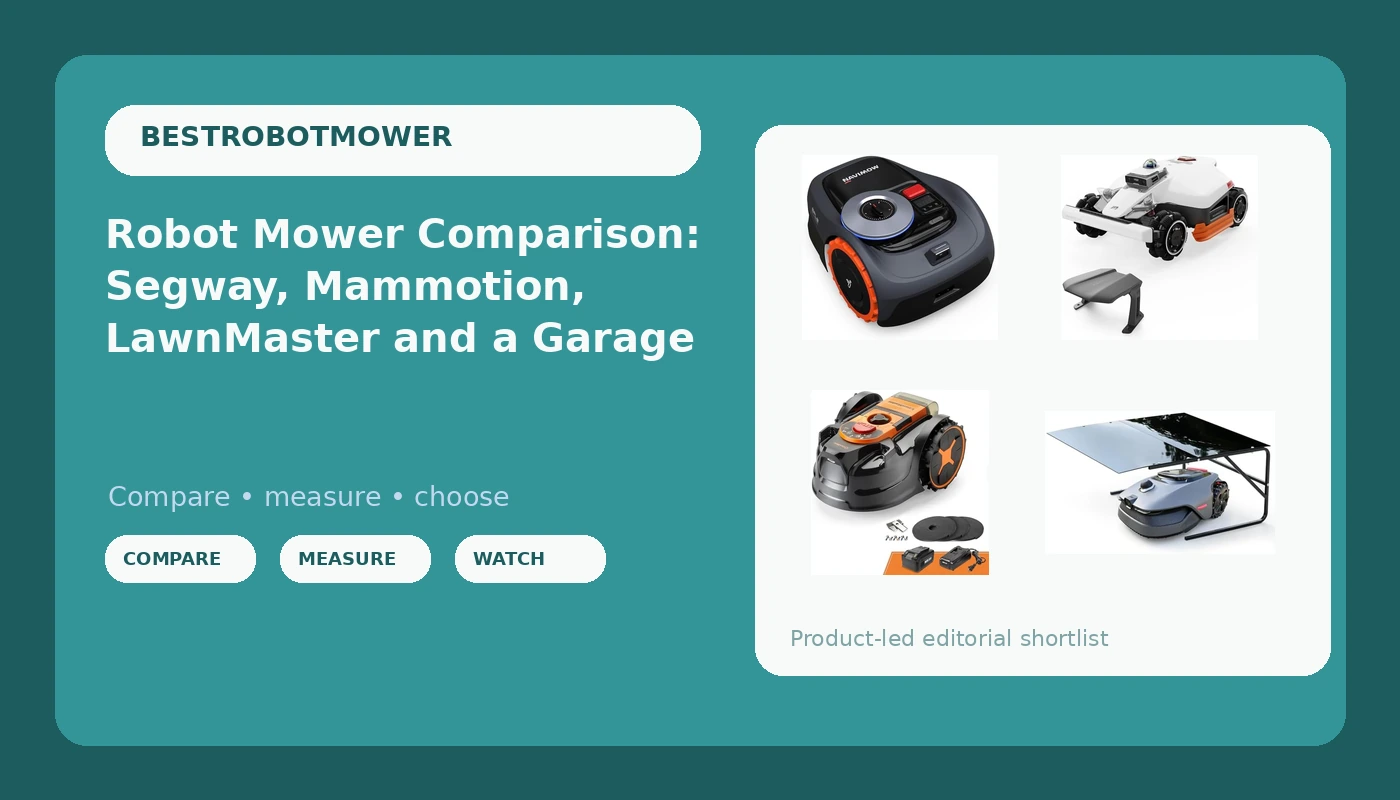
Segway Navimow i110N
No boundary wire to bury, quiet 58 dB(A) operation, virtual boundaries in the app for beds that move
RTK is only as good as your sky; tree canopy and wet reflective grass slow the mapping down
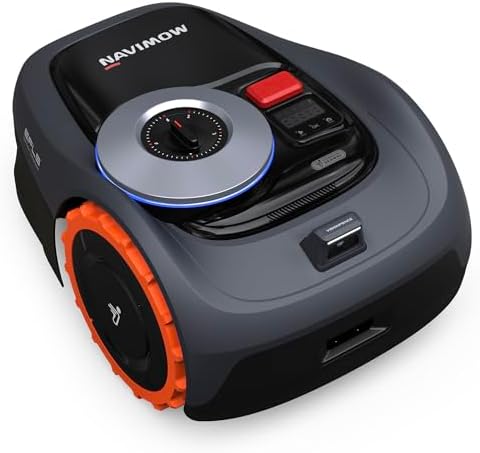
Mammotion LUBA 3 AWD 1500H
All-wheel drive for real slopes, large area coverage, garage included in the bundle
The most expensive option here, and the garage ships separately so install day takes two deliveries
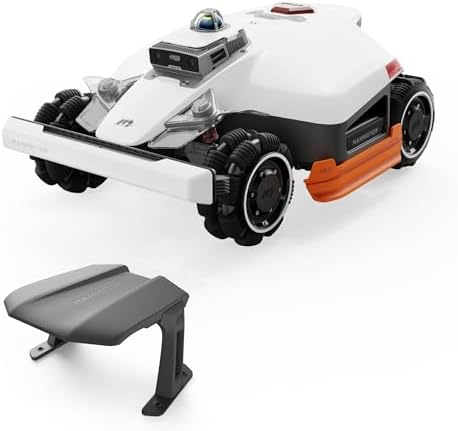
LawnMaster OcuMow VBRM601YCM AD
Parallel cutting leaves a striped, mulched finish instead of a random pattern
Budget build, best on small flat lots, and it is not a slope machine
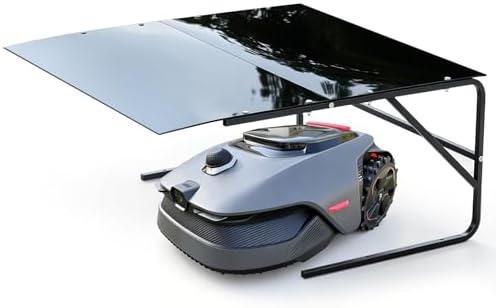
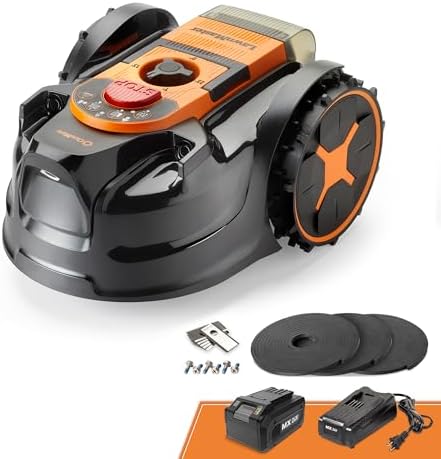
Robot Mower Garage, Large Size
Rainproof and UV-proof shelter that fits any mower and keeps the dock dry
It is not a mower, and it is one more thing to anchor before the first storm
Prices and availability were captured from Amazon Creators API and may change.
How I judge these four
Three things decide whether a robot mower becomes a tool or a project, and none of them are the number on the box.
The first is navigation. Wire is boring and it works. RTK is elegant and it fails under a maple tree. Both wire-free machines in this comparison lean on satellite positioning combined with camera vision, and both degrade when the sky is blocked or the grass is wet and reflective. That is not a knock on either brand. It is the physics of the category, and it is why I still quote wire installs for clients who want boring reliability.
The second is slope. Slope ratings are marketing. I have watched a machine rated for 25 percent slide sideways on wet grass at 18 percent, and I have never once seen a manufacturer publish the conditions it tested in. Treat every slope number as a dry-turf number, then subtract a third for a Minnesota spring.
The third is the install itself. Cutting height, dock placement, and whether the robot can find home in the dark matter more than any feature list. A mower that cannot dock reliably at dusk is a mower you will be rescuing in your slippers.
Segway Navimow i110N: wire-free for a quarter acre
The i110N is the machine I would hand to a client with a normal suburban lot, a phone, and zero interest in burying two hundred feet of boundary wire. It uses RTK positioning plus vision for AI-assisted mapping, and it sets virtual boundaries in the app rather than in the turf. That is a genuine advantage on a lawn where the beds change every year, which is most of them. Moving a bed should not mean digging up a wire splice.
Segway lists it at 58 dB(A), which is quiet enough to run a 7 a.m. schedule without waking anyone in the house, and it covers up to a quarter acre with multi-zone management, so the front and back can run on different schedules at different cutting heights. That flexibility is the part people underestimate. Most lawns are really two lawns with different grass, different shade, and different growth rates.
Where it will frustrate you: tree cover. RTK needs a clear view of the sky, and a mature maple canopy is a wall. On a shaded lot the mower spends its first weeks learning where it can and cannot trust its position, and you spend those weeks watching the app instead of the lawn. If your lot is mostly open, this is a non-issue. If it is not, budget for that adjustment period.
Mammotion LUBA 3 AWD 1500H: the big, sloped, wet lawn answer
This is the machine for the lawn that has already defeated something cheaper. All-wheel drive is the whole story: it is the difference between a robot that climbs your side slope and one that spins its wheels at the bottom and waits to be carried. If your property has a bank, a ditch edge, or a strip that stays damp for three days after rain, this is the category you are shopping in.
The bundled garage matters more than the marketing suggests. It ships separately from the mower, so plan for two deliveries and do not schedule the install for the day the mower arrives. Assemble and anchor the shelter first, then set the dock inside it, then let the robot learn the yard. Doing it in that order saves a second round of boundary teaching.
The trade-off is straightforward: this is the top of the price range in this comparison, and it is a large machine. It needs a real dock location with clearance, not a corner you squeezed it into. On a quarter-acre flat lot with no slope, you are paying for capability you will never use, and the i110N will do the same job for less.
LawnMaster OcuMow VBRM601YCM AD: the budget experiment
I will be honest about the budget tier, because I have watched too many people buy at the bottom and then hate the category forever. The OcuMow's headline feature is parallel cutting, which means it mows in stripes rather than a random pattern. That matters more than it sounds like it should. Stripes mean fewer missed blades of grass, better mulching, and a lawn that looks mowed instead of trampled.
It is the lowest entry cost of the three mowers here, and for a small, flat, fenced city lot with clean edges, that is a reasonable trade. What you are not buying is slope capability, big-area coverage, or the polish of the premium apps. If your yard is 0.15 acres and flat, this is a legitimate way to test whether a robot fits your life. If your yard is 0.4 acres with a bank and a garden, you will be rescuing it weekly, and that gets old by June.
My rule for the budget tier has not changed in three seasons: a cheap robot running daily beats an expensive one running weekly, but only if the cheap one can actually finish the job. Be honest about your acreage before you buy here.
Robot Mower Garage, large size: the accessory people skip
A robot mower lives outside for eight months a year, parked on a charging dock, in rain, in UV, and in leaf fall. The dock is the most exposed and least protected part of the whole system, and it is the part that fails first. This shelter is rainproof and UV-proof and sized to fit any mower, and it costs a fraction of what a replacement dock or a chalked-out plastic shell costs.
Two things to know before you order. First, size: the large version is the right call even for a mid-size mower, because you want clearance for the robot to turn into the dock without scraping. Second, anchoring: stake or weight it before the first storm, not after. A shelter that lifts in a gust and lands on the lawn is worse than no shelter at all, and I have seen exactly that happen to a client in Edina.
If you buy the Mammotion bundle, you already have one. If you buy anything else, this is the purchase that keeps the machine out of the weather and the charging contacts dry.
The trade-offs nobody puts on the spec sheet
Wire-free sounds like freedom, and it is, until your lawn is shaded. Both the Segway and the Mammotion units in this comparison depend on positioning that trees interfere with. A hybrid approach, wire for the perimeter plus RTK for the interior pattern, is where I think this market lands, and I have been saying that for two seasons.
Blades are the hidden cost on every machine here. Dull blades tear grass instead of cutting it, and torn grass blades brown at the tip and invite disease. Whatever you buy, order spare blades with the mower and change them more often than the manual suggests. If a blade swap needs a special tool you do not own, that is a design failure, and it is worth checking before you buy.
Cutting height discipline matters more than brand. A robot that runs daily at the right height will out-mow a better robot running twice a week at the wrong height, every single time. Set the schedule and leave it alone.
And think about winter. Every mower here needs to come inside before the ground freezes, and every dock needs to be cleaned and stored dry. The garage shelter makes that easier because the dock stays cleaner all season.
What I am watching next
Two predictions I have on the board for January. First, hybrid navigation (wire plus RTK) becomes the mainstream recommendation rather than a compromise, because tree cover is not going away. Second, real robot mowers keep sliding below the four-figure mark as manufacturing scales, which will make the budget tier genuinely competitive instead of merely cheap.
What I would not wait for is self-sharpening blades. They are coming, they will be a premium tier, and they will not be worth a season of torn grass tips in the meantime.
The short version
For an open quarter-acre suburban lawn, the Segway Navimow i110N is the machine I would install first, and it is the one I would recommend to a neighbor without a caveat. For a large, sloped, or chronically damp property, the Mammotion LUBA 3 AWD 1500H is the one that earns its price, garage included, as long as you accept two deliveries and a proper dock location. For a small flat lot on a tight budget, the LawnMaster OcuMow is a fair way to find out whether you like living with a robot. And whatever you park outside, buy the garage. It is the cheapest insurance in this entire comparison, and it is the one purchase people make a season too late.