I have installed robot mowers on client lawns for years: slopes, courtyards, narrow side yards, and one property with more maple canopy than grass. Fifteen years of landscape work taught me the thing spec sheets never say out loud. A robot mower is a lawn system, not an appliance. The install is the product. The robot is only the part that moves. That is the lens for this robot lawn mower comparison, which puts three mowers and one very different tool side by side and asks the question that actually decides a purchase: what does this thing need from your yard before it can work?
A note on method before we start. I have not run these four products through a full Minnesota season. Nobody can hand you a two-season reliability log for a mower that just reached the market, and I am not going to pretend otherwise. What I can do is read each product's approach, tell you what that approach means on a real property, and flag where it tends to break. The install realities come from 30-plus client installs. The product details come from the listings themselves.
For most suburban yards up to a quarter acre, the wire-free RTK mower with a vision layer is the one I would install first, because it skips the trenching that scares homeowners off and the vision layer covers the satellite dropouts that kill RTK-only machines. If your lot is heavily shaded and you want a robot that stops caring about the sky, the dual LiDAR machine is the more interesting bet.
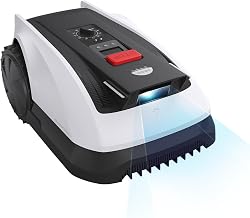
ECOVACS Goat O1000 RTK Robot Lawn Mower
Wire-free setup, RTK plus vision navigation, sized for lawns up to a quarter acre, TruEdge edge cutting
RTK still needs a sky view, so dense canopy is a real risk, and there is no physical boundary as a fallback
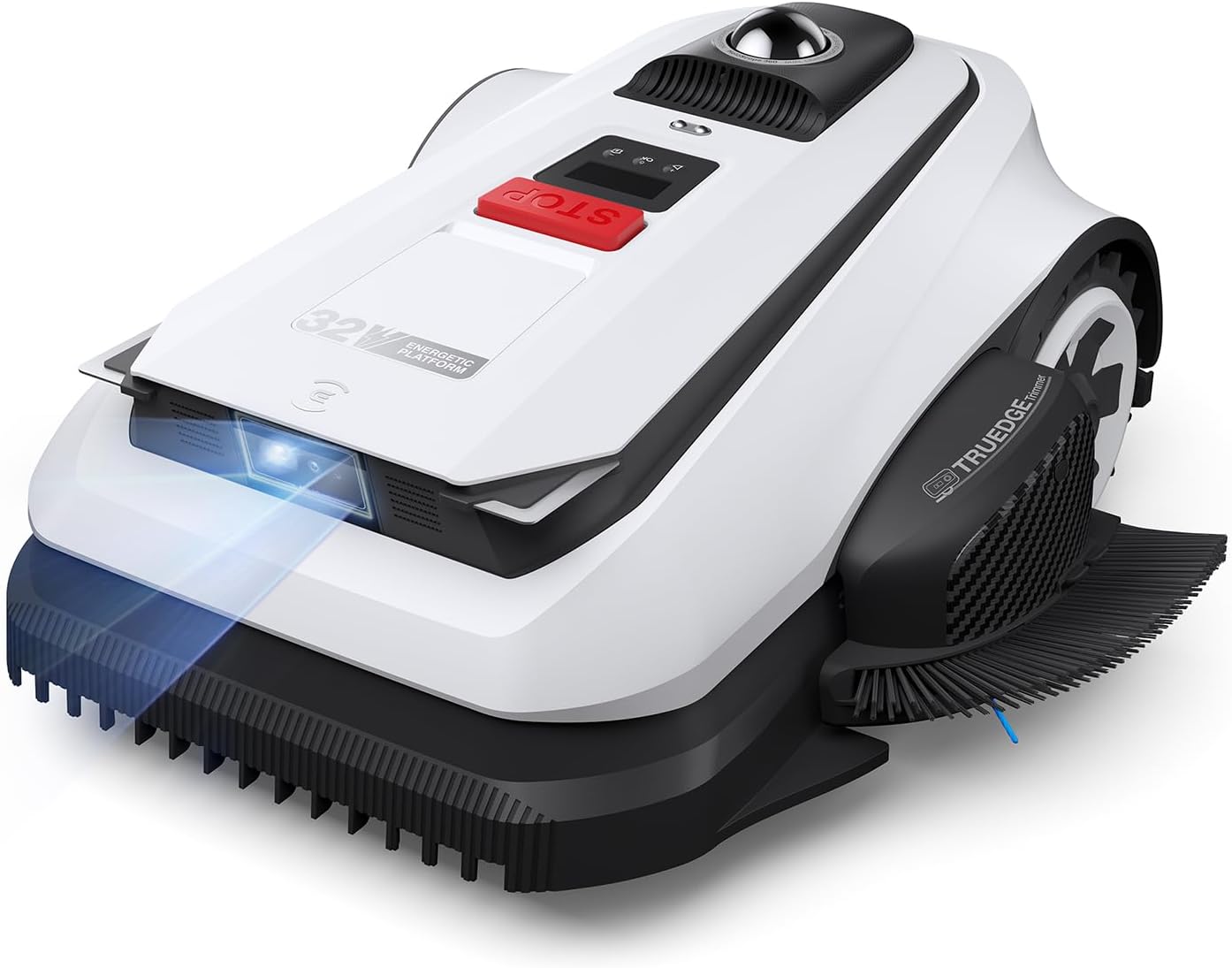
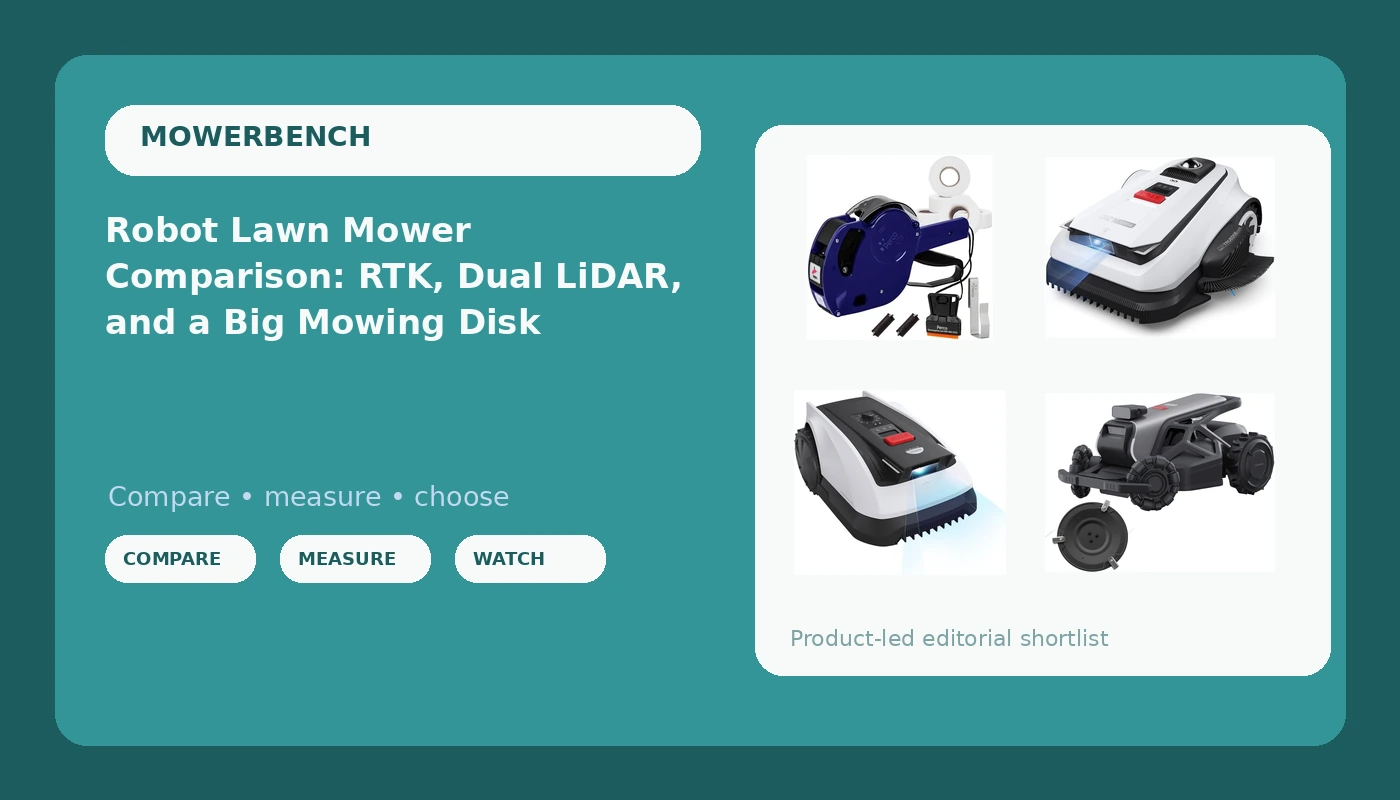
ECOVACS Goat A2000 LiDAR PRO Robot Lawn Mower
Dual LiDAR navigation does not depend on satellites, so tree cover is far less of a problem
Optical sensors need cleaning, two of them mean two failure points, and homing still has to work in the dark
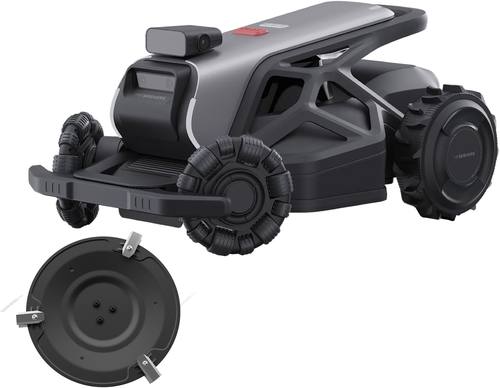
TRON Robot Lawn Mower with Large Mowing Disk
A large disk covers more ground per pass, so less time on the lawn and less traffic on one strip
Ships separately, so plan for two deliveries, and the name tells you about the deck rather than the guidance system

Perco Price Gun 1-Line Kit with 5 White Label Rolls, Clip & Ink Rollers
Fast labeling for dock tags, wire splice records, and zone maps
It does not mow anything, and it never will
Prices and availability were captured from Amazon Creators API and may change.
Start with the install, not the robot
Every mower in this comparison succeeds or fails on the same three install questions. First, how does it know where the boundary is? Second, how does it get back to the dock? Third, what happens in the week the grass grows four inches overnight and the ground is still wet from three days of rain?
Notice that none of those questions are about cutting quality. Cutting quality matters, but it is downstream of navigation. A robot that mows the same strip three times and misses the corner by the downspout does not have a mowing problem, it has a mapping problem. A robot that parks itself in the middle of the lawn at dusk because it lost the dock does not have a battery problem, it has a homing problem.
That is why I sort mowers by navigation first. Perimeter wire, RTK, LiDAR, or some combination of the three. Everything else, the app, the cutting height range, the blade count, is a detail you tune after the robot can reliably find its way around your yard and back to its charger.
Dual LiDAR: navigation that does not need the sky
LiDAR navigation works like the sensor on a self-driving car, except the mower uses it to build a map of your lawn and everything sitting on it. The ECOVACS Goat A2000 LiDAR PRO uses two of these sensors, and that duplication is the part worth noticing. Dual LiDAR means the robot is not leaning on a single viewpoint to decide where the flower bed ends and the lawn begins.
Why that matters in Minneapolis: tree cover. I have watched satellite-dependent mowers wander in slow circles under a maple because the correction signal was bouncing off leaves. LiDAR does not care about the sky. It cares about line of sight and surface, which makes it a better fit for shaded lots, courtyards ringed by tall fences, and any yard where you cannot see a horizon from the middle of the grass.
The trade-off is maintenance and complexity. LiDAR sensors are optical, which means dust, pollen, and wet grass clippings all land on them. Two sensors mean two windows to keep clean and two more components that can fail. If you have ever cleaned a robot vacuum's sensors with a cotton swab, you know the ritual. This is a navigation system that rewards a homeowner who will actually wipe the robot down once a week.
RTK plus vision: the wire-free bet
RTK stands for real-time kinematic, and the short version is that the mower talks to a fixed base station and uses satellite corrections to place itself within a couple of centimeters. The ECOVACS Goat O1000 RTK takes that approach, adds a vision layer, and is rated for lawns up to a quarter acre, which is a normal suburban lot with room to spare.
Here is the honest pitch for RTK: no perimeter wire. For a homeowner, that is the difference between an afternoon of stapling wire around 400 feet of bed edging and a mapping walk with your phone. It is also the reason I still install wire for clients who want reliability above all else, because RTK needs a clear view of the sky and my clients' nicest lawns are the ones with the most trees.
The vision layer is the interesting part of this machine. When the satellite signal thins out under canopy, vision navigation is what keeps the robot oriented to its surroundings, and the AIVI 3D obstacle avoidance on the same platform handles the dog toys and the garden hose. That hybrid approach is where I think this market is heading, and it is why this is the mower I would put on a typical quarter-acre first. What you give up is the boring certainty of a physical boundary. If the map drifts after a firmware update, the robot's idea of your yard drifts with it.
The large mowing disk: fewer passes, more questions
The TRON listing leads with its large mowing disk, and that is a real specification that is easy to underestimate. A bigger disk carries more cutting edge per rotation, so the robot covers more ground per pass and spends less time on the lawn. Fewer passes also means less traffic on the same strip of turf, which matters more than people think on a lawn that already struggles in the shade.
Two cautions. First, the listing notes that the unit ships separately, so plan for two deliveries and inspect each box before you schedule an install day. Second, a large disk is not a substitute for a documented navigation system. The name tells you about the cutting deck, not about how the mower finds its boundary or its dock, so confirm the guidance method before you buy. A great disk on a mower that cannot hold a map is still a mower that cannot hold a map.
Big disks also raise a question about blades. Every robot mower I have dealt with eats blades, and the wider the disk, the more blades you are buying at once. Dull blades tear grass instead of slicing it, and torn tips brown off within a day.
The one that does not mow
The Perco Price Gun kit is the odd entry in this comparison, and I am not going to pretend it cuts grass. It is a one-line labeling tool with five rolls of white labels, plus the clip and ink rollers to run it. It belongs in this article because it belongs in an install kit.
Here is what a label gun is for on a mower install. I tag the dock with the install date and the firmware version at setup. I tag both ends of every wire splice so the next person who opens that bed knows what is buried there. I label the zone map I keep for each client, and I label the storage bag for spare blades so they do not disappear into the garage. The tool is simple and the labels are legible, which is the whole requirement.
None of that replaces a perimeter wire or a satellite fix. It is the paperwork side of a lawn system, and it is the side that saves you an hour the first time something goes wrong in June.
The costs that never make the listing
Nobody puts these on a product page, and they are the difference between a mower that works and a mower you resent.
Dock power. The robot needs a live outlet near where it parks. Running power to the far corner of a yard can cost more than the install itself, so choose the dock location before you choose the mower.
Blades. Every robot mower consumes blades on a schedule, not on a feeling. Buy replacements before the first one dulls, not after the lawn starts looking ragged.
Firmware. A mower that loses its map after an update is not mowing, it is relearning. Read the app reviews, not just the product reviews, before you commit to a brand.
Dog interference. If your dog chases the robot, the robot will stop and wait. Every time. Plan the mowing schedule around the dog rather than against it.
Seasonal storage. Four months of no mowing in Minnesota means a battery that would rather not sit at full charge in a cold garage, and a dock that would rather not be buried in snow.
Which one belongs on your lawn
A suburban quarter acre with some shade, and a homeowner who does not want to trench wire: the Goat O1000 RTK. Wire-free setup, a vision layer for the canopy gaps, edge cutting along the beds, and a size rating that matches a normal lot. This is the one I would install first for most people reading this.
A heavily shaded lot, a courtyard, or a yard ringed by fences and mature trees: the Goat A2000 LiDAR PRO. Dual LiDAR is the approach that stops caring about the sky, and that is exactly what a maple canopy demands. Accept the weekly sensor wipe and it makes sense.
An open lawn where cut time per session is the priority: the TRON mower with the large disk, provided you confirm how it navigates and you are fine with a two-box delivery.
Anyone who wants a tidy, repeatable install record: the Perco label gun, alongside whichever mower you choose. It will not cut a single blade of grass, and that is the point of it.
Before you order, walk your yard
Take a tape measure and ten minutes. Write down the square footage of actual grass, not the lot size, because the two numbers are rarely close.
Find your dock spot. It needs power, it needs a flat approach, and it needs to sit somewhere the robot can reach in the dark. Mowers that cannot find the dock at night are the most common complaint I hear, and it is almost always a placement problem rather than a hardware one.
Check the gates. If the robot cannot pass through, the robot cannot mow that section, and you will be pushing a trimmer through a side yard you thought you had automated.
Walk the slope with wet feet. Slope ratings get tested in conditions that do not resemble a Minnesota spring. If you would not push a wheelbarrow up it after rain, do not expect a robot to hold a line on it. And if a mower has no slope figure at all, assume the answer is no.
The honest bottom line
The best mower here is not the one with the longest feature list. It is the one whose navigation matches your yard's worst condition, because that is the condition it will meet in June, not the one printed on the box.
For most readers, that means the wire-free RTK mower with vision as a backup. For shaded properties, it means dual LiDAR. For cut-time efficiency on open ground, it means the large disk, once you have confirmed how the machine navigates. And for the person who wants the install to be documented and repeatable, it means a label gun in the toolbox and the habit of writing things down.
Mowing frequency beats mower quality every season. A mid-range robot running daily will out-mow a premium robot running weekly, and no navigation system on this list changes that.