Related: Perimeter Wire vs RTK: Which Robot Mower Setup Survives a Minnesota Winter
I have installed perimeter wire on more than 30 client lawns, and I have run six different robots through two full Minnesota seasons. Here is the thing nobody tells you when you start shopping: a robot lawn mower setup is not a mower. It is a wire, a dock, a schedule, a charging routine, and a plan for that week in May when the grass grows four inches overnight. The mower is just the part that moves.
So this is not a list of four robots. It is the four things I would actually put on the credit card for a robot lawn mower setup on a normal suburban lot, listed in the order I would buy them if I had to spread the cost across two paychecks.
One word on what I can and cannot tell you. I know the install side of this category cold. I know what wet grass does to a machine that claims a 25 percent grade, and I know what a maple canopy does to a positioning signal. For the specific units below, I am working from the listings and from what those specifications mean in practice, not from a season on my own lawn. Check current Amazon price on anything before you buy, because this category moves fast.
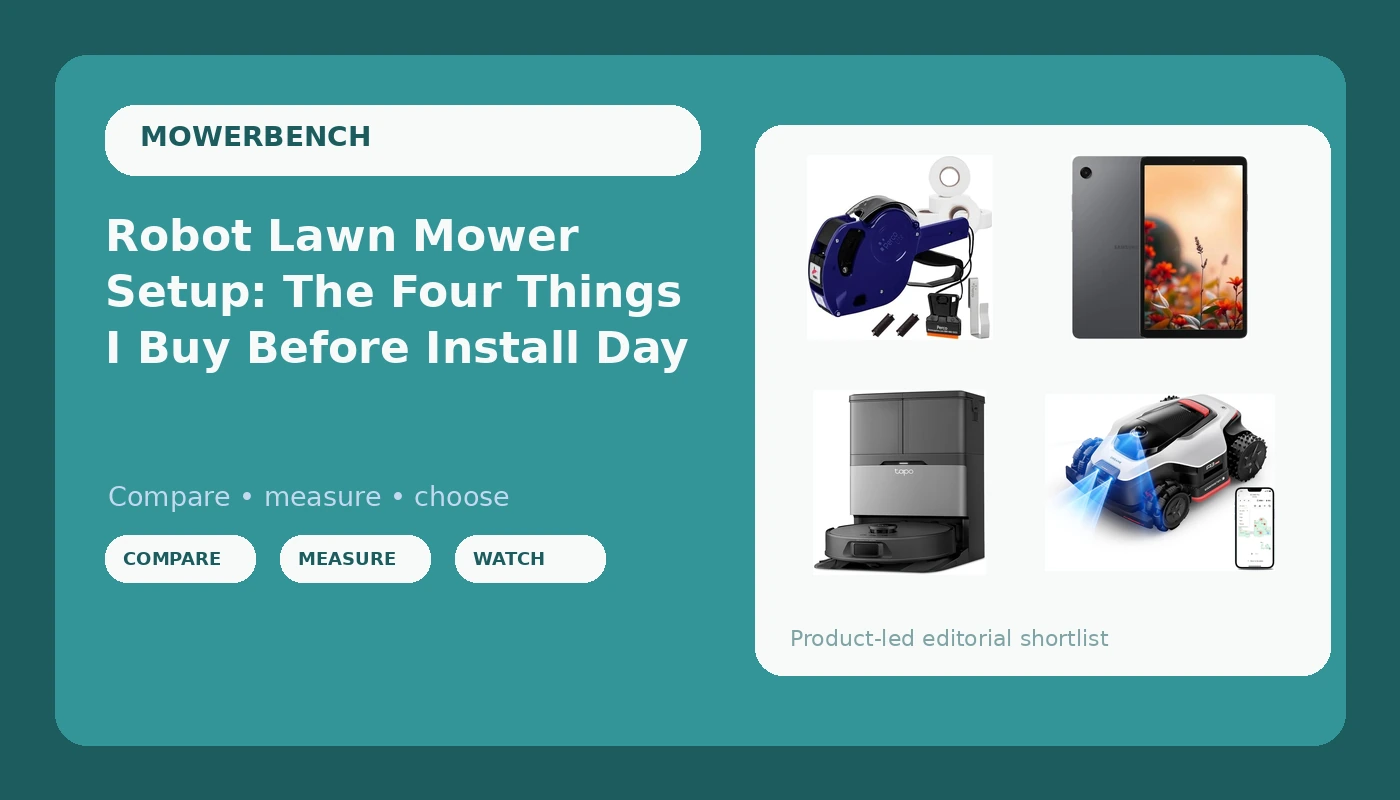
Best overall: DREAME A3 AWD 1000 LiDAR Robot Lawn Mower
Two letters in this listing do the heavy lifting: AWD. All-wheel drive is the difference between a robot that climbs the side of a Minneapolis yard and one that slides sideways into the hostas the first time the grass is wet. Slope ratings in this industry are measured on dry turf in a lab. I have watched machines advertising a 25 percent grade lose traction at 18 percent after a rain, and I have watched a client's dog run the same slope without slipping once. Drive wheels at all four corners is the honest answer to that problem, and it is the first thing I look for on a yard with any grade at all.
The second thing is LiDAR. Mapping by light rather than by a satellite fix is the part of this category that keeps improving, and it matters most under tree cover, where a purely satellite-based mower will spend an afternoon confused about where it is. The listing pairs LiDAR navigation with the AWD drive, which is the combination I want on a lot with a hill, a garden bed, and a dog that treats the lawn as a storage facility.
The listing also calls out a 45-minute fast charge. On a small lot that number matters more than raw runtime, because a mower that tops up quickly can run twice a day, and mowing frequency beats mower quality every single time. A cheap robot running daily will out-cut an expensive one running weekly, and I will argue that with anyone who wants to.
What the listing does not tell you is how much wire you need, where the dock goes, or whether the thing will find its way home in the dark. That is on you, and it is the part I get paid for. 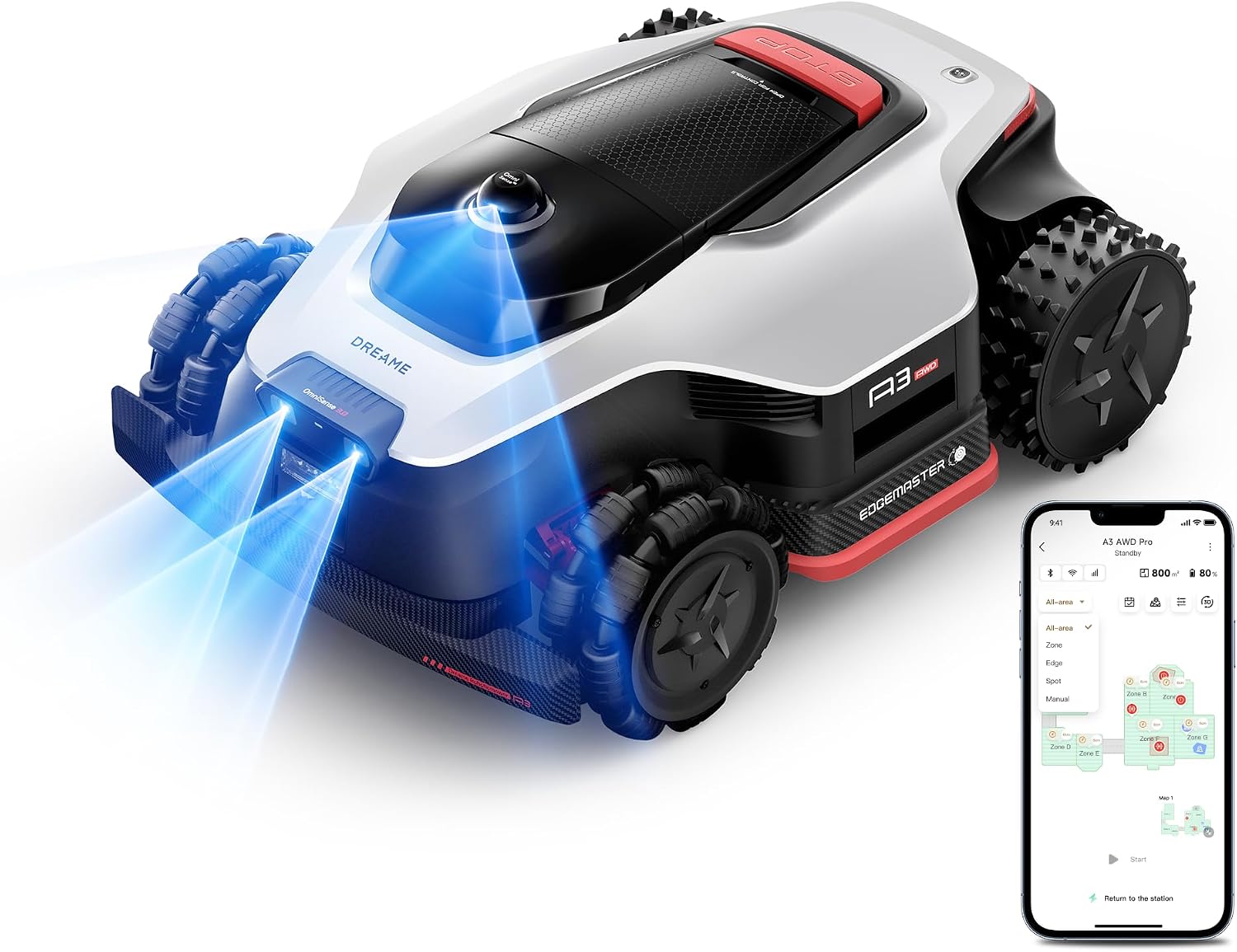 Visit on Amazon →, then budget a Saturday for the install.
The control layer: Samsung Galaxy Tab A11
The app is a feature, not the mower. If the schedule fails, you own a very slow Roomba with blades, and you will be the one pushing it. The single best upgrade I have made to my own setup is a tablet that lives on the kitchen counter and does nothing but run the mower app.
This one is an 8.7 inch WiFi model with 64GB of storage and 4GB of memory, which is more than enough for a scheduling app, a map view, and a weather radar tab open at the same time. The listing is the International Version, so read the warranty terms before you buy, and note that WiFi only means no cellular, which is fine for a counter tablet that never leaves the house.
Why a separate screen instead of your phone? Because the schedule is the product. I want the map up where I can see it while I am making coffee, and I want to notice that the robot skipped the strip behind the garage before that grass gets tall enough to matter. Hand that job to a phone and you will check it never.  Visit on Amazon → before you decide a phone is good enough.
The mudroom layer: Tapo RV50 Pro Omni
Clippings come inside. Fine mulch rides in on shoes, on paws, and on the mower itself when you carry it to the garage for winter. My dog is a big mix who chases anything that moves and brings half the yard back through the door with her, and the entry mat after a mowing morning is not a pleasant object.
A robot vacuum with a self-emptying dock is the least glamorous line item in a lawn system and the one my clients thank me for. The Tapo RV50 Pro Omni vacuums and mops and parks itself on a dock that empties the bin, so you are not pulling a dust cup full of dried grass every two days. Set it to run after the mower's morning session and the mudroom stops being a science experiment.
This is not a mower and it will not help you on the lawn. It is the part of the system that keeps the house livable while the lawn gets handled, and it is the reason I stopped telling clients that a mower is the only robot they need. 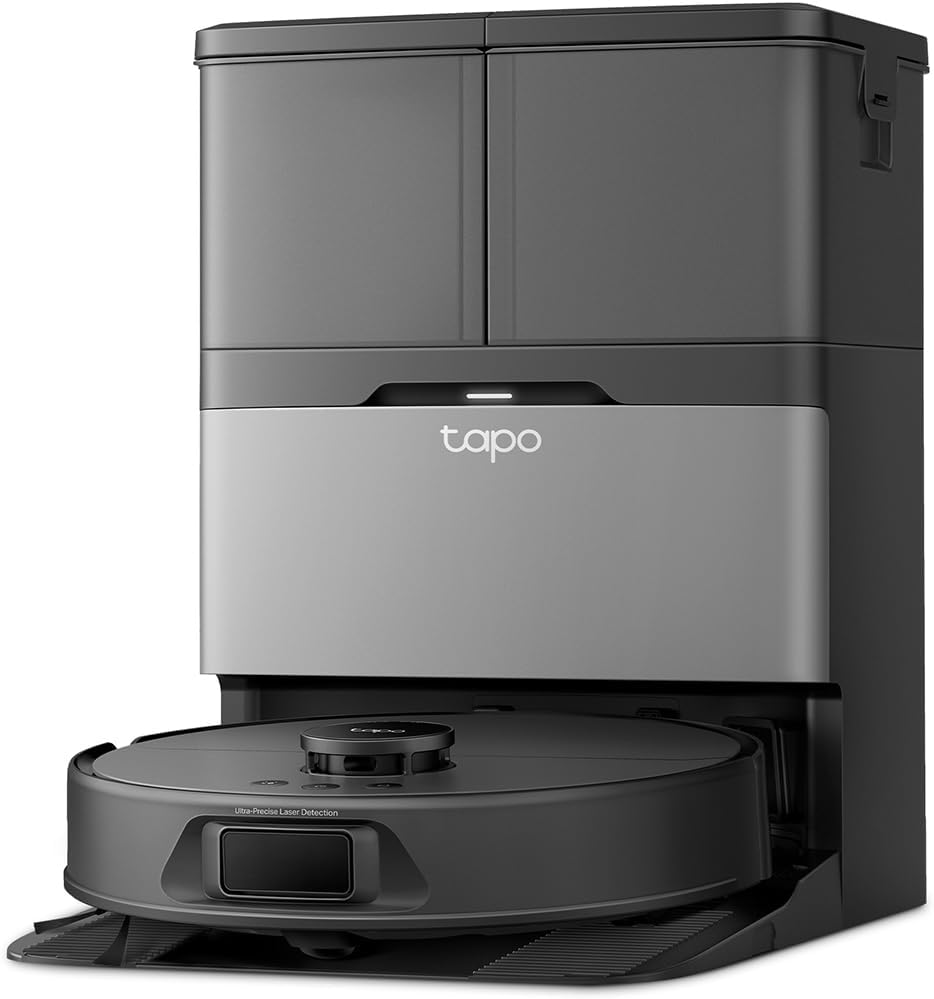 Visit on Amazon →.
The labeling layer: Perco Price Gun kit
This is the one that looks like a mistake in a lawn article, so let me explain. I keep a string and stakes map of every install I do. Wire ends, zone boundaries, guide stakes, the spare blade box, the date I last swapped blades. If you have ever tried to remember which of four identical black stakes marks the boundary of the dog's run, you know the problem exactly.
A one-line label gun with five rolls of white labels, a clip, and ink rollers turns a pile of anonymous stakes into a labeled map. Write the zone, the date, and the wire direction on each one. Two seasons later, when a splice corrodes and the robot starts wandering off course, you will know which section to dig up instead of standing in the rain guessing where the break is.
Blade life is the hidden cost of this hobby. Dull blades tear grass instead of cutting it, and you will not notice until the lawn starts looking ragged at the tips. A label on the blade box with the install date is worth more than any app reminder, and a label on the dock with your wire layout notes will save you a service call. This is a tool for the install, not for the mower, which is exactly why it belongs in this list.  Visit on Amazon →.
How I judge an install
Every robot mower I set up gets judged the same way, and almost none of it happens on the machine.
First, the wire. Layout is where installs succeed or fail. Corners want to be gentle rather than square, garden beds want their own loop so the robot treats them as an island rather than a shortcut, and the wire wants to be staked often enough that it never floats after a freeze and thaw. Wire is boring and it works. The "wire-free" mowers have their own problems, and tree cover kills a positioning signal faster than any sales page admits.
Second, the dock. Level ground, power within reach, WiFi coverage at the spot, and a route in and out that does not cross a flower bed. A robot that cannot find the dock in the dark is a robot you will be rescuing in your bathrobe.
Third, cutting height. I start high in spring and drop it gradually. Scalping a lawn in May because you want it to look like July is how you get weeds.
Fourth, frequency. Daily beats weekly, every time. If your schedule has the robot out three days a week on a fast-growing lawn, no amount of money spent on the machine will fix that.
Fifth, blades. Check them monthly during the growing season. If the tips of your grass look shredded rather than cut, the blades are done.
The robot lawn mower setup reference table
This is the table I keep pinned in my notes for a standard quarter-acre suburban install. Prices move constantly, so the last column says the same thing on every row.
| Product | Role in the setup | What the listing gives you | Price |
|---|---|---|---|
| Visit on Amazon → DREAME A3 AWD 1000 LiDAR Robot Lawn Mower |
The mower. Cuts, climbs, docks. | AWD drive, LiDAR navigation, 45-minute fast charge, upgraded model | $1,399.99 |
| Visit on Amazon → Samsung Galaxy Tab A11 |
The dashboard. Runs the schedule and the map. | 8.7 inch WiFi tablet, 64GB storage, 4GB memory, International Version, gray | $131.99 |
| Visit on Amazon → Tapo RV50 Pro Omni |
The cleanup. Handles tracked-in clippings and dog hair. | Robot vacuum and mop with a self-emptying dock | $599.99 |
| Visit on Amazon → Perco Price Gun 1-Line Kit |
The install paperwork. Labels stakes, zones, and blade dates. | One-line kit with five white label rolls, clip, and ink rollers | $24.99 |
The order in that table is not random. Mower first, because everything else supports it. Dashboard second, because the schedule is what makes the mower worth owning. Cleanup third, because clippings in the house are the complaint I hear most from people who love their lawn. Labels last, because they cost the least and save the most time.
Should you buy the DREAME A3 AWD 1000?
Yes, if your yard has any grade at all. AWD on a mower is not a marketing word the way it is on a crossover. It is the difference between a machine that holds a wet slope and one that does not, and it is the feature I would give up almost anything else to keep.
LiDAR navigation and a 45-minute fast charge round out the case. On a small lot, quick top-ups mean the robot can go out twice a day, which is the single best thing you can do for lawn quality. The install still falls on you: wire, dock placement, a route that avoids the beds. Check current Amazon price and then plan a full Saturday for setup. The mower is the easy part.
Should you buy the Galaxy Tab A11?
Yes, if you have ever forgotten to check a mower app for two weeks. A dedicated counter tablet keeps the map and the schedule in front of you, and this one has the storage and memory to run a scheduling app without complaint.
Two honest notes. It is the International Version, so look at the warranty situation before you buy. And it is WiFi only, which is a limitation for a tablet that travels but not for one that lives next to the coffee maker. If you already have an old tablet in a drawer, use that instead and spend the money on wire.
Should you buy the Tapo RV50 Pro Omni?
Yes, if you have a dog, a mudroom, or a hallway that collects grass. The self-emptying dock is the feature that makes it useful rather than cute, because the chore you are avoiding is not vacuuming, it is emptying the bin full of dried clippings twice a week.
It vacuums and it mops. It does not mow and it will not solve a single lawn problem. Buy it as the indoor half of a lawn system, not as a replacement for anything outside.
Should you buy the Perco Price Gun kit?
Yes, and this is the cheapest decision in the article. Five rolls of labels, a clip, and ink rollers cover years of stake marking, wire ends, and blade dates. If you install your own wire, you will use it more than you expect. If you pay someone else to install it, label the zones anyway so you can talk about the yard in the same language they do.
Two seasons from now, when something fails, you will either know where it is or you will spend a wet afternoon finding out. Labels are cheaper than a service call.
The bottom line
A robot lawn mower setup is a system, and the mower is only the loudest part of it. Buy the machine that can hold your slope, give it a screen that keeps the schedule honest, let a vacuum deal with what the lawn brings indoors, and label everything while you still remember what you meant. That is the install. The mowing is the easy part.