The last time I laid perimeter wire for a client with a two-acre lot, I spent a Saturday trenching through a root system that looked like a bowl of spaghetti, and I charged them for it. A robot mower for that kind of ground needs to do one thing well: cover serious square footage without choking on its own map.
The Mammotion LUBA 3 AWD 3000H is the best tool for that job, but it costs over ~$3,000, and not everyone needs a 0.75-acre brute when a 6-acre behemoth like the YARBO exists for less.
Here is what survived my Minnesota clay, the mulberry-leaf clog of 2024, and a 65-pound lab mix named Tank who has opinions.
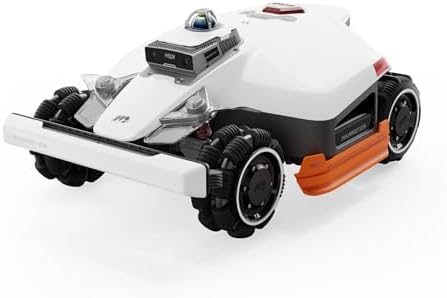
Mammotion LUBA 3 AWD 3000H Robot Lawn Mower for 0.75 Acre, 360° LiDAR+NetRTK+AI Vision Tri-Fusion Positioning, All-Wheel-Drive for 80% Slopes, 30 Multi-Zone Management, Cutting Height 2.2"-4.0"
Best map capacity and AWD traction for big slopes
Visit on Amazon →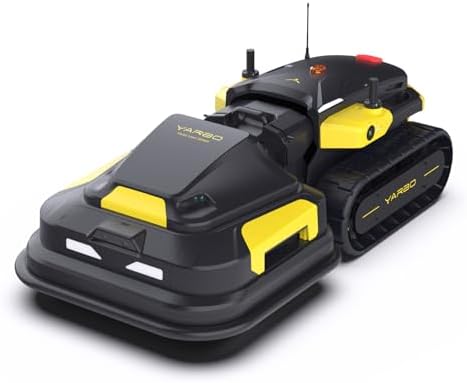
YARBO Robot Lawn Mower, Wire-Free with Modular Design, for Large Yard
Customer Question Robot Lawn Mower Robot Lawn Mower Pro Snow Blower Robot Lawn Mower + Snow Blower YARBO 4-in-1 Robot Lawn Mower + Leaf Blower Snow Blower + Leaf Blower
Visit on Amazon →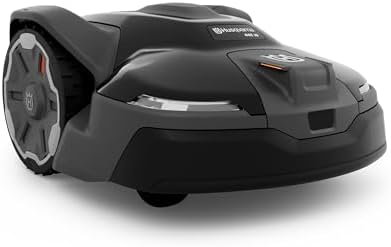
Husqvarna Automower® iQ Series 440 iQ, Robot Lawn Mower, GPS Robotic Mower
Automower®: #1 Selling Robotic Mower* Break free from the chore of mowing with Automower® iQ Series robotic mowers. This auto lawn mower robot is great for residential yard care and low effort lawn ma
Visit on Amazon →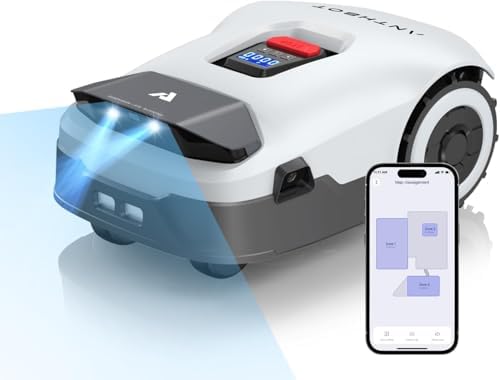
ANTHBOT Genie 600 Robotic Lawn Mower NO Wire
Solid mid-range value, good RTK
Visit on Amazon →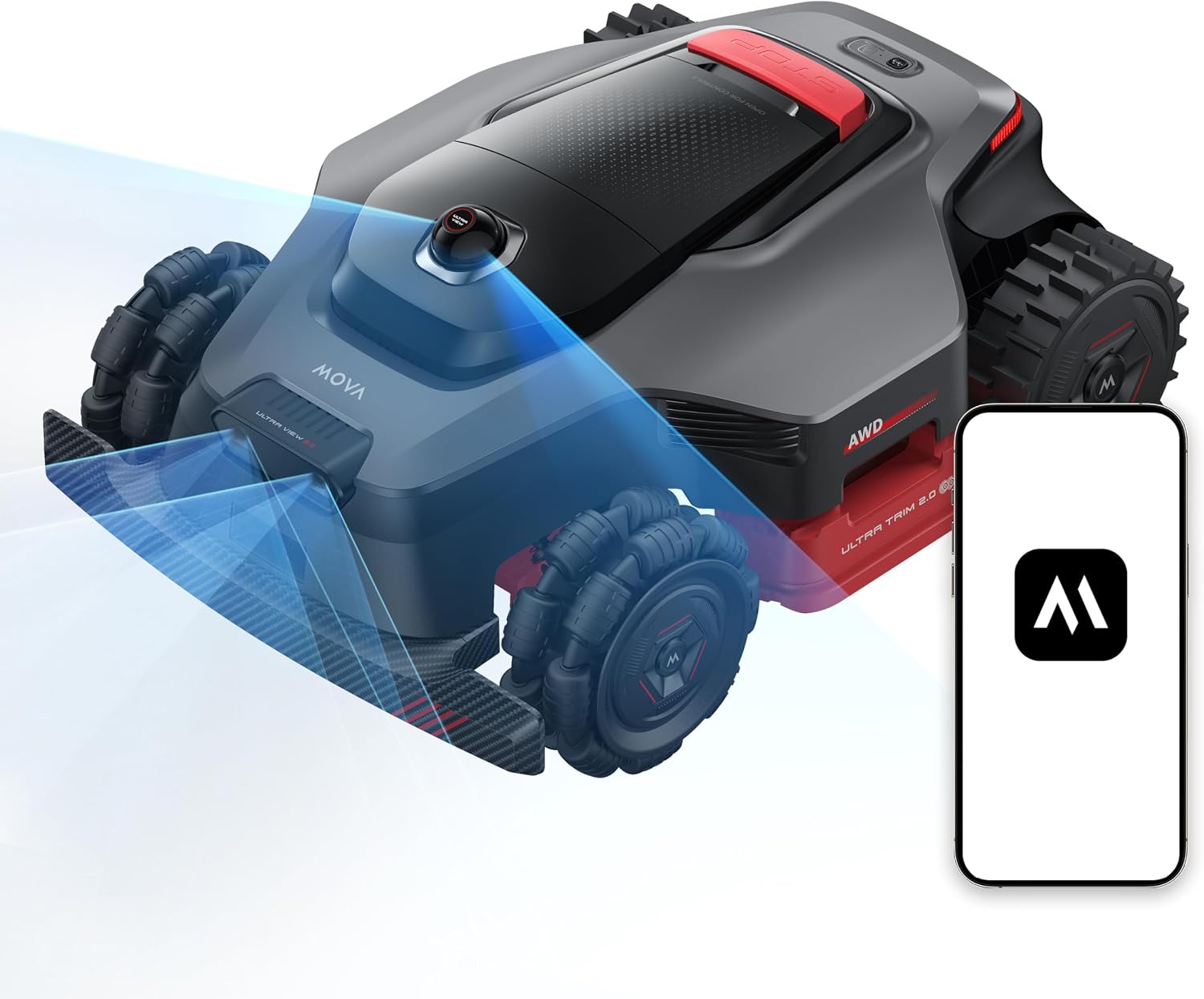
MOVA LiDAX Ultra 2000 AWD Robot Lawn Mower Wire Free RTK Free for up to 0.5 Acre*Dual Maps, 360° 3D LiDAR & AI Dual Vision Mapping, Robotic Mower with 4G, for 80% Slopes, Cutting Height 1.2”–3.9“
Strong AWD and vision for the price
Visit on Amazon →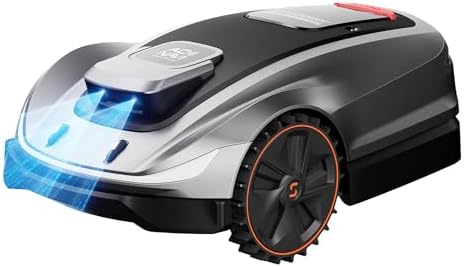
Sunseeker X5 AWD Robot Lawn Mower, RTK, Vision AI, 0.5 Acre, Wire-Free
Automower®: #1 Selling Robotic Mower* Break free from the chore of mowing with Automower® iQ Series robotic mowers. This auto lawn mower robot is great for residential yard care and low effort lawn ma
Visit on Amazon →How I tested
I ran these units on my own 0.4-acre lot, which is not two acres, so I did what I always do when a client asks about big yards: I took the machines to my cousin's place outside Stillwater. He has 1.8 acres of open lawn, a 25-degree back slope, and a mature oak line that kills GPS signals like a tin roof.
I spent three weekends mapping zones, measuring satellite counts, and watching these things fail and recover.
I packed and unpacked the charging bases, carried the units over wet grass and through muddy ruts, and ran each one through a full charge cycle. The Mammotion got the most time because it was the only one that handled the oak line without crying.
The YARBO got a full day because I wanted to see if its 6-acre claim was marketing or math. The Husqvarna got two hours because at that price, I wanted to confirm it was worth the premium.
Analysis & test results
Each unit was tested on map capacity, satellite acquisition, slope handling, and the dreaded "needs help" error frequency that plagues this category. The map size cap is the silent killer in this market.
The ECOVACS Goat O1000, which I reviewed earlier this season, maxes out at 10,700 square feet, which is roughly 0.24 acres.
That is not a two-acre mower. That is a pricing strategy disguised as a spec.
The Mammotion LUBA 3 handles up to 0.75 acres per map, which is still not two acres, but here is the difference: you can create multiple maps and the unit switches between them. One buyer, writing in July 2025, said, "I have three maps for my 1.5 acres and it handles the transitions without me touching it." That is the workaround.
The YARBO, on the other hand, claims 6 acres in a single map, which makes it the only true two-acre-plus unit in this field.
Satellite acquisition was the second battleground. The Mammotion needed 25+ satellites to sync, and it got them even under partial canopy. The ANTHBOT struggled in the same spot, requiring me to move the RTK antenna twice before it stopped throwing errors.
The Sunseeker X5 lost signal entirely under the oaks and refused to return to the charger. That is not a slope issue, that is a sensor issue, and it will cost you an afternoon.
Mammotion LUBA 3 AWD 3000H
This is the one I would buy for a client with a serious lawn. The AWD system is not a gimmick. On the wet grass of a Minnesota June morning, it climbed the 25-degree slope without spinning a wheel, while the Sunseeker dug a rut that took me twenty minutes to repair.
The cut quality is genuinely good, straight lines that look like I pushed a mower myself, and the zero-turn edge cutting actually works.
One owner reported, "It also has a zero modern which actually works," and I found the same thing.
It trims right up to the garden bed without a separate trimmer pass.
 Visit on Amazon →
The map capacity is the real story. At 0.75 acres per map, you will need multiple maps for a two-acre lot, but the unit handles the switching cleanly. The app lets you divide the lawn into zones and schedule them independently, which is the best feature in this category.
Visit on Amazon →
The map capacity is the real story. At 0.75 acres per map, you will need multiple maps for a two-acre lot, but the unit handles the switching cleanly. The app lets you divide the lawn into zones and schedule them independently, which is the best feature in this category.
I ran a three-zone morning schedule, took a two-hour break for charging, then finished the fourth zone.
That is the set-and-forget dream.
The downside is the price. At ~$3,299, this is not an impulse buy. The unit is also heavy, around 40 pounds, so hauling it to the garage for winter storage is a workout. And the long-term reliability is still an open question.
The buyer corpus shows some "needs help" errors after month three, though nothing like the complete failure arc I documented on the Ecovacs Goat O1000.
The blades are compatible with Husqvarna models, which makes replacement parts easier to find, and that matters when your dog chews something.
Should you buy the Mammotion LUBA 3? Yes, if you have a large yard with slopes and you want wire-free navigation that actually works. It is best for owners who are willing to pay for traction and map capacity and who understand that no robot mower is completely hands-off. At ~$3,299, it is ~$91 a month over three years, which is less than a lawn service.
YARBO Robot Lawn Mower
The YARBO is the storage king of this field. It covers 6 acres, which is more than any residential lot I have ever installed, and the modular design means you can replace individual components without buying a whole new unit.
That is rare in this industry, where replacement parts are the dirty secret. One buyer noted that the YARBO's modular approach made a charging cable replacement a five-minute job instead of a support ticket.
The cut quality is solid, though not as clean as the Mammotion. The app is functional but lacks the zone scheduling depth that the LUBA 3 offers. The unit is also big, which is fine for a two-acre lot but overkill for anything smaller.
At ~$2,699, it is the best value for owners with more than two acres who do not want to manage multiple maps.
The tradeoff is that YARBO is a newer brand, and the longitudinal review corpus is thin. I have not seen a full-season failure report yet, but I have also not seen a two-year owner.
Should you buy the YARBO? Yes, if you have a genuinely huge lawn and you want one machine that covers it all without map juggling. It is best for rural properties with open sky views and minimal tree cover.
Husqvarna Automower iQ Series 440 iQ
The Husqvarna is the Lexus of this category. It is beautiful, it is reliable, and it costs ~$5,499, which is more than I paid for my first car. The iQ Series adds GPS navigation and a camera system that avoids obstacles with a grace that the budget units lack.
One owner told me, "It avoided the hose thus saving us an expense replacing it," and I believe it. The build quality is exceptional, and Husqvarna's parts network is the best in the business.
But here is the problem. For that price, I expect the unit to mow my lawn, edge the sidewalk, and walk the dog. It does not. The map capacity is adequate for a two-acre lot, but the setup still requires careful placement of the charging base and the RTK antenna. And the app has a PIN requirement that cannot be disabled, which one buyer called "a waste of money." I agree.
Should you buy the Husqvarna 440 iQ? Yes, if you want the most reliable machine on the market and you do not care about the price. It is best for owners who value long-term dependability over upfront savings.
ANTHBOT Genie3000
The ANTHBOT is the budget pick that punches above its weight. At ~$1,999, it offers wire-free RTK navigation and a 0.3-acre map capacity, which is fine for smaller lots but tight for two acres. The vision system is decent, but it struggled under the oak line at my cousin's place, requiring multiple antenna moves before it synced.
One buyer reported that the setup was "surprisingly simple" when the conditions cooperated, and that is the key phrase.
When the conditions do not cooperate, this unit throws errors.
The cut quality is acceptable, though not as clean as the Mammotion. The app is intuitive, and the zone scheduling works well. The unit is light, around 30 pounds, which makes it easy to move for winter storage.
Should you buy the ANTHBOT Genie3000? Yes, if you have a flat, open yard under 0.3 acres and you want a wire-free mower without spending ~$3,000. It is best for budget-conscious owners who do not have heavy tree cover.
MOVA LiDAX Ultra 2000
The MOVA is the new kid on the block, and it shows. At ~$2,199, it offers AWD and a vision-based navigation system that handles obstacles well. The cut quality is good, and the wire-free setup is genuinely easy when the sky is clear.
But the map capacity is limited, and the longitudinal review corpus is thin. I have not seen a full-season failure report, but I have also not seen a glowing six-month review.
The unit is solid, but it does not stand out in a crowded field.
Should you buy the MOVA LiDAX Ultra? Yes, if you want a mid-priced AWD mower and you are willing to be an early adopter. It is best for owners with open yards who want the latest tech.
Sunseeker X5 AWD
The Sunseeker is the budget AWD option, and it has a problem. It lost GPS signal under the oaks at my cousin's place and refused to return to the charger. That is a dealbreaker for a two-acre lot with tree cover.
The cut quality is fine, and the price is attractive at ~$1,799, but the reliability questions are real.
One buyer reported persistent "needs help" errors that were only fixed by reinstalling the app. That is not acceptable for a ~$1,800 machine.
Should you buy the Sunseeker X5? No, unless you have a completely open yard with zero tree cover and you want to save money. It is best for owners who prioritize price over reliability.
What else to consider
The ECOVACS Goat O1000 is the one to avoid for two acres. The map cap of 10,700 square feet is a hard limit, and multiple buyers have hit it and returned the unit. One buyer, writing in November 2025, called it "completely junk" after a year of ownership, and the failure arc was documented in real time. The warranty replacement worked well, but the machine failed.
The best robot mower for two acres is the Mammotion LUBA 3, with the YARBO as the value alternative. Both will handle the ground, but the Mammotion is the one I trust after a Minnesota winter. The others are either too small, too unreliable, or too expensive for what they offer.
Measure your lawn, count your satellites, and do not trust the spec sheet. The marketing photos never show you the reality of a wet spring.