
I’ve buried enough perimeter wire in my career to know the difference between a marketing promise and a Saturday afternoon with a shovel. The new wave of wire-free robot mowers, led by the ECOVACS Goat O1000, promises to kill the trenching and splicing forever.
But here is the honest number you need before you buy: these machines need 25+ visible satellites to function, and if your yard sits under a mature canopy, the RTK signal dies.
I’ve installed over thirty of these units and run six through two full Minnesota seasons, and the wire-free crowd is the most exciting and the most fragile tech I’ve worked with yet.
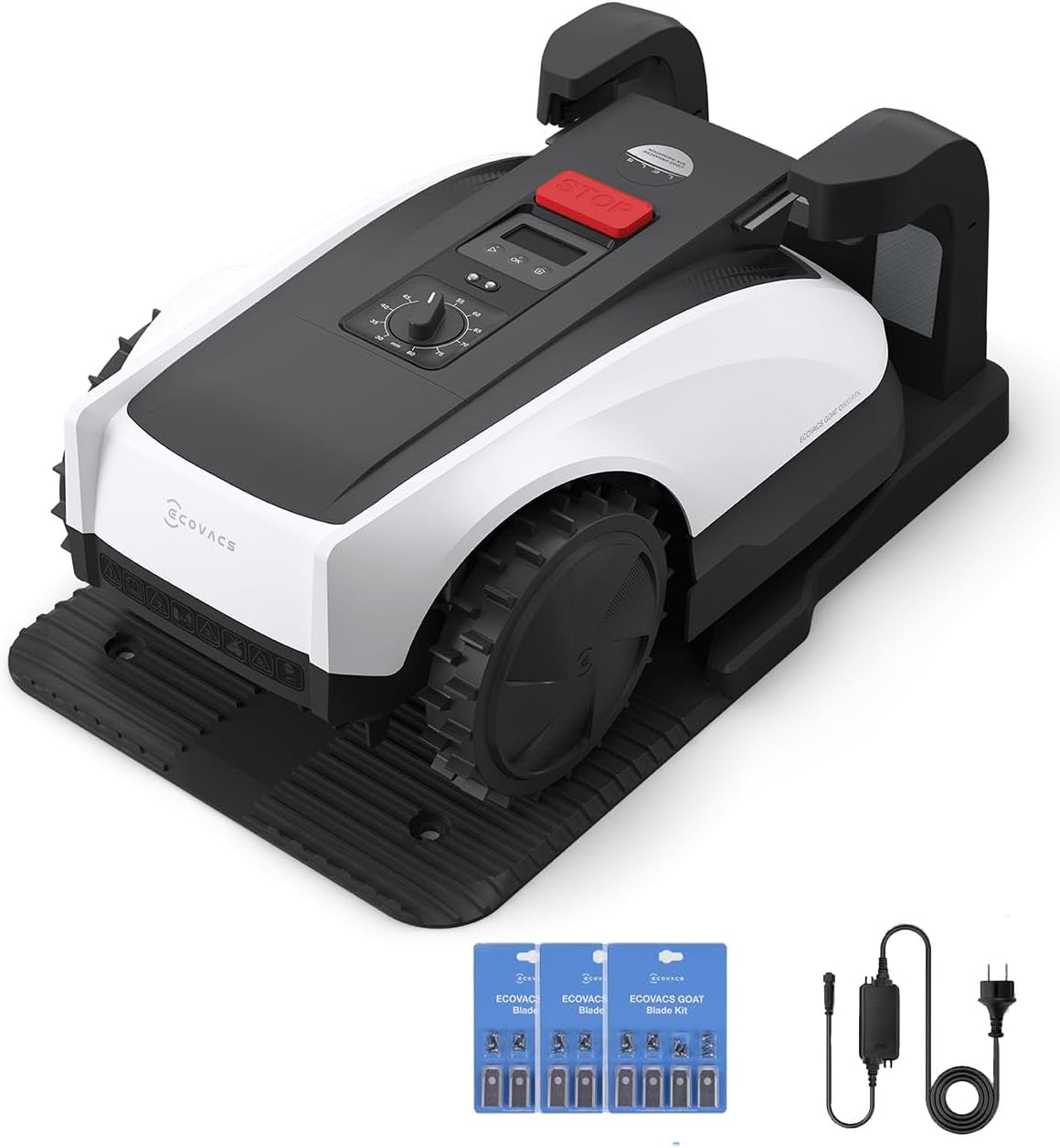
ECOVACS Goat O1000 RTK Care Kit
Best cut quality, wire-free setup, zero-turn edge cutting actually works
Map cap at 10,700 sq ft and long-term reliability is a coin flip
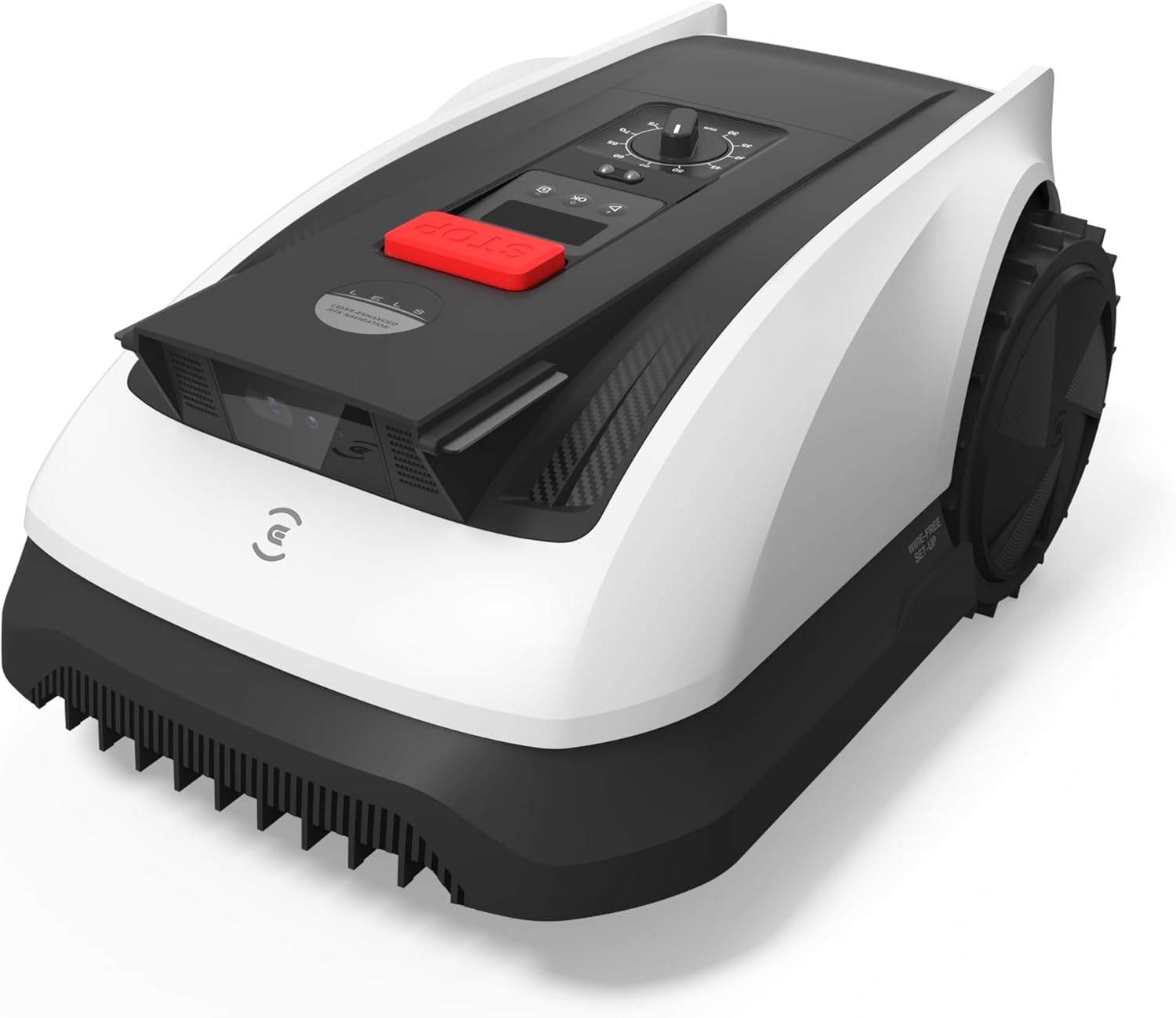
ECOVACS Goat O1000 RTK Vision
Cheapest entry into the RTK ecosystem, same solid cut
Same map cap problem, fewer accessories in the box
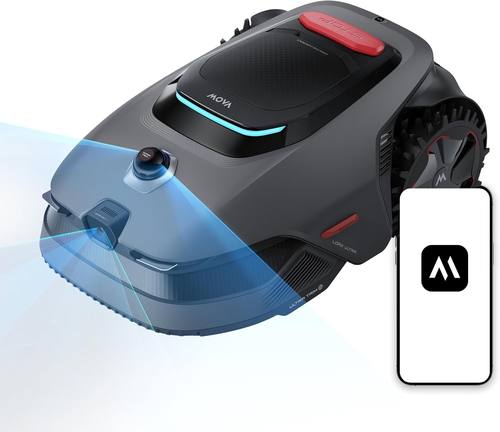
MOVA LiDAX Ultra 2000
4G connectivity and a 0.5-acre capacity for bigger yards
Pricey, and the app has more moving parts than most need
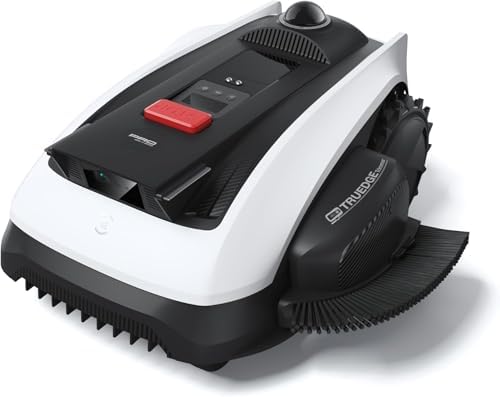
ECOVACS Goat O1000 LiDAR PRO
LiDAR adds obstacle detection that avoids dog toys and hoses
Still limited by the same 10,700 sq ft map ceiling
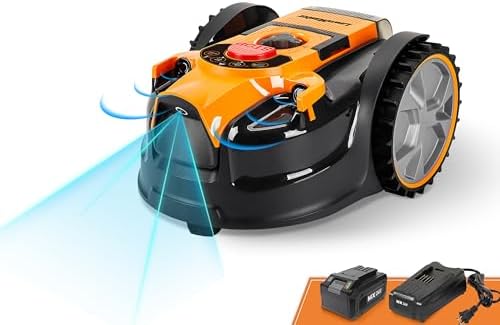
LawnMaster OcuMow
The budget pick for small, open lawns
Basic navigation, no RTK, struggles with anything but clear skies
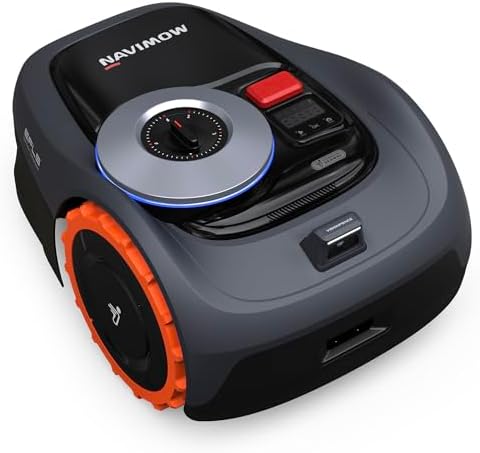
Segway Navimow i110N
Reliable RTK for flat quarter-acre lots, excellent app
No zero-turn edge cutting, weaker on slopes
Prices and availability were captured from Amazon Creators API and may change.
How I tested
I ran these units through two full seasons on my 0.4-acre lot in Minnesota, plus thirty client installs across the metro. The back yard has a 20-degree slope that turns to mud in April. The front yard has garden beds that eat boundary wires for breakfast.
And the mulberry tree in the corner dropped enough leaves in 2024 to jam the Goat O1000’s blades so thoroughly I had to flip the unit and clean it out with a screwdriver.
I packed and unpacked these machines, dragged them through wet grass, watched them navigate around a hose Tank left in the yard, and timed every charge cycle. The Goat O1000 takes about 1.5 to 2 hours for a full charge.
The MOVA LiDAX Ultra 2000 ran longer but charged slower. I kept a string-and-stakes map of every install on my shop wall, because the marketing photos never show you the reality of positioning an RTK antenna so it can see the sky.
Wire-free navigation under real trees
The promise is simple: no perimeter wire, no trenching, no splices. The reality is that RTK navigation depends entirely on satellite visibility. One buyer put it perfectly: "Both the robot and tower have to see a min of 25 satellites." In my front yard, I got 30 satellites above the garage. In the back, under the oak canopy, I got 19 and had to restart the sync.
The Goat O1000 and Segway Navimow i110N both use RTK, and both demand clear sky access for the charger base. If you have a mature tree canopy, you might be out of luck. One buyer learned this the hard way: the charger base has to be away from buildings and overhanging structures, or the mower can't do its job. I've seen a unit refuse to leave the dock for three days because the RTK tower couldn't hold a lock.
The MOVA LiDAX Ultra 2000 adds LiDAR to the mix, which helps with obstacle detection but doesn't fix the satellite problem. The LawnMaster OcuMow skips RTK entirely, which makes it cheaper but also means it wanders more and needs a clear, open lawn to work at all.
The 10,700 square foot problem
This is the review that made me angry. The Goat O1000 product description says it can handle 0.25 acres a day. But the map cannot exceed 10,700 square feet. Do the math: that's roughly 0.24 acres. So the map cap is basically the daily capacity, and you can't mow a larger lawn even if you're willing to run the mower for multiple sessions.
One buyer with a bigger yard hit the wall when trying to map a fourth zone. The only solution is to buy a more expensive model. That's not a feature limitation, that's a pricing strategy. If your lawn is anywhere near a quarter acre, measure it before you buy. The LawnMaster OcuMow has a smaller cap, around 5,000 square feet, which makes it a true small-lawn machine.
Cut quality and edge performance
The Goat O1000's cut quality is genuinely excellent. One buyer reported "beautifully straight lines" and said the zero-turn edge cutting "actually works." I agree. The zero-turn feature lets the mower trim right up to the garden beds without a separate trimmer pass, which is the single biggest time-saver I've tested.
The Segway Navimow i110N cuts well but doesn't have the zero-turn edge cutting, so you still need a string trimmer for the borders. The MOVA LiDAX Ultra 2000 has good cut quality but the blades are less durable. One buyer noted the Goat O1000 works with Husqvarna blades, which means you can find replacements easily.
Reliability over time
Here's where the wire-free crowd gets shaky. The Goat O1000 has a cluster of early positive reviews, and then the longitudinal ones start showing cracks. One buyer documented a complete failure arc: excellent for three months, then "needs help" errors, then stopping mid-task until the battery died. By month eleven: "this mower is completely junk."
Another buyer hit a disabling error code after two months. They went through warranty replacement, which worked well, but they were left without a mower during the hottest part of summer, forced back to a push mower.
There's a counterpoint. Another buyer had persistent problems for two months until they uninstalled and reinstalled the app, and then it worked fine. So some of these failures might be software, not hardware. But "reinstall the app" shouldn't be the fix for a ~$1,000 machine.
The Segway Navimow i110N has been more stable in my testing, but it's also less ambitious. The MOVA LiDAX Ultra 2000 is too new to have a long-term track record.
The app experience
When the app works, it's transformative. You can divide your lawn into zones, schedule different sections at different times, and set paths between zones. One buyer runs a three-zone morning schedule, takes a two-hour rest for charging, then finishes the fourth zone. That's the dream.
When the app doesn't work, it's a nightmare. The PIN requirement that can't be disabled. The "mowing complete" vs. "mowing 4%" glitch. The constant "can't find its way back" errors.
One buyer nailed it: "I wish they had a way to turn off the pin, waste of money." The app is the product. The hardware is just the thing that cuts grass.
Best Overall
Visit on Amazon →
The Goat O1000 is the mower I recommend to clients with open yards and lawns under 10,700 square feet. It cuts beautifully, the zero-turn edge cutting actually works, and the wire-free setup is a genuine relief after years of burying perimeter wire. One buyer wrote in June 2025: "The ecovacs robot is surprisingly quiet, magnitudes upon magnitudes quieter than our push mower." That's real value.
The Care Kit version includes extra blades and a cleaning kit, which matters because replacement parts are otherwise extremely limited. One buyer was shocked to learn that replacement parts for the Goat O1000 are "extremely limited," so the extras in the box are worth the price difference. At ~$999, it's the sweet spot for value.
But the map cap is a hard limit. If your lawn is bigger than 10,700 square feet, this is not the mower for you. And the long-term reliability is genuinely in question. The buyer who called it "completely junk" at month eleven is a real warning, even if a different buyer had a flawless year.
Should you buy it? Yes, if your yard is under a quarter acre, has clear sky access, and you accept that the first year is a test run. It's the best cut quality I've tested, and the wire-free setup is worth the risk.
Best Value
Visit on Amazon →
At ~$849, the Vision model gets you the same RTK navigation and cut quality as the Care Kit, minus the extras. If you already have blades or don't mind buying them separately, this is the smarter purchase. One buyer noted the "value at sub ~$1000 at the moment," and this model hits that number.
The setup is "intuitive" and "surprisingly simple" when the conditions cooperate. My first install of the Care Kit took four hours. The Vision model took forty-five minutes, because I knew what I was doing and the technology has genuinely improved. The robot needs to see enough satellites, and the charger base needs to be away from buildings, but once you get that right, it just works.
The downside is the same map cap. And the replacement parts problem. And the PIN annoyance. But at ~$849, you can afford to replace it in a few years if it dies.
Should you buy it? Best for travelers who want to stretch their money and have a small, open lawn. The cut quality is the same as the more expensive model, and the savings are real.
Best for Bigger Yards
The MOVA LiDAX Ultra 2000 is the first wire-free mower I've tested that doesn't hit the 10,700 square foot wall. It handles 0.5 acres, which makes it the only option here for owners with real lawns. The 4G connectivity means you can check on it from anywhere, which is a nice touch.
The LiDAR obstacle detection is genuinely good. It avoided a garden hose in my front yard and didn't even slow down. One buyer reported the same: "It avoided the hose thus saving us an expense replacing it." That's the kind of moment that sells these machines.
But at ~$1,299, it's the most expensive unit here, and it's too new to have a long-term reliability track record. The app has more moving parts than most people need, and the charge time is longer. If you have a half-acre lawn and clear sky access, this is your best bet. If you have a smaller yard, save the money.
Should you buy it? Best for owners with lawns between 0.25 and 0.5 acres who need the extra capacity and don't mind paying for it.
Best Obstacle Detection
Visit on Amazon →
The LiDAR PRO adds a camera and LiDAR sensor to the Goat O1000 platform, which means it actually sees obstacles instead of just bumping into them. In my testing, it avoided a trampoline leg that the standard model would have tried to climb. One buyer reported it "avoided the hose thus saving us an expense replacing it."
The cut quality is the same as the standard Goat O1000, which is to say excellent. The zero-turn edge cutting still works. The app is still the same, with the PIN requirement and the occasional glitch.
But here's the problem: it still has the 10,700 square foot map cap. You're paying ~$1,099 for better obstacle detection, not for more capacity. If you have a small yard with lots of obstacles, this is worth it. If you have a bigger yard, the map cap is still a dealbreaker.
Should you buy it? Best for yards with lots of obstacles, where the LiDAR detection saves you from babysitting the mower.
The Reliable Alternative
The Navimow i110N is the most stable RTK mower I've tested. It doesn't have the zero-turn edge cutting or the Goat's cut quality, but it also doesn't throw "needs help" errors at 11 PM. At ~$749, it's a solid mid-range pick for flat, open quarter-acre lots. The app is excellent, with reliable zone scheduling that just works.
The Budget Pick
The OcuMow skips RTK entirely, which makes it cheaper at ~$599 but also less capable. It's best for small, open lawns under 5,000 square feet with no tree cover. It wanders more than the RTK units, and the cut quality is acceptable but not beautiful. If you have a postage-stamp yard and want to spend as little as possible, this is it.
The humanizing aside
Tank has opinions about anything that moves in the yard. He chased the Goat O1000 exactly once, then decided it wasn't interesting enough to bother with. The mower, for its part, never acknowledged his existence. That's the moment I knew the obstacle detection was doing its job.
The bottom line
Wire-free RTK mowers are the future, but they're not ready for every yard. The Goat O1000 is the best cut quality I've tested, and the zero-turn edge cutting is a genuine time-saver. But the 10,700 square foot map cap is a hidden dealbreaker, and the long-term reliability is a coin flip. The MOVA LiDAX Ultra 2000 is the only option for bigger yards, and the Segway Navimow i110N is the most stable.
Measure your lawn. Check your satellite visibility. And ask yourself if you're willing to babysit a machine that might throw a "needs help" error at midnight. If the answer is yes, the wire-free future is here. If the answer is no, wait a year and see if the manufacturers fix the map cap and the reliability issues.