Every March I get the same message from a homeowner in Edina or Saint Paul: they want a wire-free robot lawn mower, no perimeter wire, no trenching, no staples pressed into the turf. I have installed more than 30 robot mowers for clients, and here is what I have learned. Wire-free describes the positioning system, not the work. Somebody still has to map the yard, set the dock, level it, and figure out what happens when the dog leaves a rope toy in the tall grass. This wire-free robot lawn mower comparison covers four products I keep coming back to: three mowers at three different capability tiers, plus the accessory that solves the problem all three of them share. I have not run a full Minnesota season on all four of these exact units, so treat what follows as a spec-and-install read rather than a season log.
Related: Perimeter Wire vs RTK Robot Mowers: What Actually Works
The best wire-free robot lawn mower for most suburban lawns here is the Segway Navimow i215, because LiDAR plus vision mapping handles shade and narrow passes better than RTK alone, and its 0.37 acre coverage fits a real lot. If your lawn is a quarter acre or smaller and you want the lowest entry point, the ECOVACS Goat O1000 deserves the first look. If you have genuine grade and want traction, the Mammotion LUBA 3 AWD 1500H is the heavy option. And the Robot Mower Garage is the unglamorous accessory that decides whether your dock survives three winters.
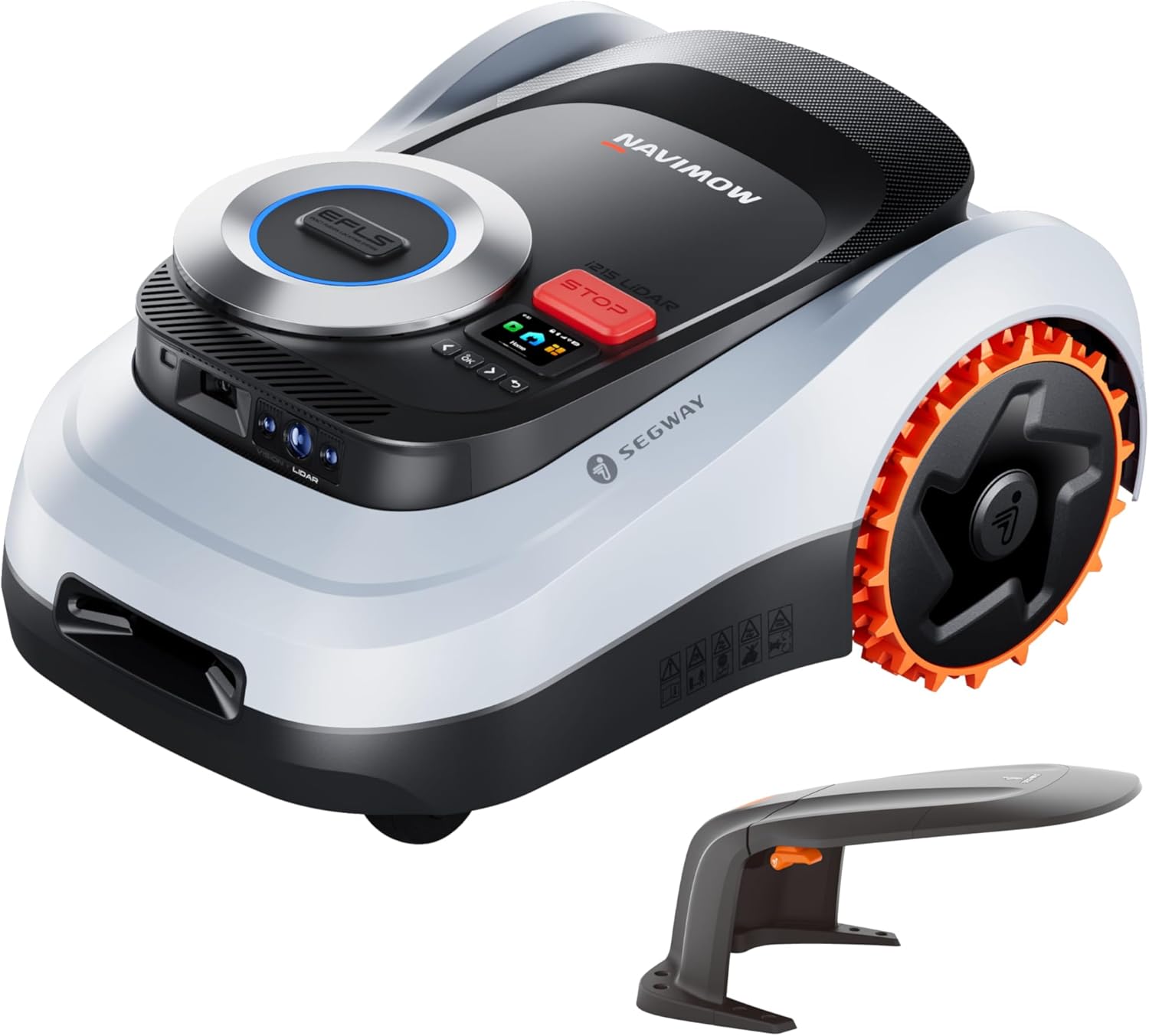
Segway Navimow i215 LiDAR Robot Lawn Mower Wire Free with Garage M
LiDAR and vision fusion maps without a wire, off-road wheels listed for 45% slopes, covers 0.37 acre, best all-around fit for a real suburban lot
Garage M ships separately, so the bundle is two deliveries and the first map still needs a clean, uncluttered run
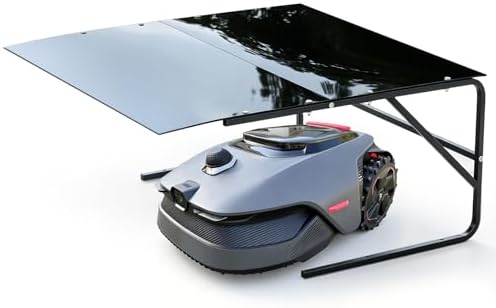
Robot Mower Garage, Rainproof UV-Proof Shelter for All Mowers(Large Size)
Rainproof and UV-proof, large enough for any mower and its dock, the single cheapest way to extend dock life
It does not mow anything, it is a separate purchase, and it takes an afternoon to assemble and level
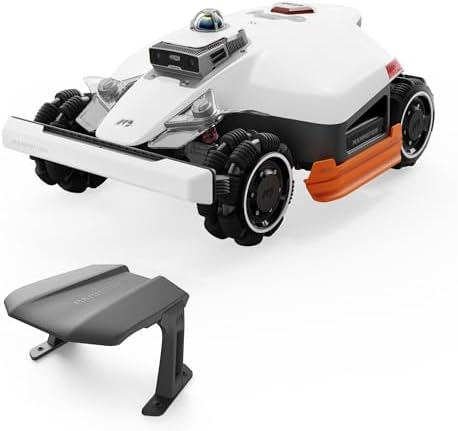
Mammotion LUBA 3 AWD 1500H Robot Lawn Mower with Garage (Ship Separately)
The only all-wheel drive mower in this group, traction on grade and in spring mud, listed with a garage
Garage ships separately, AWD adds weight and cost, and this is the premium end of the comparison
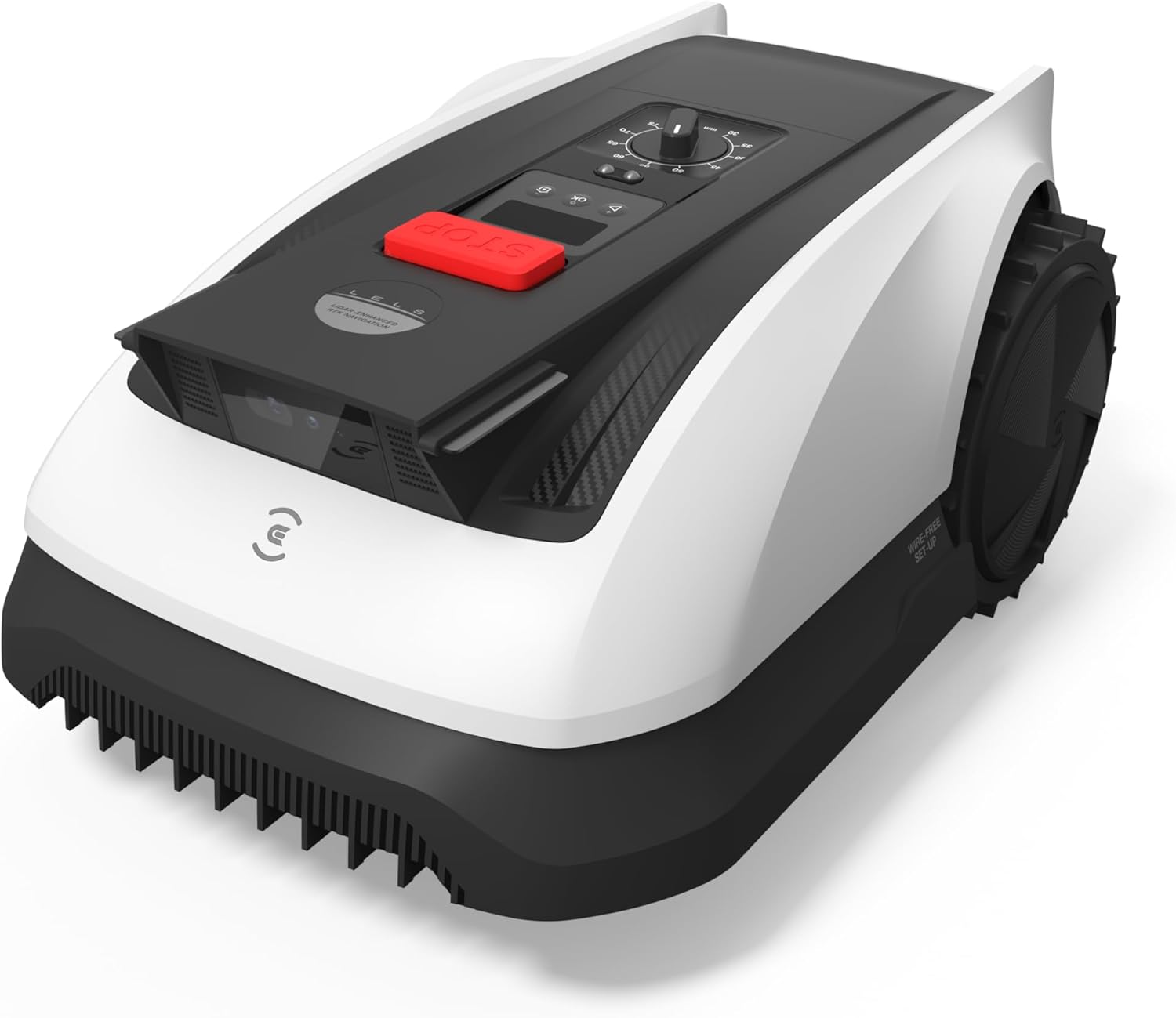
ECOVACS Goat O1000 RTK Robot Lawn Mower
Lowest entry point here, RTK plus vision, 3D obstacle avoidance, zero-edge cutting, covers 1/4 acre, app control
RTK needs a clear view of the sky, so dense canopy can drop the fix, and low flat objects still fool the vision layer
Prices and availability were captured from Amazon Creators API and may change.
The Segway Navimow i215: the one I would put on most lawns
The Navimow i215 is the product in this group that behaves like a system instead of a gadget. LiDAR and vision work together to build the map, and that combination matters more than the marketing copy suggests. A LiDAR mower reads the shape of the yard with a spinning sensor plane, and the camera layer catches the low obstacles the laser plane passes over. Auto mapping means you walk the boundary once, the mower learns it, and then you stop thinking about it, which is the entire point of owning one of these.
Coverage is listed at 0.37 acre. That is a genuine suburban lot, not a courtyard, and it is the number that decides whether this mower fits your property or spends its life parked at 40 percent charge. The off-road wheels are listed for 45% slopes. I have watched enough mowers slide sideways on wet grass at 18% to tell you that any slope rating is a dry-turf number. Treat 45% as a ceiling, not as a Tuesday.
The catch is in the product name. The Garage M ships separately, so this listing is a mower plus a shelter that arrives in its own box and gets assembled by you. If you want one delivery and one setup session, this is not that.
The ECOVACS Goat O1000 RTK: the value pick for a small lawn
The Goat O1000 is the entry point of this comparison, and it is the one I would hand to a client with a quarter acre and a normal suburban fence line. RTK positioning, vision, 3D obstacle avoidance, automated mapping, app control, and zero-edge cutting. Zero-edge cutting is the feature I would underline twice, because trimming along a fence or a bed edge is the job that never ends, and it is where cheap mowers leave a mohawk of grass that you then cut by hand.
RTK is the part to think hard about before you buy. It holds a line using satellite positioning plus a correction signal, and when it works it is elegant and quiet and wire-free in the way the marketing promises. My install notes say the same thing every season: RTK holds beautifully in open yards and struggles under dense canopy. If your lawn is ringed by mature maples, plan on the mower leaning on vision when the fix drops, or accept that it will pause and wait. That is a site condition, not a defect.
3D obstacle avoidance is the other trade-off worth naming. It is good at spotting a dog, a standing hose reel, or a shoe. Flat objects remain the weak spot in every vision system I have watched, and the fix is boring: walk the lawn before you schedule the run.
The Mammotion LUBA 3 AWD 1500H: the slope answer
All-wheel drive is the entire reason to look at the LUBA 3 AWD 1500H. On a robot mower, AWD is about traction on grade and in mud, and a Minnesota spring delivers both in the same week. If your property has a slope steep enough that you have to lean into it when you mow, front-wheel-drive mowers spin and claw and leave ruts, and an AWD mower climbs. It is that simple.
This listing includes a garage, and the garage ships separately, so again you are dealing with two boxes and two delivery events. The LUBA 3 sits at the top of this group in capability and it is priced like the premium machine it is. For a lawn with a genuine grade and a homeowner who does not want to think about mowing again, that trade is fair. For a flat quarter acre, you are buying capability you will never use, and you will still be the person who levels the dock.
The Robot Mower Garage: the accessory that decides your season
The Robot Mower Garage is the least exciting product in this article and the one that most affects how long your mower lasts. It is rainproof, it is UV-proof, it is large enough for all mowers, and it covers the docking station as well as the robot itself.
I have replaced more docks than I have replaced mowers. Water in the charging contacts, UV cracking the plastic housing, and leaf litter packed into the charging plate are the three failure modes I see most often, and all three are shelter problems rather than mower problems. If you are spending real money on a robot, spending a fraction of that on a shelter is not an upsell, it is maintenance.
The trade-off is honest. It is a box. It does not mow, it does not map, and it takes an afternoon to assemble and level on a slope. Some homeowners would rather let the mower sit in the open and take their chances with the weather. I would not, and neither would any client who has called me in April about a dock that will not charge.
Wire-free still means install day
This is the part the listings bury. Wire-free removes the trenching, the staples, and the splice that corrodes by August. It does not remove install day.
Somebody still has to place the dock on level ground within reach of an outlet, and the dock placement is the decision you cannot easily undo. Somebody still has to walk the boundary while the mower maps, and that walk is slower than you expect because the mower stops at every shrub. Somebody still has to set keep-out zones around the garden beds, and somebody still has to supervise the first three runs. On my own 0.4 acre lot, that first afternoon is the difference between a mower that works all season and a mower that beeps at me from a flower bed at 2 p.m. every day.
The install is the product. The mower is just the robot that executes it, and every one of these three machines will look broken if the dock is tilted or the map has a hole in it.
RTK versus LiDAR in a Minnesota spring
I keep a string-and-stakes map of every install, and the pattern is consistent across brands. RTK mowers are superb in open yards and unreliable under canopy. LiDAR mowers handle shade without complaint but need a clean first map, because a laser that learns a boundary around a parked car will remember that car as a wall. The market is slowly settling on hybrid approaches for exactly this reason, and the Navimow i215 in this group is the clearest example of that direction.
Spring adds its own variable. Mud, wet grass, and a lawn that grows four inches in a week will expose any traction weakness immediately, which is where all-wheel drive stops being a spec sheet line and becomes a Tuesday afternoon rescue. If you have ever pulled a robot out of a muddy low spot by hand, you know which mower you want.
Slope ratings, coverage numbers, and what I actually trust
Slope ratings are marketing until proven otherwise. A rating tested on dry turf tells you nothing about wet fescue in May. Coverage numbers assume daily mowing, which is the correct way to run these machines anyway: a cheap robot running daily beats an expensive one running weekly, every single time. Blade condition decides whether you get a mulch or a shredded mess, and dull blades tear grass instead of cutting it, so budget for replacements no matter which mower you choose.
What I trust is the boring stuff. Does the dock sit level. Does the map survive a firmware update. Does the mower find the dock in the dark. Those three questions predict your satisfaction better than any slope percentage on a box.
The trade-offs, side by side
Choose the Segway Navimow i215 if you have a normal suburban lot, some shade, and you want the best mapping in this group. Choose the ECOVACS Goat O1000 RTK if your lawn is a quarter acre or less, your sky is open, and you want the lowest entry point with real zero-edge cutting. Choose the Mammotion LUBA 3 AWD 1500H if you have grade, mud, and a preference for not rescuing anything. Buy the Robot Mower Garage with whichever mower you pick, because the dock is the part that fails first.
None of these are toys, and none of them are appliances. They are lawn systems, and the install decides how well they run.