
A quarter acre is the awkward size in robot mowing. It is too big for the cheap toy class that stalls in tall grass, and small enough that you do not need commercial gear that costs as much as a used truck. Robot lawn mower setup at this size is not complicated, but it is specific. The failures I see are almost never about the mower itself. They are about where the dock went, what the cutting height was set to in May, and whether the boundary loop was stapled tight enough to survive a Minnesota frost heave.
I have installed these machines for clients for years, and I keep a string-and-stakes map of every install. The pattern is boring and repeatable: choose the navigation system, place the dock, map or wire the yard, set the height, then schedule daily and leave it alone. Below is that order, plus the two mowers I would put on a quarter-acre shortlist right now.
Why you should trust me
I am a landscape designer who spent 15 years installing lawns before I moved into reviewing robot mowers. I have put in more than 30 of them for clients and have run six different models through two full Minnesota seasons, including winter storage, spring reinstalls, and one memorable autumn when mulberry leaves clogged every dock on the block. I do not care which brand wins. I care whether the thing finds its dock in the dark, in the rain, and in the last week of October.
The decision that comes before everything else
Wire or no wire. That is the fork in the road, and it changes what install day looks like.
A wire-based mower runs a low-voltage boundary loop around the lawn and treats that loop as its fence. You bury or staple the wire, connect it to the docking station, and the mower follows the signal. Add GPS on top and the machine can also learn zones and cut in a deliberate pattern instead of bouncing off the perimeter at random angles. The wire is dull, cheap, and it works in places where satellites cannot see.
A wire-free mower skips the loop. It maps the yard with LiDAR, which means it scans its surroundings with a laser, builds its own map, and navigates from that. Nothing to bury, nothing to splice, nothing to nick with an edger in year three.
Which one for your yard? If your quarter acre is open with a clean edge, wire-free is faster to live with and faster to install. If your lawn is chopped into pieces by a maple canopy, a shed, and a garden bed, the boundary loop is more predictable, because it does not care what is overhead.
What a quarter-acre yard actually needs
Ignore the marketing and check five things.
- Cutting height range that reaches 3.5 to 4 inches. Spring grass here grows four inches overnight. If the mower tops out at 2.5 inches, you will be resetting the height every week and still leaving clumps.
- A rated area of at least a quarter acre, with margin. A mower rated exactly to your square footage will run all day, every day, and never quite finish. Some headroom keeps the battery cycles sane.
- A slope rating you have actually measured. I have watched a mower rated for 25 percent slide sideways on wet grass at 18 percent. Take the number with salt.
- A dock location you can reach with power. Not "close enough," actually reachable. Extension cords across a walkway are how these systems get unplugged in July.
- Scheduling you can trust. The app is a feature, not the mower. If the schedule fails, you own a very slow Roomba.
The two mowers I would shortlist
Both of these are rated for a quarter acre, and they take opposite approaches to navigation. One relies on a boundary loop and GPS. The other drops the wire and maps with LiDAR. Pick the approach that matches your yard, then pick the machine.
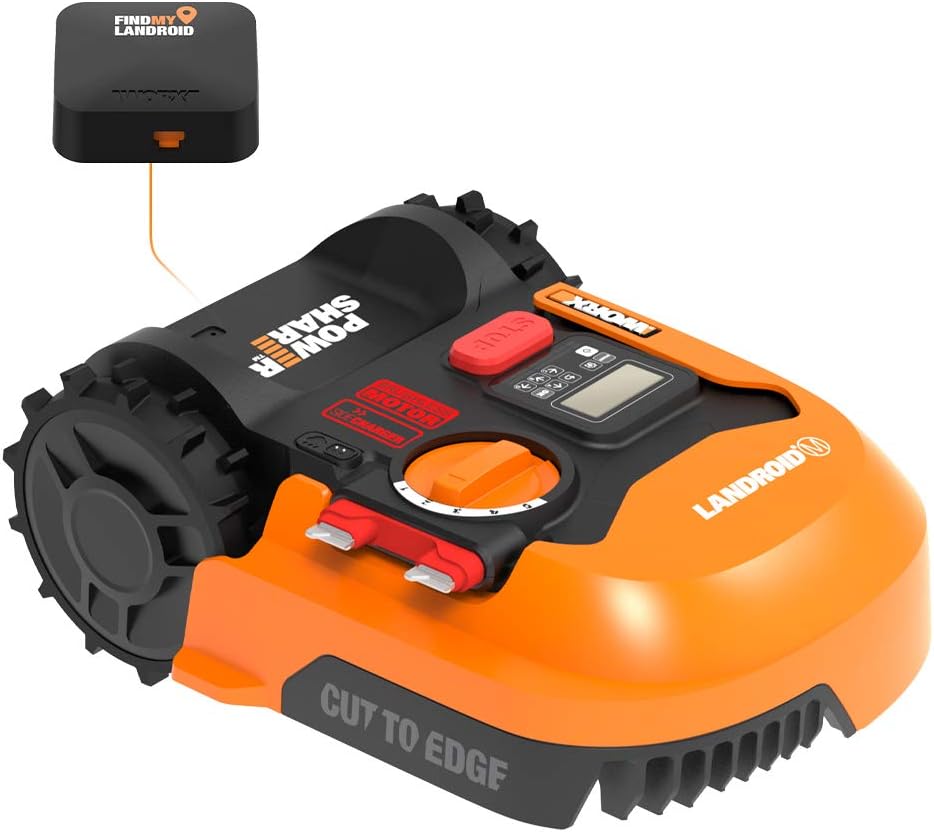
Our pick for wire-based reliability: WORX Landroid M 20V Robotic Lawn Mower w/GPS 1/4 Acre / 10,890 Sq.Ft Power Share- WR143 (Battery & Charger Included)
 Visit on Amazon →
This is the one I point clients toward when their lawn is broken up by trees and beds. The rated coverage is a quarter acre, or 10,890 square feet, and it pairs a boundary wire with GPS, which is the combination I trust most under a canopy. The loop keeps the mower inside the lawn no matter what the sky is doing, and the GPS layer lets it cut in organized passes instead of wandering.
Two practical details matter here. The battery and charger are included, so you are not budgeting a separate battery purchase on top of the mower. And it uses the Power Share battery system, which means if you already run other WORX 20V tools, the packs are interchangeable. That is a real cost saver over five seasons.
Caveats worth knowing: The wire is the labor. Budget an afternoon for a quarter acre, more if you have beds to route around and a driveway to cross. Splices are the weak point of any loop, so keep them dry and above standing water.
Check current Amazon price before you commit, and confirm the wire length in the box covers your perimeter before install day.
Anyone with a fragmented lawn, mature trees, and a willingness to spend one Saturday with a staple gun should start here.
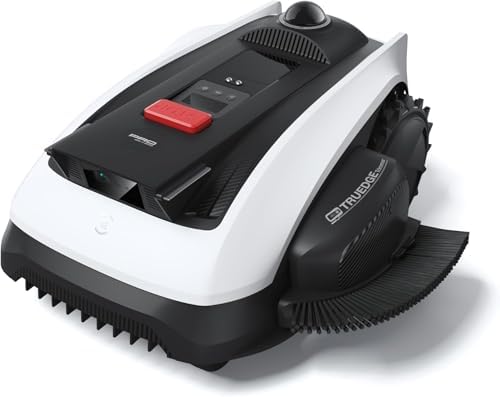
The wire-free alternative: ECOVACS Goat O1000 LiDAR PRO Robot Lawn Mower, Wire-Free Mapping with LiDAR Navigation, AI Obstacle Avoidance, Smart Edge Mowing, App Control, for Lawns Up to 1/4 Acre
 Visit on Amazon →
This is the mower for the homeowner who read the words "boundary wire" and closed the tab. It maps with LiDAR navigation instead of a perimeter loop, so there is no wire to lay, no wire to splice, and no wire to hit with a string trimmer. For a quarter acre of open lawn, that removes the single biggest reason people abandon a robot mower install halfway through.
The LiDAR approach also sidesteps the satellite problem. It does not need a clean view of the sky to know where it is, which matters on a lot with mature trees, and it works in the shade where signal-based navigation gets twitchy. The AI obstacle avoidance handles the stuff your yard throws at it: dog toys, a forgotten garden hose, the dog itself. Smart edge mowing and app control round out the package, and the coverage rating is up to a quarter acre.
Caveats worth knowing: Wire-free mapping still needs a first mapping lap with you present, and it still needs a defined edge. If your lawn dissolves into groundcover with no clear boundary, a mower that maps by scanning will get confused, and you may want a wire after all. Very low overhanging branches can also interrupt a LiDAR scan.
Check current Amazon price, and read the setup instructions for the mapping pass before you start, because doing it in the wrong order wastes an afternoon.
Anyone with a clean, open quarter acre who wants the mower running the same day it arrives should look here first.
The setup workflow, in order
This sequence works for either navigation type. Do it in this order and you skip most of the problems people email me about.
Step one: Walk the yard and mark the edge. Take a string and stakes, or a can of marking paint, and trace the actual mowing boundary. Include the beds you want protected and the strip along the driveway you want cut. This takes 20 minutes and it is the step everyone skips. The boundary you define here is the boundary the mower will respect for years.
Step two: Choose the dock location. You want a level spot, power within reach, and a straight run of at least three feet in front of the dock so the mower can approach cleanly. Shade is fine. Sitting in the low corner where water pools is not. On a slope, put the dock at the top and let the mower come home downhill.
Step three: Wire or map. If you chose the wire-based route, lay the loop now, keeping it 8 to 12 inches from walls and beds and stapling every few feet. Leave slack at the corners. If you chose the wire-free route, run the mapping lap exactly as the app instructs, walking the perimeter once and letting the mower record it.
Step four: Set the cutting height high first. Do not start at your summer height. Start high, let the mower take the top off, and step down one notch per week until you reach your target. Cutting too low on the first pass shocks the grass and leaves clumps that smother the lawn underneath.
Step five: Schedule daily, not weekly. Mowing frequency beats mower quality every time. A cheap robot running daily produces a better lawn than an expensive one running Saturdays. Daily passes mean short clippings that fall back into the turf as mulch, and the mower never fights tall grass.
Step six: Set the rain and slope behavior. Decide now whether the mower pauses in rain. On a quarter acre with a slope, wet grass is where traction ratings go to die. If your mower has a rain sensor, use it.
Step seven: Watch the first three cycles. Follow the mower on its first few runs. You will find the spot it gets stuck, the toy it drags around, and the corner it cannot reach. Fix those in week one and you will not think about them again until spring.
Step eight: Check the blades monthly. Dull blades tear grass instead of cutting it, and torn tips brown out and invite disease. Inspect the blades every month during the growing season and replace them at the first sign of nicks.
Where quarter-acre setups go wrong
The dock is in the wrong place. A dock on a slope, in a puddle, or facing a wall causes more failed returns than any software bug. Fix the dock before you blame the mower.
The wire is loose. A loop that is not stapled tight gets pulled up by frost, nicked by an edger, or chewed by a dog. Test it with a loop tester every spring.
The map was never updated. If you add a garden bed or a shed, remap or reroute. A mower working from a stale map will find the new obstacle at full speed.
The cutting height never changed. Set it in April for the spring flush and lower it gradually through June. This one habit does more for lawn quality than any feature on the spec sheet.
Nobody cleaned the dock contacts. Mud, grass, and grit on the charging contacts cause intermittent charging and mysterious mid-day stops. Wipe them down when you check the blades.
What this all costs
The mower is the visible cost. The install is the real one, and it depends on which route you take. A wire-based system means an afternoon of your own labor, or a few hundred dollars if you hire it out, plus wire and stakes. A wire-free system means a mapping lap and no materials at all.
Then there is the ongoing budget: replacement blades a few times a season, occasional wire repair, and electricity that amounts to pocket change. Battery replacement is the one big line item, usually years out. If the mower you are looking at includes the battery and charger, that is one less surprise. The WORX model here includes both.
Do the math on cost per season rather than sticker price. A mower that runs daily for five seasons costs you a few cents a day in blades and power, and it buys back every Saturday morning from May through October. That is the trade.
Check current Amazon price on whichever navigation approach fits your yard, confirm what is in the box, and buy once. The install is the product. Get that right and the robot just executes it, quietly, every morning at six, whether you are awake or not.