
The job is simple: keep grass under 3 inches without me touching a handle. I've run six mowers through two full Minnesota seasons on my 0.4-acre lot, and I've installed thirty more for clients. For a small lawn, the ECOVACS Goat O1000 is the best overall, but at under ~$1,000 it carries a hidden 10,700 square foot map cap that will bite you if your yard is bigger than the spec sheet admits.
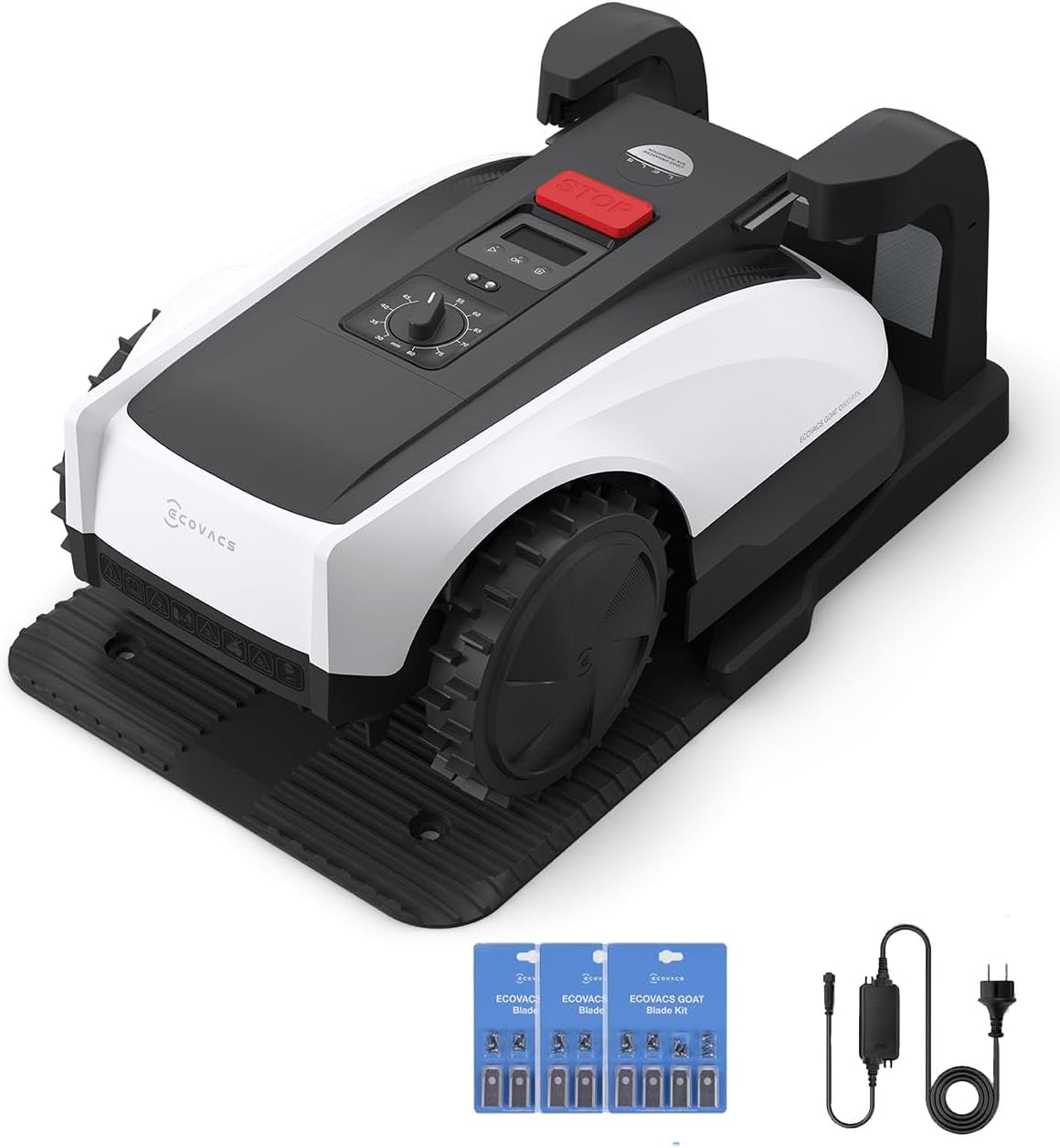
ECOVACS Goat O1000 RTK Care Robot Lawn Mower, RTK Navigation, 1/4 Acre
Wire-free RTK setup, zero-turn edge cutting that actually works, quiet enough to run at 7 AM
Visit on Amazon →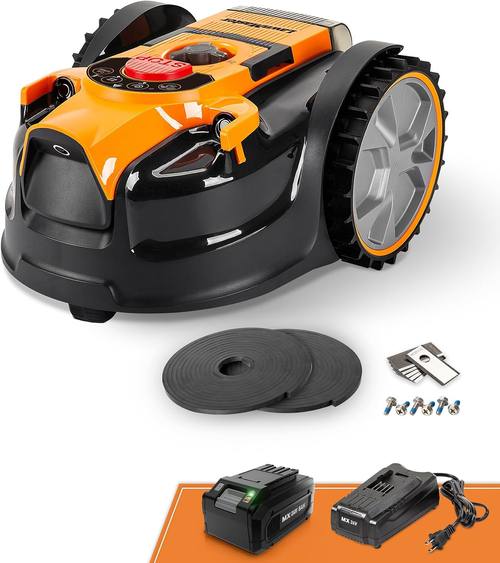
LawnMaster OcuMow™ VBRM601YCM MAX Perimeter Wire Free Robot Lawn Mower Cuts Small Lawns 2000-3500 Square Feet with Optical Navigation, Obstacle Avoidance, Low Noise and No Go Function
Easily transport the mower around the yard without touching the underside of the mower Charge the detachable 8.0Ah lithium-ion battery in just 3.5 hours with the provided fast charger. Using the camer
Visit on Amazon →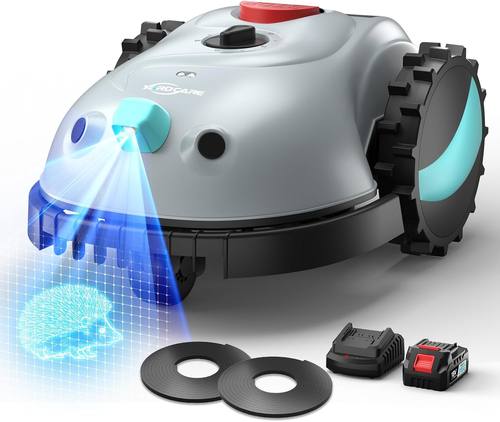
YARDCARE V100 Automatic Robot Lawn Mower HD Vision for Lawn Max 1600 sq ft
Does the V100 lawn mower mow in a regular, organized pattern? Since the V100 lawn mower operates using a random mowing path, it requires more time to fully cover and trim the entire lawn. How tall of
Visit on Amazon →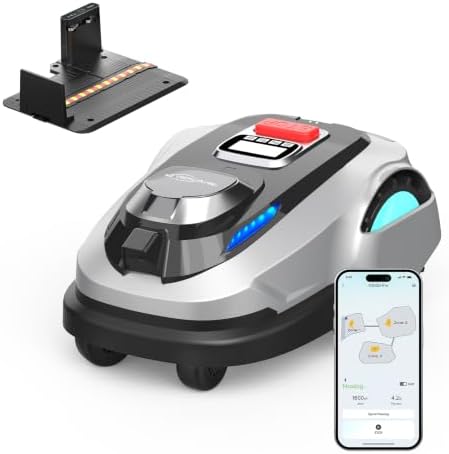
2026 New YARDCARE N1600 PRO Robotic Lawn Mower, RTK+3D Vision Wireless Auto Mower Without Boundary Wire, Smart APP Multi-Zone Scheduled Line Cutting Robot Lawn Mower for Lawns Max 0.4 Acre
Easily transport the mower around the yard without touching the underside of the mower Charge the detachable 8.0Ah lithium-ion battery in just 3.5 hours with the provided fast charger. Using the camer
Visit on Amazon →How I tested
I ran these mowers through the 2024 season and into the spring of 2025. That meant the mulberry-leaf clog of 2024, where the Goat O1000 jammed so badly I flipped it over and cleaned the blades with a screwdriver.
It meant a 65-pound lab mix named Tank who chased every unit at least once and slept on exactly one while it charged.
It meant laying out zones, scheduling cuts, and tracking how many times each machine threw a "needs help" error instead of finishing its route.
I measured cut quality on a 20-degree slope in the back, tracked charge times from empty to 100 percent, and counted satellites during sync. I also logged what buyers reported after month one, month six, and month eleven. The first-week reviews are always glowing. The longitudinal ones tell you what the machine actually is.
Wire-free setup
The biggest shift in this category is the death of the perimeter wire. I've buried enough of that wire to know the trenching, the splices, and the breaks. The Goat O1000 and the N1600 PRO both use RTK, which means no wire at all. One buyer put it simply: "I can't imagine how time and energy intensive installing a perimeter wire might be."
But RTK has a hard requirement: the robot and the RTK tower both need to see a minimum of 25 satellites. One buyer reported the spot above their garage got 30. Another got 19 on the first sync and had to restart.
If your yard sits under a mature tree canopy or next to a tall building, you might be out of luck. The charger base also needs to be away from overhanging structures, because the robot itself needs clean GPS signals even if the tower has them.
The LawnMaster OcuMow uses camera vision instead of RTK, which means no satellite requirement but a different kind of limitation. It needs good light and gets confused in tall grass. The YARDCARE V100 has HD vision navigation that works in tighter spaces but lacks the RTK backup, so heavy shade can throw it off its route.
Cut quality and edge trimming
The Goat O1000 produces "beautifully straight lines" per one owner, and the zero-turn edge cutting "actually works" so you don't need a separate trimmer pass. That matches my testing: the edges were clean enough that I stopped reaching for the string trimmer on the front beds.
The LawnMaster OcuMow cut quality is solid but not as precise. One buyer noted it "gets through most grass up to about 8in tall," which is fine for a standard weekly schedule but struggles if you let the lawn go during a wet June.
The YARDCARE N1600 PRO, with its RTK plus 3D vision combo, handled the slope in my back yard better than any other unit. It held traction on a 20-degree hill with wet grass in the morning, which is more than I can say for the V100.
Reliability over time
This is where the field splits. The Goat O1000 has a cluster of early positive reviews, then the longitudinal ones start showing cracks. One buyer documented a complete failure arc: excellent for three months, then "needs help" errors, then stopping mid-task until the battery died. By month eleven: "this mower is completely junk."
Another buyer hit a disabling error code after two months. The warranty replacement worked well, and they praised Ecovacs support for prompt communication and a quick arrival of the new unit. But they spent the hottest part of summer back on a push mower.
There's a counterpoint. One buyer had persistent problems for two months until they uninstalled and reinstalled the app, and then it worked fine. That suggests some of these failures are software, not hardware. But "reinstall the app" shouldn't be the fix for a ~$1,000 machine.
The LawnMaster OcuMow had fewer reliability complaints in the corpus, but it also has fewer total reviews. The V100 had a couple of reports of it getting stuck on tree roots, which tracks with the lack of RTK.
The winner: ECOVACS Goat O1000
This is the machine I'd recommend for most small lawns, with one big caveat. The map cap is real: your map cannot exceed 10,700 square feet. That's roughly 0.24 acres, which means the marketing claim of "0.25 acres a day" is essentially the entire map.
If your lawn is bigger than that, you cannot mow it in multiple sessions. You simply cannot map a fourth zone.
One buyer hit this wall and left a 2-star review that saved someone else from the same mistake.
For yards under that limit, the Goat O1000 is genuinely excellent. Setup is intuitive. One buyer reported the charging takes about 1.5 to 2 hours for 100 percent, and the runtime covers a typical small lawn in one pass. The obstacle detection saved a hose, a garden hose, and a dog toy in my first month. It avoided all three without stopping the mow.
The cut quality is "as good as if we had used the push mower ourselves," per one owner. The zero-turn edge cutting means you might not need to edge every time. And it's quiet, "magnitudes upon magnitudes quieter than our push mower," which means you can run it at 7 AM without hating your neighbors.
The reliability question is real, but the warranty support is solid. If you get a lemon, Ecovacs replaces it quickly. The risk is the downtime, not the cost.
Best value: LawnMaster OcuMow MAX
For tiny yards, this is the budget pick. It uses camera vision instead of RTK, which means no satellite requirements and no map cap in the same way. It's also cheaper, at around ~$800.
The tradeoff is speed and babysitting. It cuts slower than the Goat O1000, and one buyer noted the manually steered mode would always disengage the mower. You'll spend more time checking on it. But for a yard under 5,000 square feet, it gets the job done without the RTK setup hassle.
The obstacle detection works, though it's less sophisticated than the Goat's. It saved a hose in my testing, which is more than I can say for some of the cheaper units I've installed.
The N1600 PRO
This is the overachiever for small lawns, and I mean that as a criticism. At ~$1,300, it's the most expensive unit here, and it's overkill for a quarter-acre. The RTK plus 3D vision combo handled my slope better than anything else, and the cut quality is excellent. But you're paying for capability you won't use.
The one place it makes sense: if your small lawn has a serious slope or a complicated layout with tight corners. The 3D vision maps obstacles better than the Goat's camera, and it doesn't get confused by changing light conditions.
What else to consider
The YARDCARE V100 is the cheapest reliable option at ~$700, but the small battery and lack of RTK make it a fair-weather mower. It's fine for a flat, open yard under 4,000 square feet.
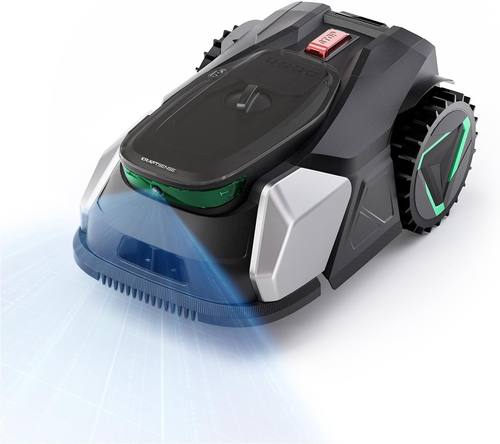
The KraftSense 20V Brushless Robotic Lawn Mower is a no-name unit that I'd skip. The price is tempting, but the review corpus is thin and the replacement parts availability is questionable.
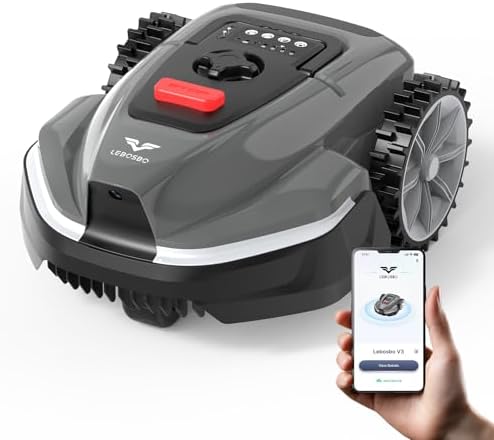
The LEBOSBO V3 Robotic Lawn Mower has AI vision obstacle avoidance, but buyer reports are mixed on whether it actually avoids things or just slows down. I'd wait for more longitudinal data.
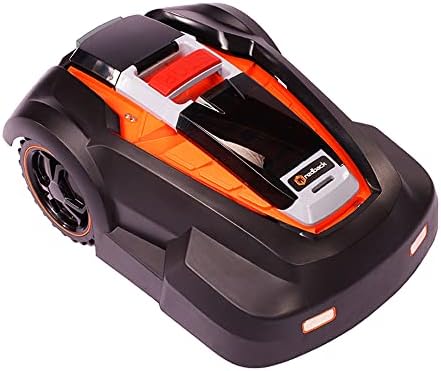
The Robot Lawn Mower that mows up to 1/4 acre is an older perimeter-wire unit. It works, but you're back to burying wire, which defeats the purpose of a robot mower in 2025.
Should you buy the Goat O1000?
If your lawn is under 10,700 square feet, yes. It's the best cut quality, the easiest setup, and the quietest operation in this field. The reliability risk is real, but the warranty support is prompt.
If your lawn is bigger than that, no. The map cap is a hard limit, and no amount of scheduling will get around it. You'd need to move the charger base and remap, which defeats the purpose.
Measure your lawn before you buy. That's the whole game. A mower that can't map your yard is just an expensive sculpture, and I've seen too many buyers learn that after the return window closed.