Robot mowers do not fail on the spec sheet. They fail in the yard: on the wet slope behind the garage, under the maple where the positioning signal drops out, and in the week after a firmware update wipes the map. I have spent fifteen years installing lawns and several seasons running robot mowers through Minnesota springs, and the best robot lawn mowers are the ones whose navigation method matches the yard they park in, not the ones with the longest feature list.
That is the whole problem with shopping for one of these machines. Nearly every listing leads with area coverage and a slope percentage, and almost none of them explain how the mower knows where it is. This roundup compares six products from the current catalog: four grass-cutting machines, one manual mower that covers what a robot cannot reach, and one handbook for the yards that need a plan before they need a robot. Every card is matched to a verified product record, and the links go to the retailer so you can confirm current price and availability yourself.
Related: Robot Mower Install: Wire Versus RTK
Quick answer
The MOVA LiDAX Ultra 2000 Robot Lawn Mower with 4G is the strongest fit for most suburban lots up to half an acre because it navigates with 360 degree 3D LiDAR and AI vision auto mapping, needs neither a boundary wire nor an RTK base station, and lists a 45% slope rating, zero-edge cutting, and 150 mowing zones. Choose the L2500-NEO Robot Lawn Mower instead when you are cutting closer to a full acre and want NetRTK plus AI vision, Wi-Fi HaLow connectivity, and multi-zone management in the same machine.
Robot mowers worth comparing
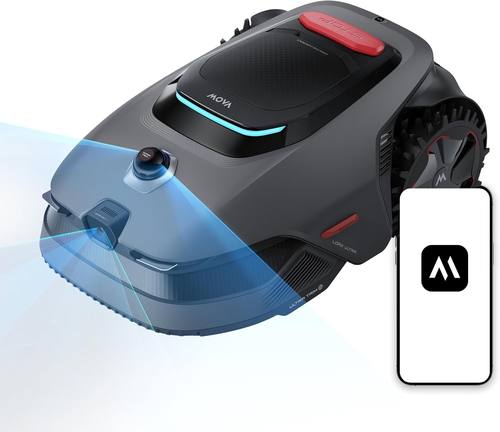
MOVA LiDAX Ultra 2000 Robot Lawn Mower with 4G for 0.5 Acre, No Wire No RTK+360° 3D LiDAR+AI Vision Auto Mapping, Zero-Edge Cutting, Cut Height 1.2"-3.9", 45% Slope, 150 Mowing Zones, Anti-Theft
A wire-free, RTK-free design that maps with 360 degree 3D LiDAR and AI vision, rated for 0.5 acre and 150 zones, with a 45% slope figure, zero-edge cutting, 4G connectivity, and anti-theft built in.
Visit on Amazon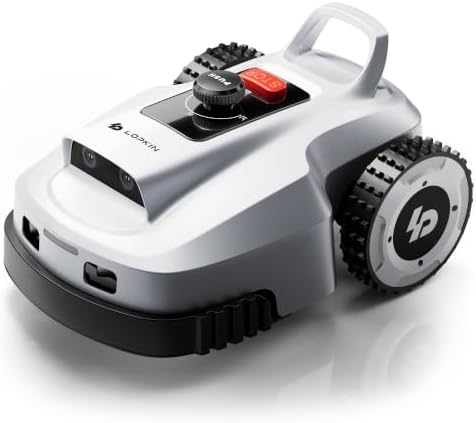
L2500-NEO Robot Lawn Mower for 0.9 Acres, NetRTK + AI Vision Lawnmower Robot, Wi-Fi HaLow Connectivity, No Boundary Wire, AI Obstacle Avoidance, App Control, 60dB Quiet, Multi-Zone Management
NetRTK plus AI vision navigation for yards up to 0.9 acres, with no boundary wire, Wi-Fi HaLow connectivity, AI obstacle avoidance, app control, multi-zone management, and a 60 dB noise rating.
Visit on Amazon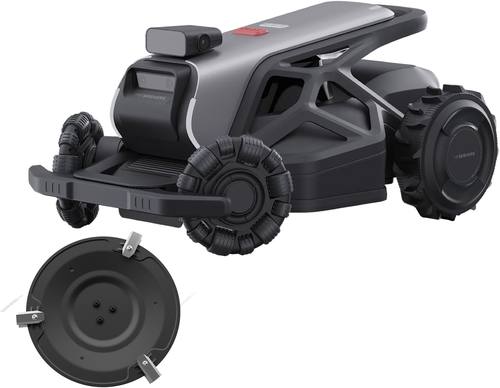
TRON Robot Lawn Mower with Large Mowing Disk(Ship Separately)
A robot mower built around a large mowing disk, which is the part that decides how much grass the machine takes off per pass. Note that it ships separately, so plan for more than one delivery window.
Visit on Amazon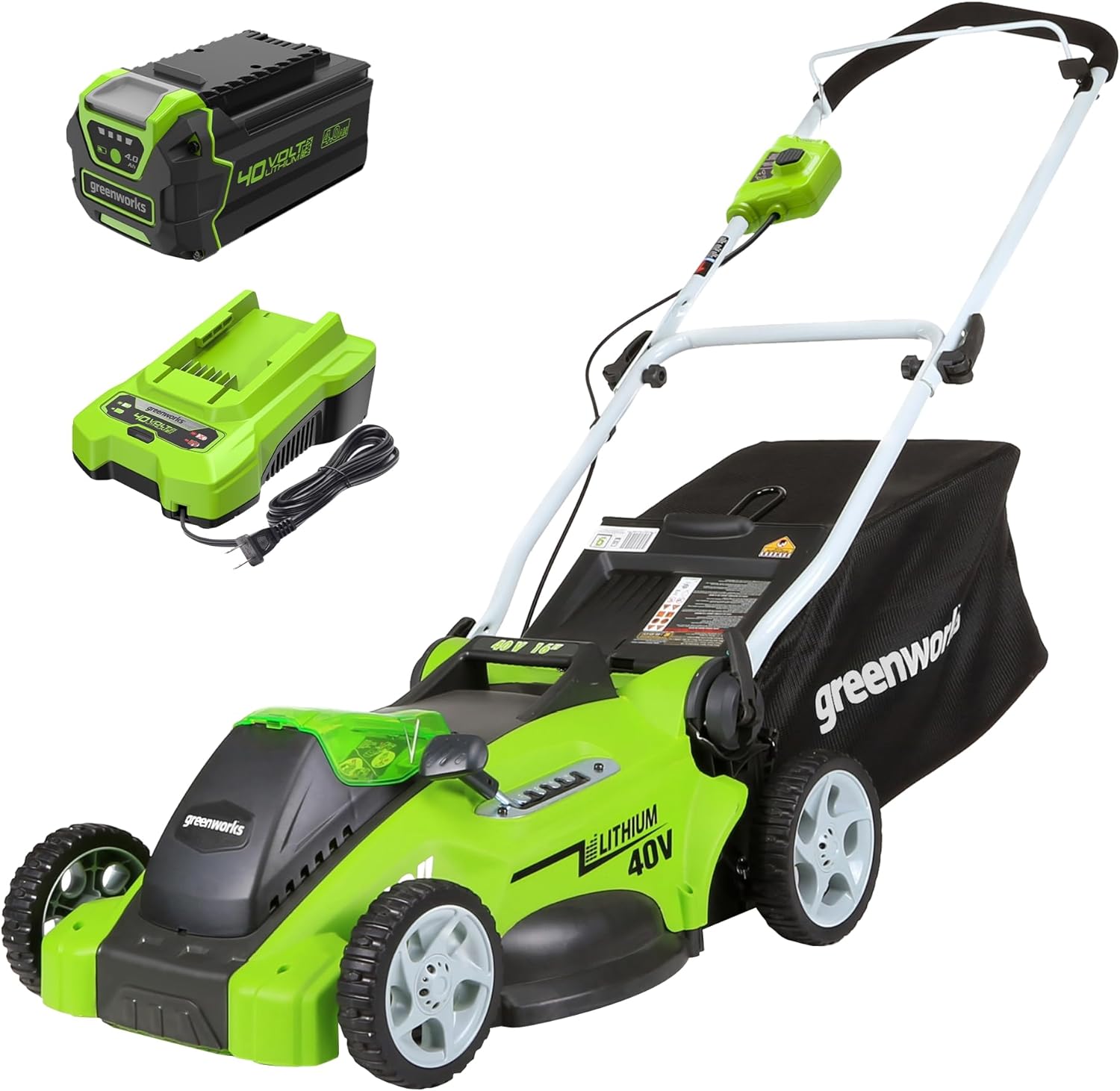
Greenworks 40V 16in Push Lawn Mower, 4.0 Ah Battery and Charger
A 40V push mower with a 16 inch deck, one 4.0 Ah battery, and a charger. This is the tool for the first cut of the season, overgrown edges, and the strips a robot skips along beds and fences.
Visit on Amazon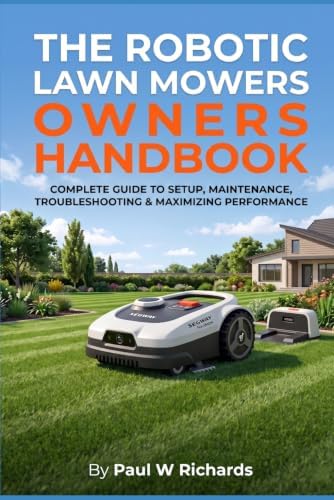
The Robotic Lawn Mower Owners Handbook: The Real-World Guide for Managing Complex Yards, Maximizing Efficiency, and Eliminating Edging with Robotic Mowing (The Evolution of Lawn Care Series)
A book-length guide to running a robot mower in a yard that is not a simple rectangle: zone planning, efficiency, and cutting down the string trimmer work that robot mowing leaves behind.
Visit on Amazon
Instant Pot Duo 7-in-1 Electric Pressure Cooker, Sterilizer, Slow Cooker, Rice Cooker, Steamer, Saute, Yogurt Maker, and Warmer, 8 Quart, 14 One-Touch Programs & 8 Quart Glass Lid
Check current Amazon price
Not a lawn tool, and I am not going to pretend otherwise. It is an 8 quart multi-cooker with 14 one-touch programs and a glass lid, listed here because it arrived in the same catalog batch as the mowers above.
Visit on AmazonPrices and availability may change. Check the retailer for current details.
How these products were compared
This guide compares navigation method, rated area coverage and zone management, cutting height range, slope rating, and connectivity and app control. Product names, images, and retailer links are matched by product identifier so that every card points to the product shown.
Navigation comes first because it decides whether the mower works in your yard at all. The MOVA unit uses 3D LiDAR and AI vision with no wire and no RTK base, the L2500-NEO pairs NetRTK with AI vision and Wi-Fi HaLow, and the TRON entry is described mainly by its large mowing disk rather than by a positioning system. Those are three different bets on how a mower should find its way, and they behave differently under tree cover, along fences, and near reflective siding.
How to choose the right robot lawn mower
Start with the boundary question. There are three ways a robot can learn your lawn: a perimeter wire buried or stapled at the edge, an RTK base station that corrects satellite positioning, or onboard sensors such as LiDAR and cameras that build a map as the mower drives. Wire is boring and it works, and it keeps working under a dense canopy. RTK is elegant and precise in open sky, and it struggles where the satellite view is broken up. Onboard mapping needs no buried wire and no base station, which is why the wire-free, RTK-free design here is appealing for a yard with a mix of sun and shade.
Then check the slope number honestly. A published slope rating is a starting point, not a promise. Wet grass, morning dew, and a mower loaded with clippings all change what a machine can hold. If your slope is the reason you are shopping, look for a mower whose rating leaves headroom above your actual grade, and plan the docking station at the bottom rather than at the top.
Match area coverage to zones, not just acreage. A half-acre lot cut into eight zones divided by beds, paths, and a dog run is harder work than a half-acre rectangle. Zone counts and multi-zone management matter more than the headline acreage figure, and they are the reason the two wire-free machines here list zone support so prominently.
Cutting height range is the quiet spec. A robot that runs daily cuts a little at a time, so a range that covers roughly an inch and a quarter up to about four inches handles both a tight spring cut and a taller summer setting. If you also own a manual mower, set the robot slightly higher than the push mower and let it do the frequent passes. If you want the longer version of this argument, the wire versus RTK install comparison walks through the trade-offs in more detail.
Finally, check the app and the connectivity. The app is a feature, not the mower. If scheduling fails or the map disappears after a firmware update, you own a very slow Roomba. Cellular and Wi-Fi HaLow options matter on lots where the dock sits far from the router.
MOVA LiDAX Ultra 2000 Robot Lawn Mower with 4G
The top pick is the machine that removes the two most expensive parts of a robot mower install. The MOVA LiDAX Ultra 2000 is listed as no wire and no RTK, which means no trenching, no staples, no splices to corrode, and no base station to site with a clear view of the sky. It maps with 360 degree 3D LiDAR and AI vision, and it is rated for 0.5 acre across 150 mowing zones, with zero-edge cutting, a 45% slope figure, an adjustable cut height from about 1.2 to 3.9 inches, 4G connectivity, and anti-theft features.
The trade-off is the same one that applies to every sensor-mapped mower. Onboard mapping is only as good as what the sensors can see, so a yard with dense low branches, a narrow gap between a shed and a fence, or a garden bed that changes shape every season will ask more of the initial mapping runs than a wire boundary would. If you want the simplest possible install and your yard has open sky and reasonably defined edges, this is the one to start with. Confirm the current price and availability through the retailer link before you commit, and read the setup instructions before the mower arrives rather than after.
Alternatives to consider
The L2500-NEO Robot Lawn Mower is better suited to larger properties, since it is rated for 0.9 acres and combines NetRTK with AI vision, Wi-Fi HaLow connectivity, AI obstacle avoidance, app control, multi-zone management, and a 60 dB noise figure. It is the pick when you want satellite correction as part of the navigation stack and you have the open sky to support it. The TRON Robot Lawn Mower is a stronger fit when the cutting disk itself is your priority, since it is built around a large mowing disk rather than a positioning headline, and it ships separately, so allow extra time for delivery.
The Greenworks 40V 16in Push Lawn Mower, the Robotic Lawn Mower Owners Handbook, and the Instant Pot Duo cover the rest of the list. The Greenworks machine handles the first cut of the season, the overgrown strips along fences and beds, and the areas a robot cannot reach, and it comes with a 4.0 Ah battery and charger. The handbook is the planning companion for a complicated yard, covering zone management, efficiency, and reducing the edging work that robot mowing leaves behind. The Instant Pot is a kitchen appliance, included here only because it is part of this catalog set, and it is not a substitute for any mower on this page.
Day-to-day use and maintenance
Robot mowing works best as a frequent, light cut rather than a weekly rescue. A machine running most days at a slightly taller setting keeps clippings short enough to mulch back into the lawn, and it avoids the long, wet clumps that clog a deck and dull blades. That is the real reason frequency beats mower quality: a modest robot running daily will out-cut an expensive one running weekly.
Blades are the hidden cost of ownership. Dull blades tear grass instead of cutting it, which shows up as a frayed, brownish tip a day after mowing. Check the blade condition on the schedule the manufacturer specifies, keep a spare set on hand, and prefer designs you can service without a special tool. The docking station also deserves a look each month: clear the contacts, keep the approach pad free of leaves and dog toys, and confirm the mower can find the dock after dark, since a robot that wanders at dusk will eventually fail to park.
For winter, follow the storage instructions for the battery and the base. A mower stored wet, with clippings packed around the deck, starts the next season with a rust problem and a blade problem at the same time.
Buying checklist
- Measure the actual area you will mow, and count the zones rather than the acreage.
- Choose the navigation method, wire, RTK, or onboard sensors, based on your tree cover and how much installation work you want.
- Confirm the exact model includes the features you are counting on, such as zone management, anti-theft, or cellular connectivity.
- Check the cutting height range against the settings you actually use.
- Read the cleaning, blade, and winter storage instructions before the first season.
- Verify the current retailer price, availability, and return terms.
Final recommendation
Choose the MOVA LiDAX Ultra 2000 Robot Lawn Mower with 4G when you want a wire-free, RTK-free install on a lot up to about half an acre, with LiDAR and vision mapping, a wide cut height range, and zone management that handles a yard divided by beds and paths. Choose the L2500-NEO Robot Lawn Mower when you are mowing closer to a full acre and want NetRTK plus AI vision with Wi-Fi HaLow connectivity. Add the Greenworks push mower for the edges and the first cut, and the handbook if your yard is complicated enough that planning is the hard part.