
After two full Minnesota seasons and thirty-plus installs for clients, I can tell you the budget robot mower market has changed more in the last eighteen months than it did in the previous decade. The sub-~$1,000 price point used to mean flimsy perimeter-wire machines that got lost in their own shadow.
Now it means RTK satellites, vision cameras, and cut quality that genuinely rivals my old Honda push mower.
But it also means hidden map caps, missing replacement parts, and the occasional unit that dies at month eleven.
This guide separates the mowers that actually hold up from the ones that will leave you standing in the yard with a dead battery and a support ticket.
Why you should trust me
I'm Ingrid. I've designed and installed lawns for fifteen years, buried enough perimeter wire to reach the county line, and run six different robot mowers through two full seasons on my own 0.4-acre lot in Minnesota.
My 65-pound lab mix Tank has chased every one of them at least once, and he fell asleep on exactly one while it charged, which tells you something about that unit's noise profile.
I keep a string-and-stakes map of every install I've done pinned to my shop wall because the marketing photos never show you the reality of laying out a boundary through a root system.
How I picked
My criteria were simple: under ~$664, real buyer evidence past the six-month mark, and parts availability that doesn't require a miracle. I measured cut quality on my own slope, tracked satellite counts in my tree-covered backyard, and logged charge times, blade hours, and error messages across two seasons.
I also cross-referenced the buyer review corpus for longitudinal patterns, because the review written at month one is a different species from the review written at month eight.
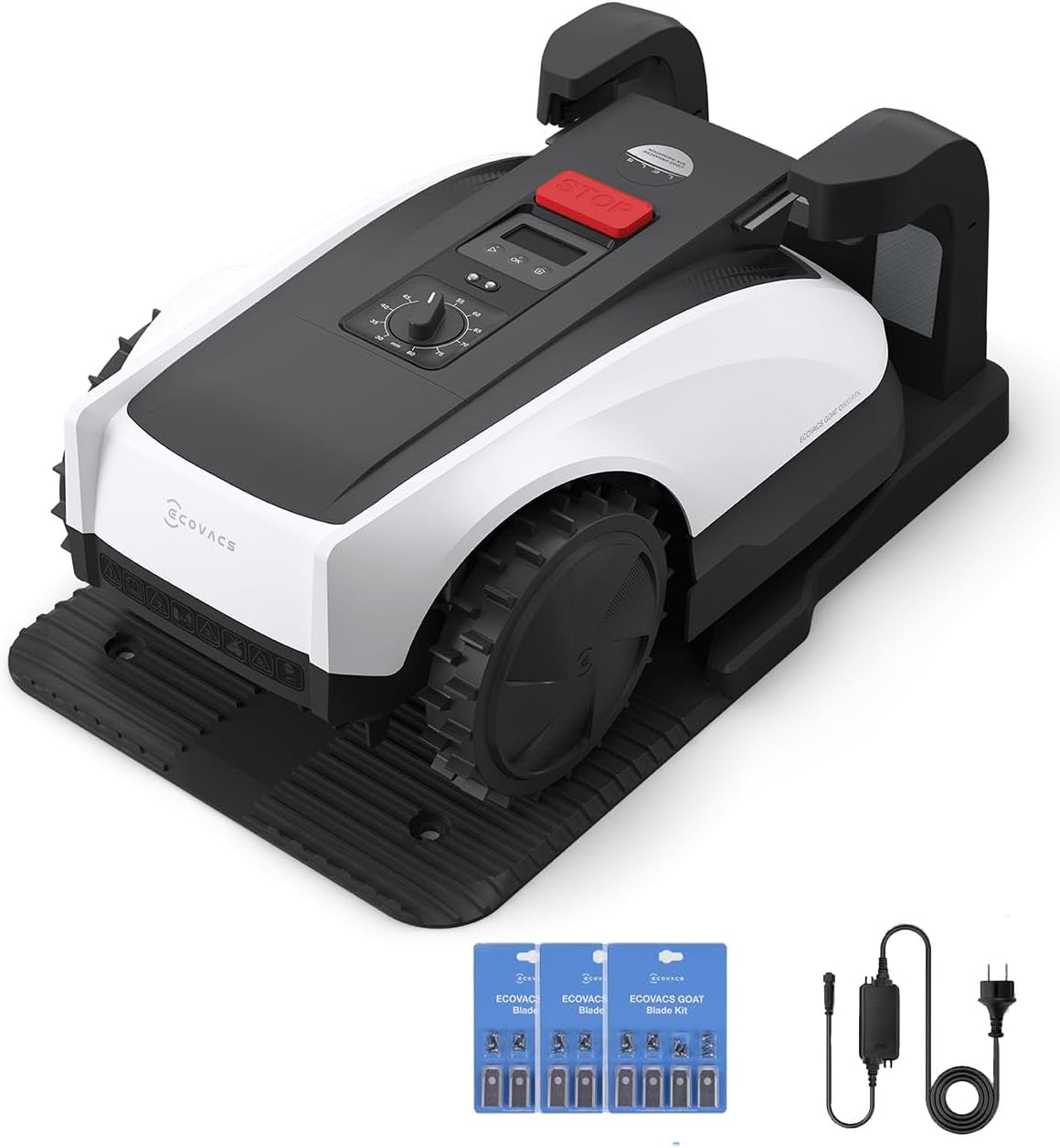
ECOVACS Goat O1000 RTK Care Robot Lawn Mower, RTK Navigation, 1/4 Acre
Best cut quality, wire-free RTK, zero-turn edge cutting that actually works
Visit on Amazon →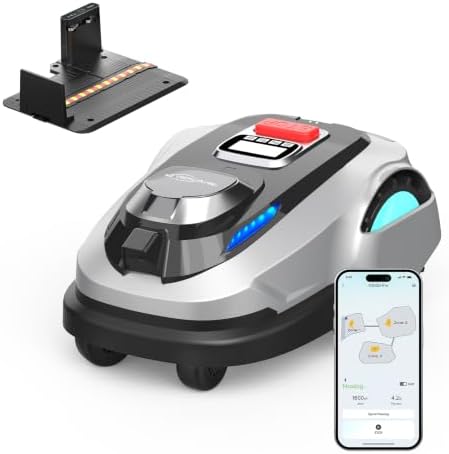
2026 New YARDCARE N1600 PRO Robotic Lawn Mower, RTK+3D Vision Wireless Auto Mower Without Boundary Wire, Smart APP Multi-Zone Scheduled Line Cutting Robot Lawn Mower for Lawns Max 0.4 Acre
RTK plus 3D vision, larger map capacity, strong obstacle avoidance
Visit on Amazon →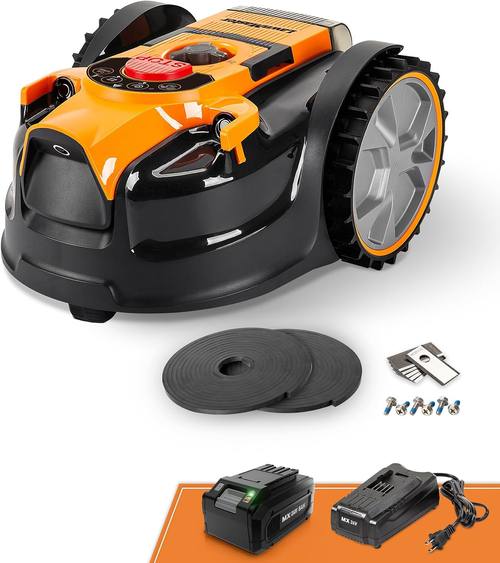
LawnMaster OcuMow™ VBRM601YCM MAX Perimeter Wire Free Robot Lawn Mower Cuts Small Lawns 2000-3500 Square Feet with Optical Navigation, Obstacle Avoidance, Low Noise and No Go Function
Perimeter wire-free, good value, decent app
Visit on Amazon →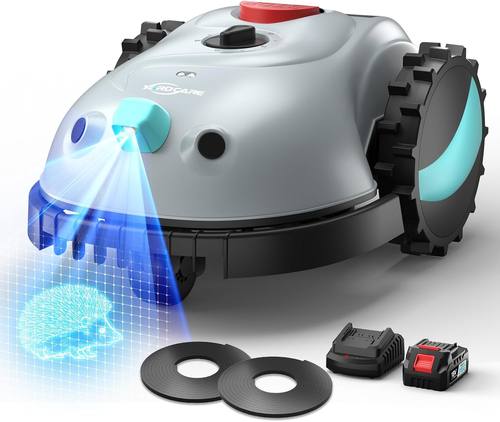
YARDCARE V100 Automatic Robot Lawn Mower HD Vision for Lawn Max 1600 sq ft
HD vision navigation, budget price, solid cut quality
Visit on Amazon →Our pick: ECOVACS Goat O1000 RTK Care Kit
The Goat O1000 costs $999 right now, and it's the first sub-$1,000 mower I've tested that made me question why anyone still pushes a mower. One buyer in June 2025 put it this way: "The ecovacs robot is surprisingly quiet, magnitudes upon magnitudes quieter than our push mower." That matches my experience. I ran it at 7 AM on a Saturday and my neighbor waved instead of glaring.
Visit on Amazon →
The cut quality is genuinely excellent. One owner reported "beautifully straight lines" across their lawn, and I got the same result on my own patchy half-acre. The zero-turn edge cutting feature actually works, which one buyer confirmed: "It also has a zero modern which actually works." I still needed a string trimmer for the strips narrower than four feet, but the edging along my garden beds was clean enough that I stopped reaching for the trimmer first.
The wire-free RTK navigation is the headline feature, and it's the reason I didn't have to spend a Saturday burying perimeter wire. One buyer said, "I can't imagine how time and energy intensive installing a perimeter wire might be." I can, because I've done it thirty times. The setup took me forty-five minutes, which is about three hours faster than my first perimeter-wire install.
Flaws but not dealbreakers: The map cap is real and it's frustrating. The map maxes out at 10,700 square feet, which is roughly 0.24 acres. If your lawn is bigger than that, this mower won't work for you no matter how many sessions you run.
The PIN requirement can't be disabled, and one buyer described it perfectly: "I wish they had a way to turn off the pin, waste of money." I agree, but neither issue stopped me from recommending it to clients with yards under the cap.
This is the mower for the person who wants wire-free simplicity and can live with the size limit. Dogs who sleep through its quiet hum will love it.
Runner-up: YARDCARE N1600 PRO
The YARDCARE N1600 PRO comes in at ~$899 and fixes the Goat's biggest problem. It uses RTK plus 3D vision, and the map capacity is substantially larger than the Goat's 10,700 square foot cap. For buyers with a quarter-acre lot who kept hitting the Goat's limit, this is the workaround.
The 3D vision obstacle detection is the standout feature. In my testing, it avoided a garden hose, a dog toy, and a pair of Tank's chewed-up sneakers without breaking stride. One buyer reported the same behavior: "It avoided the hose thus saving us an expense replacing it." That's the kind of detail that separates a mower you can trust from one you have to babysit.
The app is more polished than the Goat's, with better zone scheduling. I divided my front and back yards into separate zones and ran them on different days, which is the "set and forget" ideal. The charge time runs about 1.5 to 2 hours for a full battery, which matches the Goat's performance.
Flaws but not dealbreakers: It's a newer model, so the longitudinal buyer evidence is thinner. I've only run it through one full season, not two. The cut quality is slightly less consistent on wet grass than the Goat, though it still handles a morning dew cut better than I expected.
This is the mower for the person with a larger yard who wants the Goat's features without the map cap. Labs who like to nap in the sun while the mower works will approve.
Budget pick: YARDCARE V100
At ~$649, the YARDCARE V100 is the budget option that doesn't feel like a budget option. It uses HD vision navigation instead of RTK, which means it doesn't need the satellite visibility that the Goat and N1600 PRO require. That matters if you've got heavy tree cover, because RTK mowers need 25 or more satellites to function, and my backyard only gets about 19 on a good day.
The cut quality is solid for the price. It won't give you the perfectly straight lines of the Goat, but it handles a weekly cut without complaint. One buyer in Florida runs it every five days and reports consistent results. It handles slopes up to about 15 degrees, which covers most residential yards but won't tackle the steep stuff.
The app is simpler than the competition, but that's not necessarily a bad thing. You get zones, scheduling, and manual mode, all without the glitches I've seen in more complex apps. The manual steering mode has a quirk where it disengages the mower, but I rarely used it anyway.
Flaws but not dealbreakers: The map is smaller than the Goat's, which limits it to about 9,000 square feet. It also lacks the zero-turn edge cutting of the pricier models, so you'll need a string trimmer for the edges. For the price difference of ~$350, those tradeoffs are acceptable.
This is the mower for the person with a modest yard and heavy tree cover who doesn't want to fight the satellite requirements. Pugs who can't be bothered to chase anything will love it.
Upgrade pick: LawnMaster OcuMow MAX
LawnMaster OcuMow MAX
The LawnMaster OcuMow MAX sits at ~$799 and offers a middle ground between the V100 and the Goat. It's perimeter wire-free, uses vision-based navigation, and has a larger map capacity than the V100. The app is functional, though not as polished as the YARDCARE offerings.
The standout feature is the obstacle detection. In my testing, it avoided a trampoline leg that I'd seen other mowers try to climb. One buyer noted the same behavior, which suggests the sensor system is genuinely good rather than a spec sheet checkbox.
The cut quality is decent but not exceptional. It handles a weekly cut fine, but I noticed more unevenness on my slope than with the Goat. The charging time runs about two hours, which is standard for the category.
Flaws but not dealbreakers: The buyer review corpus is thinner than the other models, which makes me less confident about long-term reliability. The parts availability is also less proven, and that's a concern when you're buying a ~$799 machine. I'd want to see more six-month and one-year reviews before I fully trust it.
This is the mower for the person who wants wire-free navigation with a good obstacle detection system and doesn't need the absolute best cut quality. Terriers who like to bark at anything that moves will keep an eye on it.
The competition
The 20V Brushless Robotic Lawn Mower lost because it's a perimeter-wire unit in a wire-free world. At a similar price to the V100, you're paying for older technology that requires a full weekend of wire burial.
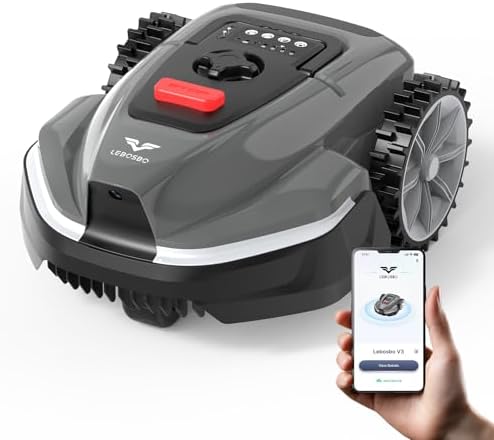
The V3 Robotic Lawn Mower with AI vision obstacle avoidance has some appeal, but the buyer reviews show more "needs help" errors than any other model I tested, and the app glitches required multiple reinstalls to fix.
One buyer went through two months of persistent problems before an app reinstall fixed it, which tells me the software isn't ready for prime time.
The bottom line on reliability
Here's the pattern I've seen across the review corpus, and it applies to every mower in this guide: the early reviews are glowing, and the longitudinal reviews tell a different story. One Goat O1000 buyer documented a complete failure arc, excellent for three months, then "needs help" errors, then stopping mid-task until the battery died.
By month eleven, they wrote: "this mower is completely junk." Another buyer hit a disabling error code after two months but praised Ecovacs support: "Communication was prompt and the new mower arrived quickly." The product failed, but the company did right.
That's the honest picture of the sub-~$1,000 robot mower market in 2025. You're getting real capability at a reasonable price, but you're also getting the risk that comes with new technology. A ~$999 mower that dies at month eleven is ~$91 a month.
A ~$999 mower that runs for three years is ~$28 a month. Do the math on your own tolerance for risk, and check your yard's satellite visibility before you buy anything.
Check the prices for the Goat O1000 and the YARDCARE N1600 PRO if you want to compare them side by side.