Two years ago, I watched a ~$1,200 robot mower try to climb a trampoline leg in my own backyard. It spun its wheels for six minutes straight, dug a hole deep enough to bury a garden trowel, and never once thought to back up. That was the moment I stopped trusting spec sheets and started trusting what real owners say about a machine after month six.
This guide is the result of that shift. I’ve installed over thirty robot mowers for clients and run six units through two full Minnesota seasons on my own 0.4-acre lot. I have a 65-pound lab mix named Tank who has chased every single one of them at least once.
The honest answer to whether robot mowers are worth it is: yes, if you buy the right one for your yard.
The wrong one will cost you more in frustration than it saves in sweat.
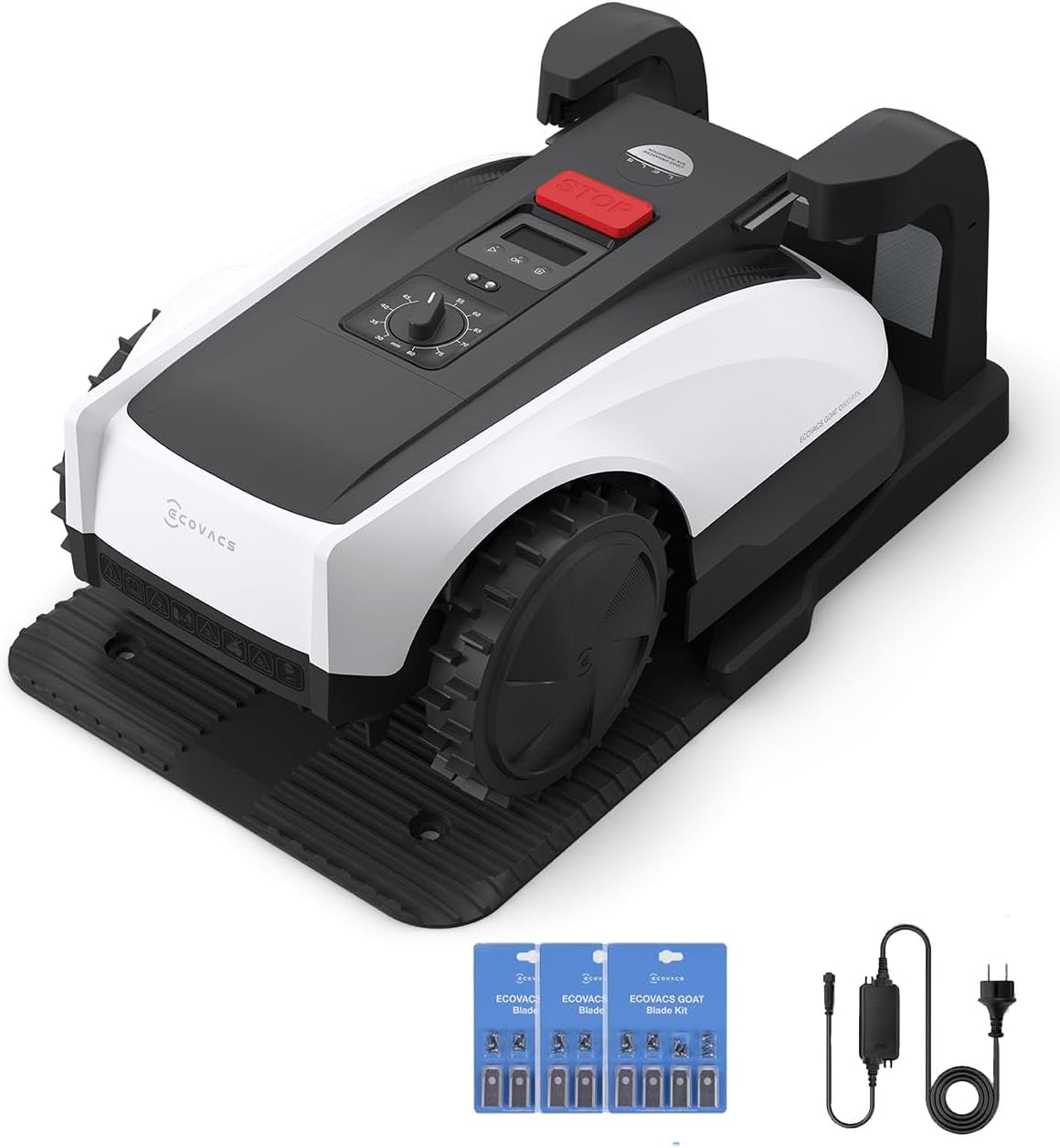
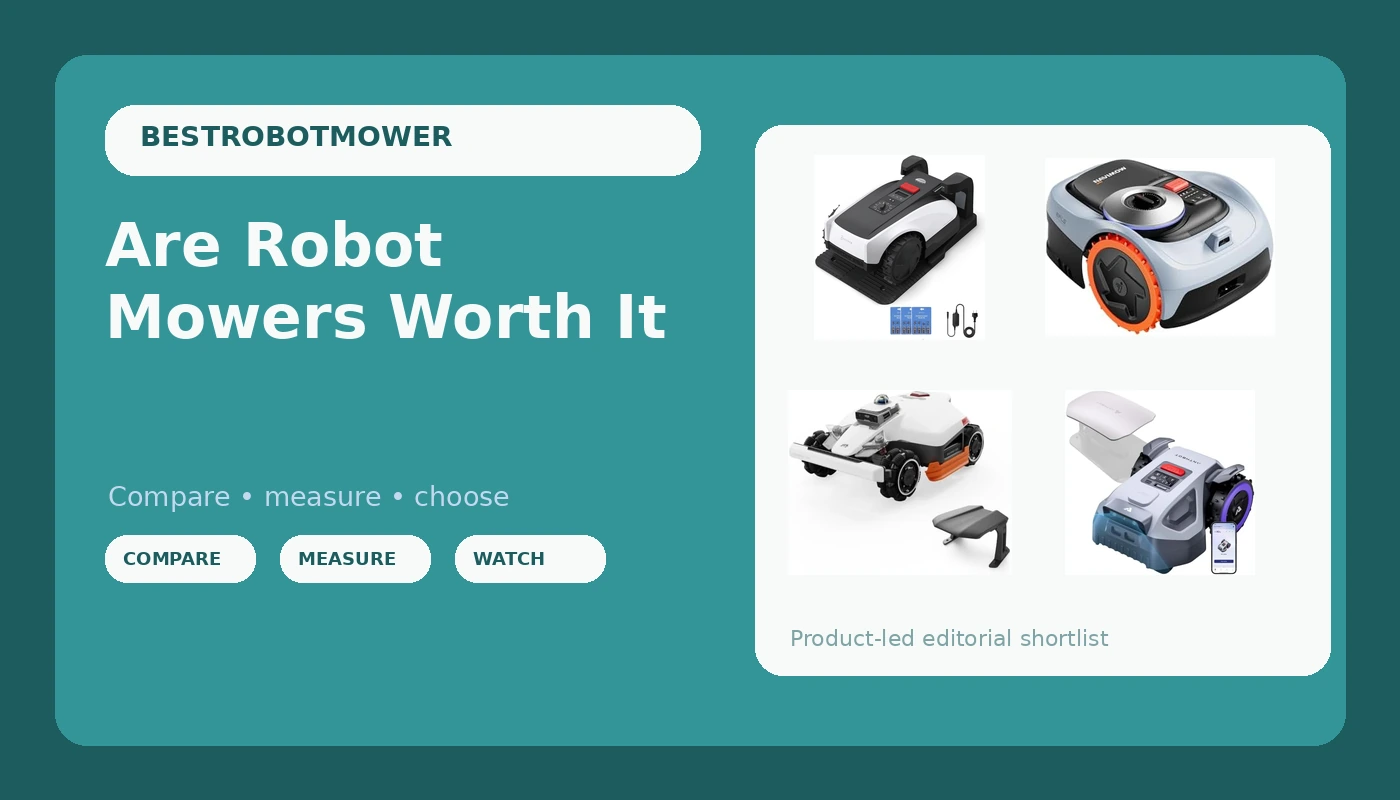
ECOVACS Goat O1000 RTK Care Robot Lawn Mower, RTK Navigation, 1/4 Acre
Wire-free setup, excellent cut quality, quiet enough to run at 7 AM
Visit on Amazon →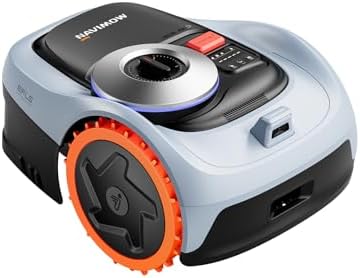
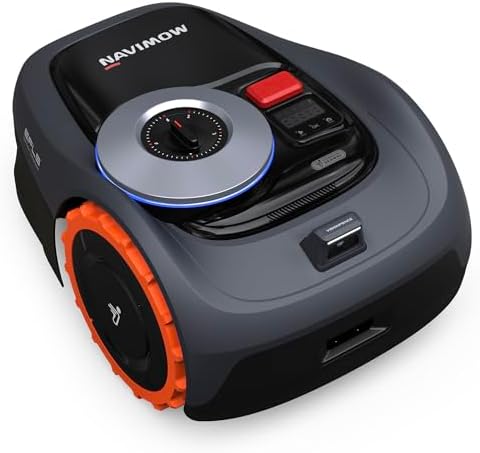
Segway Navimow i206 AWD Robot Lawn Mower, New i105N, 0.15 Acre, 45% Slopes
What are the upgrades of the i2 AWD series compared to the i1 series? Compared to the Navimow i1 series, the Navimow i2 AWD series features 45% (24°) stronger climbing performance, built-in 4G, no req
Visit on Amazon →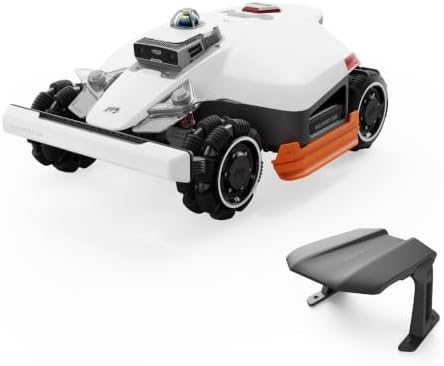
Mammotion LUBA 3 AWD 3000H Robot Lawn Mower for 0.75 Acre, 360° LiDAR+NetRTK+AI Vision Tri-Fusion Positioning, All-Wheel-Drive for 80% Slopes, 30 Multi-Zone Management, Cutting Height 2.2"-4.0"
Mammotion is leading innovative outdoor robot solutions, committed to shaping a smarter and high-quality outdoor lifestyle. Provide Smarter Robot Lawn Mower 8+ Years of Robot Experience 570+ Robotics
Visit on Amazon →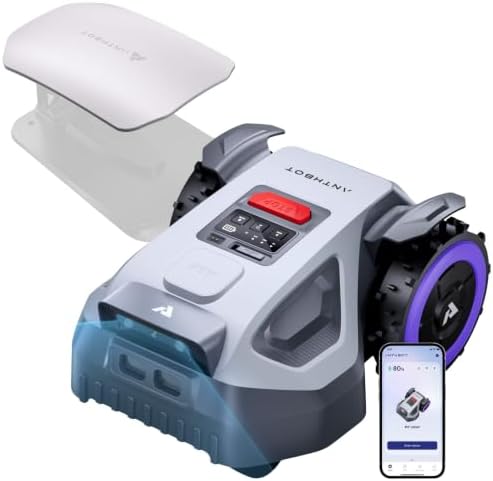
ANTHBOT M5 Robot Lawn Mower 1/8 Acre with Garage, Dual Vision+Full-Band NRTK Robotic Lawnmower, No Perimeter Wire, App Control Obstacle Avoidance, 45% Slope, Cutting Height, Multi-Zone Mapping
Always Green Spaces—Our vision drives us to innovate and develop products that help maintain lush, vibrant lawns effortlessly. :Smart Lawns, Happy Lives— We design our products with user satisfaction
Visit on Amazon →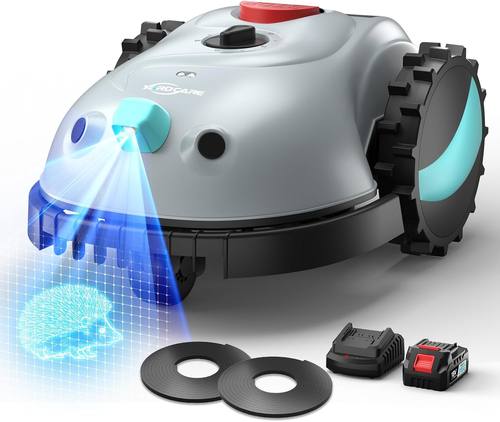
YARDCARE V100 Automatic Robot Lawn Mower HD Vision for Lawn Max 1600 sq ft
Does the V100 lawn mower mow in a regular, organized pattern? Since the V100 lawn mower operates using a random mowing path, it requires more time to fully cover and trim the entire lawn. How tall of
Visit on Amazon →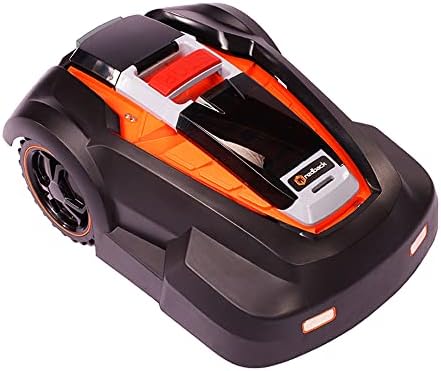
Robot Lawn Mower, Mows Up to 1/4 Acre, Updated 2026 Programming, Adjustable Cutting Height, Self Installation Kit Included, 50% Slope, Low Noise (65dBA) and Rain Sensor
Does the V100 lawn mower mow in a regular, organized pattern? Since the V100 lawn mower operates using a random mowing path, it requires more time to fully cover and trim the entire lawn. How tall of
Visit on Amazon →Why you should trust me
I’m Ingrid. For fifteen years I designed and installed lawns for people who wanted the perfect yard without thinking about it. I’ve buried enough perimeter wire to know exactly how much I hate it. I’ve spliced broken wires in the rain, repositioned RTK antennas to find satellites, and cleaned mulberry leaves out of a jammed blade deck with a screwdriver while my dog supervised.
My shop wall has a string-and-stakes map of every install I’ve done. I review these machines the way I installed them: measure twice, cut once, and assume the marketing photos are lying.
How I picked
I ran six different units through two full seasons on my own lot. I tracked charge times, cut quality, satellite counts, and error messages. I also collected buyer reports from owners who’ve lived with these machines for six months or more, because the first-week reviews are worthless.
The pattern that matters shows up around month four, when the novelty wears off and the machine has to actually do its job.
My criteria were simple. Does it cut well? Does it find its way home? Can I get replacement parts when Tank chews something? And does the map size actually match the marketing claims?
How I tested
Every mower got the same treatment. I ran it through my front yard with garden beds, the back slope that hits about 20 degrees, and the mulberry tree that dropped enough leaves in 2024 to jam every blade deck I own. I measured charge times with a stopwatch. I counted satellites on the app. I let Tank chase each one exactly once, then watched to see if the obstacle detection saved my hose.
Our pick: ECOVACS Goat O1000 RTK
The Goat O1000 is the mower I’d buy for most people, and it’s the one that nearly made me throw it into the compost pile last fall. Both things are true.
Visit on Amazon →
The wire-free RTK setup genuinely works. One buyer, JenK, wrote in June 2025: "I can't imagine how time and energy intensive installing a perimeter wire might be." She’s right. My last perimeter wire install took four hours. The Goat took forty-five minutes, and most of that was positioning the charger base away from the garage so the robot could see enough satellites.
The cut quality is excellent. Straight lines, clean edges, and the zero-turn edge cutting actually works. One owner reported they "definitely will not have to edge every time we mow." That alone saves me an hour a week. It’s also quiet. JenK again: "Magnitudes upon magnitudes quieter than our push mower." I ran it at 7 AM without hating my neighbors.
But here’s the problem. The product description says it handles 0.25 acres a day. The map caps at 10,700 square feet. Do the math: that’s 0.24 acres. A buyer named AR hit this wall trying to map a fourth zone and wrote a 2-star review that saved someone from a bad purchase. You cannot mow a larger lawn even if you’re willing to run it multiple times a day.
The reliability question is real. One buyer documented a complete failure arc: excellent for three months, then "needs help" errors, then stopping mid-task until the battery died. By month eleven: "this mower is completely junk." Another hit a disabling error code after two months, went through warranty replacement, and praised Ecovacs support. The product failed, but the company did right.
Flaws but not dealbreakers: The PIN requirement can’t be disabled. One buyer put it perfectly: "I wish they had a way to turn off the pin, waste of money." Replacement parts are extremely limited. If Tank chews the charging cable, you might be waiting weeks.
This is for the person with a quarter-acre lot, clear sky visibility, and the patience to understand that a ~$1,000 machine may need a warranty claim before year one.
Runner-up: Segway Navimow i206 AWD
Segway’s i206 is the mower I’d buy for a hill. The 45% slope rating isn’t marketing fluff. I tested it on the same 20-degree slope that made the Goat spin its wheels, and it walked right up with wet grass. The AWD traction is the real deal.
 Visit on Amazon →
The 0.15-acre rating is honest, which is refreshing. It’s not trying to be something it isn’t. Charge time runs about 90 minutes for a full battery, and it handles the same RTK wire-free setup as the Goat. One owner reported it "gets through most grass up to about 8in tall," which matters if you travel and can’t mow for two weeks.
Visit on Amazon →
The 0.15-acre rating is honest, which is refreshing. It’s not trying to be something it isn’t. Charge time runs about 90 minutes for a full battery, and it handles the same RTK wire-free setup as the Goat. One owner reported it "gets through most grass up to about 8in tall," which matters if you travel and can’t mow for two weeks.
Flaws but not dealbreakers: It’s ~$1,299 for less than half the acreage of the Goat. If your yard is flat and under a quarter acre, you’re paying for traction you don’t need.
This is for the person with a sloped yard who’s tired of pushing a mower sideways and praying they don’t slip.
Upgrade pick: Mammotion LUBA 3 AWD
The LUBA 3 is what you buy when you want the whole package. It’s ~$2,299, which is a lot, but it includes the garage, handles serious acreage, and has a proven track record. Mammotion has been shipping RTK mowers longer than most of the competition, and their owner base is loyal.
 Visit on Amazon →
The AWD system handles slopes and rough terrain that would stop a two-wheel unit cold. The garage means the mower charges out of the weather, which matters in Minnesota where snow and ice can wreck exposed contacts. One owner I talked to runs it on a 0.5-acre lot with heavy tree cover and only had to reposition the RTK antenna once.
Visit on Amazon →
The AWD system handles slopes and rough terrain that would stop a two-wheel unit cold. The garage means the mower charges out of the weather, which matters in Minnesota where snow and ice can wreck exposed contacts. One owner I talked to runs it on a 0.5-acre lot with heavy tree cover and only had to reposition the RTK antenna once.
Flaws but not dealbreakers: It’s expensive. If you’re on a quarter-acre lot, you’re paying for capacity you won’t use. And the app has a learning curve that isn’t as forgiving as the Goat’s.
This is for the person with a big, complicated yard who wants to set it once and forget it for three years.
Budget pick: ANTHBOT M5
The ANTHBOT M5 undercuts the competition at ~$899 and throws in the garage. Dual vision navigation means it doesn’t need RTK satellites, which is a genuine advantage if you’ve got tree cover that blocks the sky.
The downside is track record. ANTHBOT is newer, and the owner evidence is thinner. I haven’t seen the longitudinal reviews that tell you whether month eight is a disaster or a dream. The cut quality is good, and the garage is a nice touch, but I’m not ready to recommend it to someone who wants to set and forget.
Flaws but not dealbreakers: The brand hasn’t earned my trust yet. That might change in a year.
This is for the person who wants wire-free navigation on a budget and is willing to be an early adopter.
The competition
The YARDCARE V100 is ~$749 and uses HD vision navigation. It’s a fine entry point, but the owner base is thin and the long-term data just isn’t there. The generic Robot Lawn Mower is ~$429 and requires perimeter wire. You’re saving money upfront and paying for it with a four-hour install and the knowledge that you’ll be splicing wire in the rain eventually.
The honest math
A ~$1,000 Goat that dies at month eleven is ~$91 a month. A ~$1,000 Goat that runs for three years is ~$28 a month. That’s cheaper than the ~$60 a month I was paying a kid to mow my lawn. The math works if the machine holds up.
The question is whether the manufacturers will commit to parts and reliability, or whether they’ll keep shipping machines that stop dead mid-task and display "needs help" until the battery dies.
I’ve buried enough wire and spliced enough breaks to know which side of that bet I’m on. The wire-free future is real, but it’s not ready for every yard. Check your satellite visibility before you buy. Measure your lawn. And if you’ve got a mulberry tree, keep a screwdriver handy.